English

Early Humans
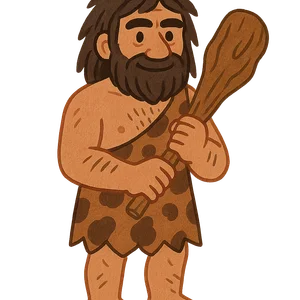
Early Humans refers to the earliest members of the genus *Homo*, including *Homo habilis* and *Homo erectus*…
Reads at Grades 3–5 Listens at Grades 1–5
Print & create
Answer keys·No prep·Free with an account
28 worksheets · answer keys · full story · quiz · Ages 8-10 · CEFR B1
Plus adds 116,000+ more stories in 27 languages, audio for every one, and printables for all of them.
Just want Early Humans?
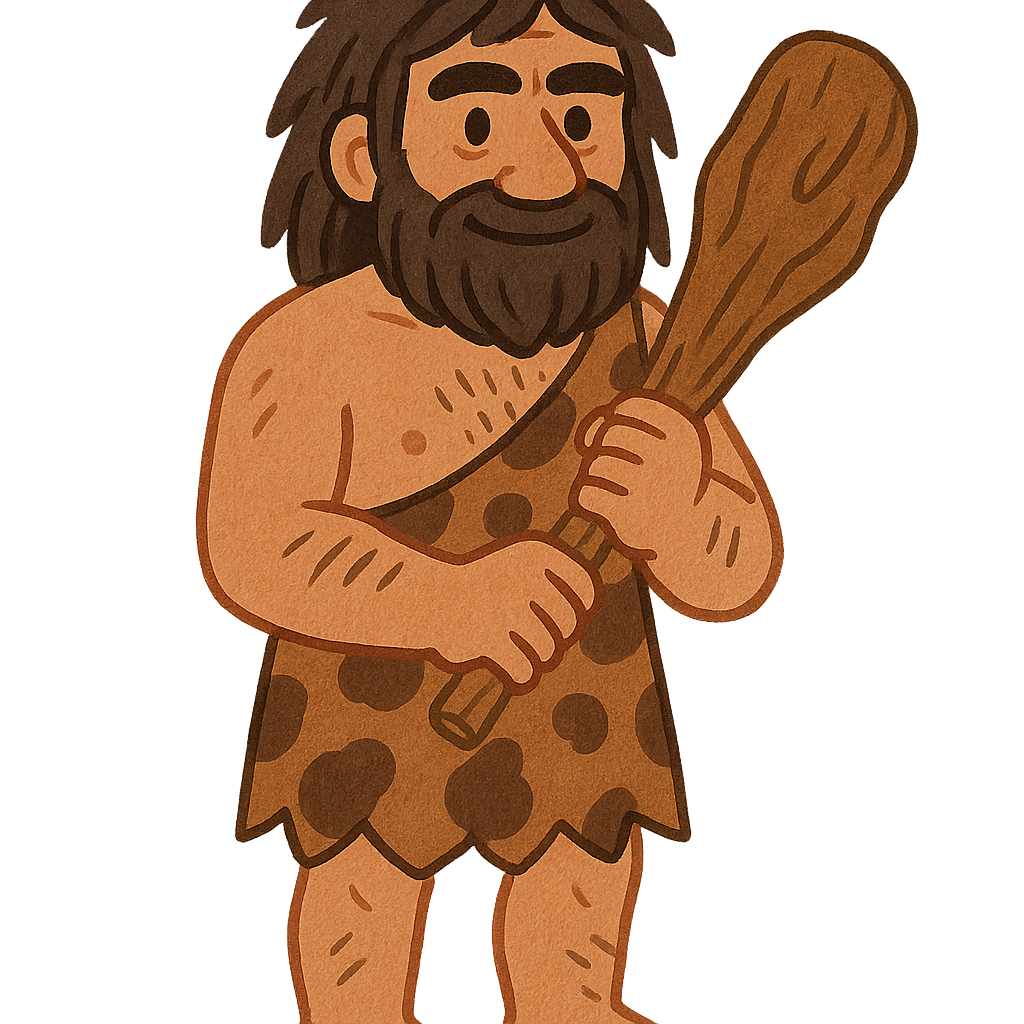
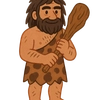
Hello, we are your ancestors. Our scientific name is *Homo sapiens*, and we were the first modern humans on Earth. Our long story began on the continent of Africa about 300,000 years ago. We did not stay in one place. Over many, many thousands of years, our small groups slowly traveled and spread out. We eventually reached every continent, learning to live in forests, deserts, and even icy lands. For a long time, we were not the only kind of human. We shared the world with some of our early relatives, like the Neanderthals, before they disappeared.
Our lives were always on the move because we were nomads. This means we didn't live in permanent towns or villages. Instead, we were hunters and gatherers. We couldn't go to a grocery store or plant a farm, so we followed the great herds of animals that roamed the land, like woolly mammoths and giant bison. Moving with the seasons was also part of our rhythm. We knew when and where to find ripe berries, crunchy nuts, and tasty roots to eat. To survive, we had to build a deep understanding of everything around us. We watched the weather, learned the secrets of the land, and knew the behavior of all the animals we depended on for food and materials.
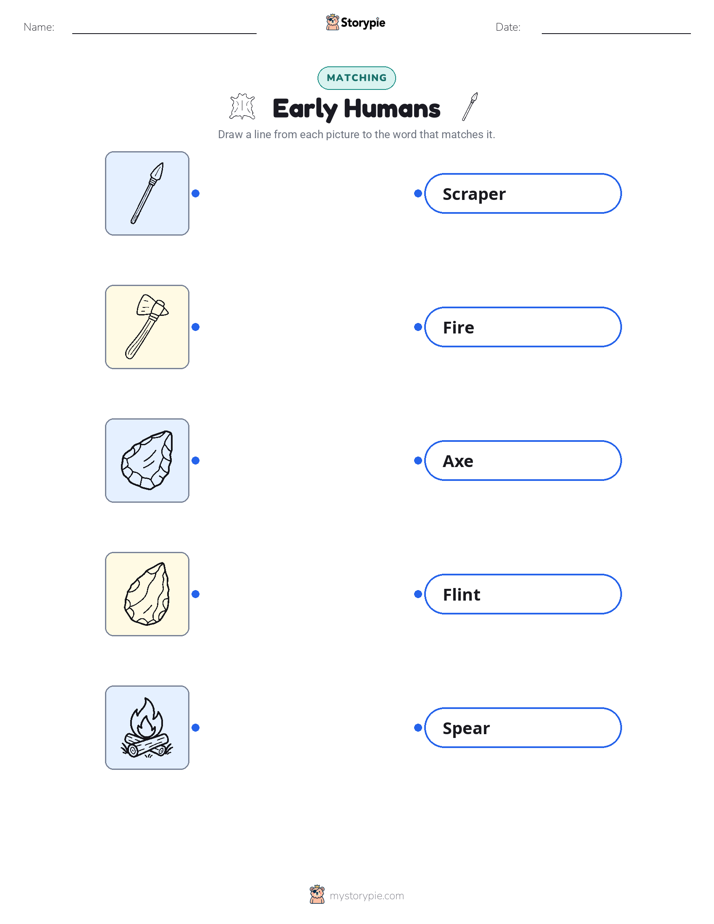
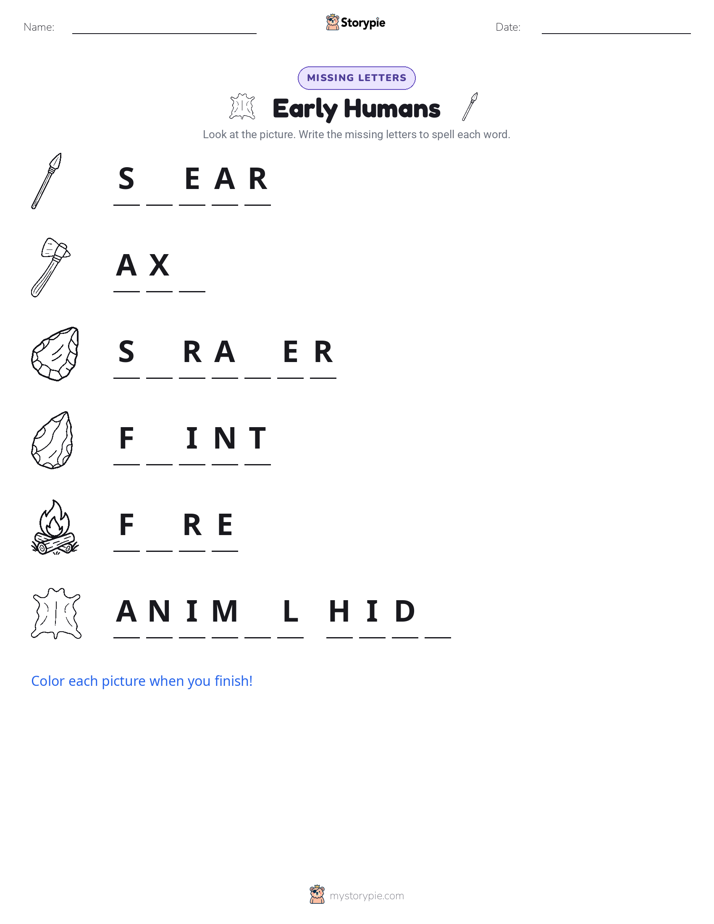
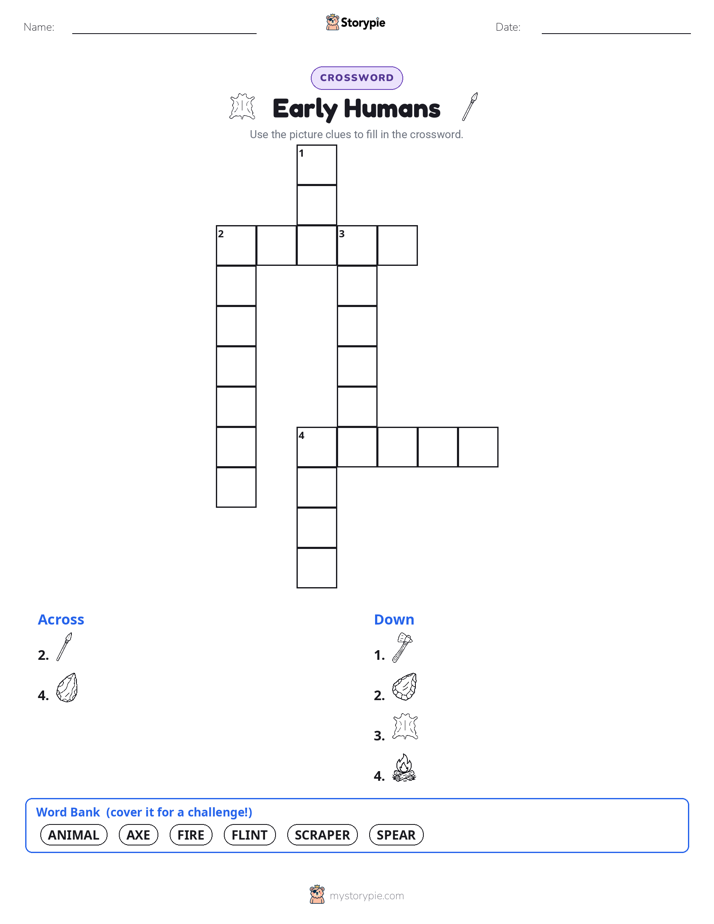
We were also the world's first great inventors. Because we used stone for so many of our most important creations, this time in our history is often called the Stone Age. We became experts at shaping stone to fit our needs. We would carefully chip away at pieces of hard flint to create razor-sharp spear points for hunting. We also crafted heavy hand axes that were perfect for chopping wood or other tough materials. But we didn't just use stone. We discovered that animal bones could be shaped into useful things, too. We made sharp bone needles, which allowed us to sew pieces of animal skin together to make warm clothing. For our homes, we used wood to build simple shelters that protected us from the wind and rain.
A Story of Early Humans
Hello, we are your ancestors. Our scientific name is Homo sapiens, and we were the first modern humans on Earth. Our long story began on the continent of Africa about 300,000 years ago. We did not stay in one place. Over many, many thousands of years, our small groups slowly traveled and spread out. We eventually reached every continent, learning to live in forests, deserts, and even icy lands. For a long time, we were not the only kind of human. We shared the world with some of our early relatives, like the Neanderthals, before they disappeared.
Our lives were always on the move because we were nomads. This means we didn't live in permanent towns or villages. Instead, we were hunters and gatherers. We couldn't go to a grocery store or plant a farm, so we followed the great herds of animals that roamed the land, like woolly mammoths and giant bison. Moving with the seasons was also part of our rhythm. We knew when and where to find ripe berries, crunchy nuts, and tasty roots to eat. To survive, we had to build a deep understanding of everything around us. We watched the weather, learned the secrets of the land, and knew the behavior of all the animals we depended on for food and materials.
We were also the world's first great inventors. Because we used stone for so many of our most important creations, this time in our history is often called the Stone Age. We became experts at shaping stone to fit our needs. We would carefully chip away at pieces of hard flint to create razor-sharp spear points for hunting. We also crafted heavy hand axes that were perfect for chopping wood or other tough materials. But we didn't just use stone. We discovered that animal bones could be shaped into useful things, too. We made sharp bone needles, which allowed us to sew pieces of animal skin together to make warm clothing. For our homes, we used wood to build simple shelters that protected us from the wind and rain.
For much of our time on Earth, the world was a very different place. We lived through a great Ice Age, a period when the planet was much colder than it is today. Giant sheets of ice, called glaciers, covered large parts of the land, and staying warm was one of our biggest challenges. One of our most important discoveries was learning how to control fire. Fire changed everything for us. We used its flames to cook our food, which made it safer to eat and easier to digest. At night, a bright fire kept dangerous predators away from our camps. Most importantly, it gave us warmth. We gathered around our fires inside the caves we sometimes used for shelter or in the simple huts we built for ourselves.
Even in a world of ice and stone, we found ways to express ourselves. We were the world’s first artists. Deep inside dark, quiet caves, where the wind could not reach, we created amazing works of art. Using the smooth rock walls as our canvas, we painted incredible pictures of the animals that were so important to our lives. We painted herds of powerful bison, graceful deer, and wild horses. To make our paints, we ground up colorful minerals into fine powders and mixed them with water or animal fat. We also used black charcoal from our fires. No one today knows for certain why we made these paintings. Perhaps we used them to tell stories about great hunts, or maybe they were part of important ceremonies. Some people think we painted them to ask for good luck before setting out to find food.
Our journey was long and difficult, but our ability to adapt, invent, and work together in small groups allowed us to do something amazing: we survived and populated the entire planet. Every great civilization that came after us, from the very first farms and villages to the giant cities of today, was built on the foundations that we laid so long ago. We did not leave behind written books, but we did leave a record of our lives. Scientists called archaeologists carefully study the tools, bones, and art we left behind. Each stone spear point and every cave painting they find helps piece together the incredible story of where all people came from.
Wow facts
About
Early Humans refers to the earliest members of the genus *Homo*, including *Homo habilis* and *Homo erectus*, and their close relatives. They were nomadic hunter-gatherers who developed stone tools, mastered fire, and created the first known art during the Stone Age.
Take a Quiz
Question 1 of 5
According to the story, on which continent did the story of modern humans begin?
Explore next






Want to do even more?
Go beyond exploring. Unlock tools that turn every story into real learning.

Storypie Plus for families
Full stories, quizzes, and printables. Nights and car rides, sorted.
- Unlimited audio stories
- Create Mode: your child stars in the story
- Offline downloads
- Printable worksheets & coloring pages

Why Storypie for Schools
Students engaged. Prep in seconds. Evenings back to you.
- Worksheets & Quizzes
- Classroom Management
- Formative Assessment
- Custom Curriculum & Lesson Plans
- 27 Languages

Why Storypie for Homeschool
Curriculum done. They'll ask for more. Hours back in your day.
- Worksheet Generator
- First-Person Audio Stories
- Built-in Comprehension Quizzes
- Custom Curriculum & Lesson Plans
- Print & Go Activities