English

Early Humans
Early Humans refers to the earliest members of the genus *Homo*, including *Homo habilis* and *Homo erectus*…
Reads at Grades 6–8 Listens at Grades 4–8
Print & create
Answer keys·No prep·Free with an account
28 worksheets · answer keys · full story · quiz · Ages 10-12 · CEFR B2
Plus adds 116,000+ more stories in 27 languages, audio for every one, and printables for all of them.
Just want Early Humans?
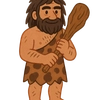
We are the first humans, and our story is the beginning of everyone’s story. It is a tale that stretches back millions of years to the continent of Africa, which was our first home. Our journey did not begin suddenly. We changed very slowly over countless generations, evolving from earlier ancestors like a group you might know as Australopithecus. For a very long time, different kinds of early humans walked the Earth. Our own group, the one to which every person alive today belongs, is called Homo sapiens. We first appeared in Africa around 300,000 years ago. From that starting point, we began a great migration, a slow and steady journey that would eventually take us to every corner of the world. We were curious and adaptable, and this drive to explore would eventually lead our descendants to build the world you know today.
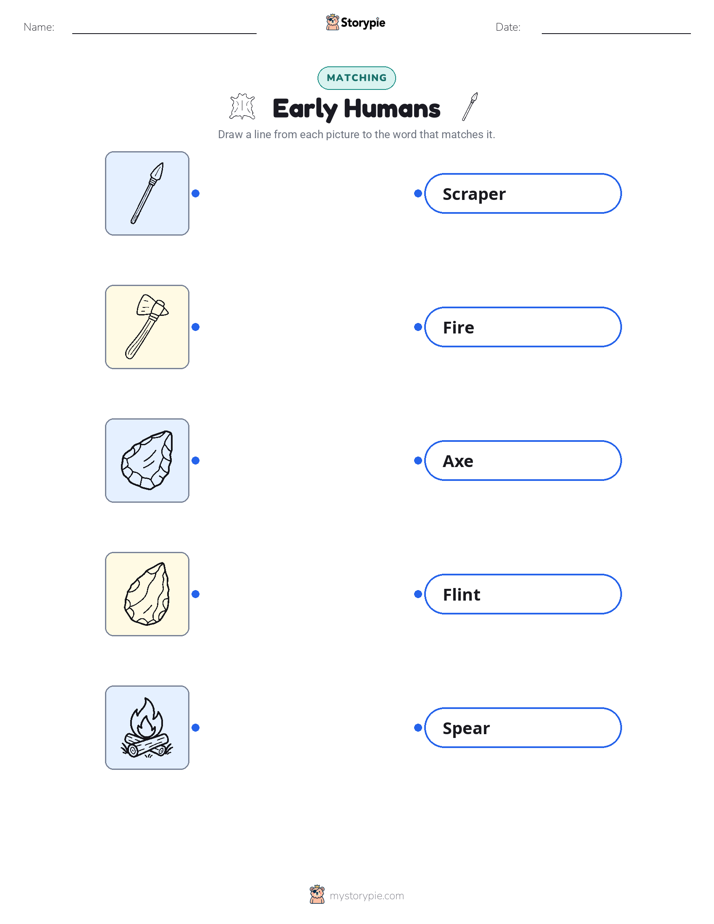
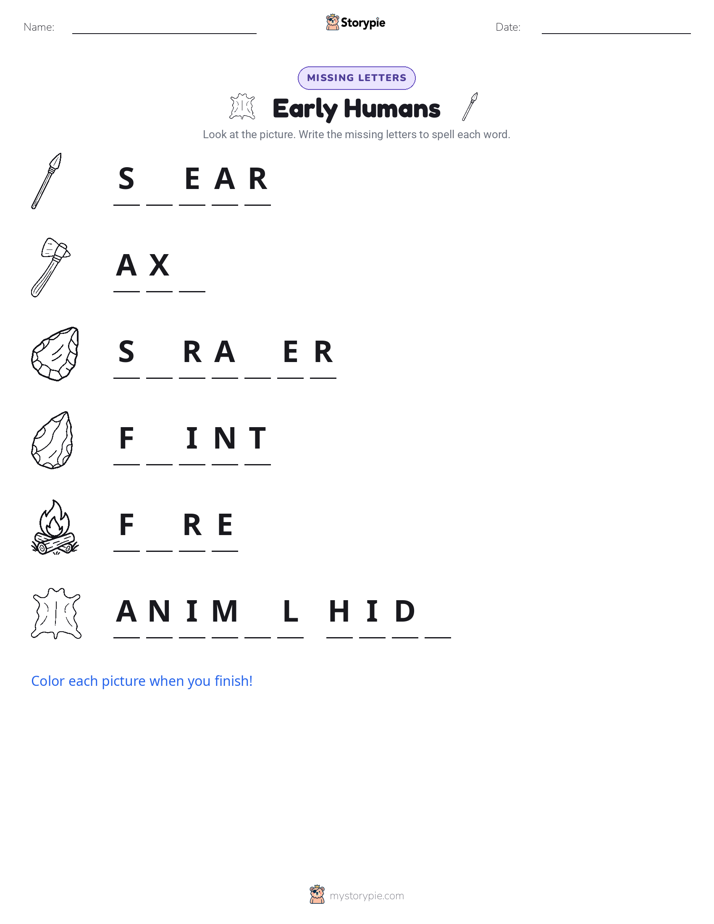
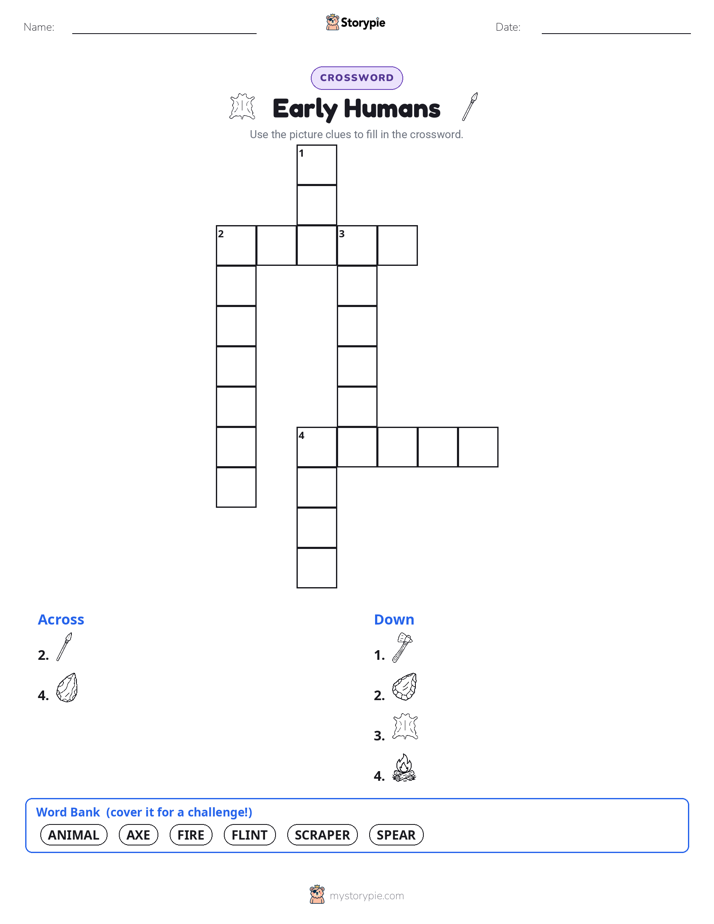
For most of our existence, we lived a life on the move. We were nomads, which means we did not have permanent homes or villages. Instead, we traveled in small groups as hunter-gatherers. Our lives followed the rhythm of the seasons and the movements of animals. We followed vast herds of large animals, which provided us with food, hides for warmth, and bones for tools. We also learned which plants were safe to eat, gathering roots, berries, and grains as they became available. This way of life required a deep understanding of the natural world. To survive, we developed tools, and our most important ones were made from stone. Over thousands of years, we became experts at shaping flint and other rocks into sharp points for spears, blades for cutting, and scrapers for cleaning hides. Our tools became more and more complex, each designed for a specific task. One of our greatest discoveries was learning how to control fire. It completely changed our lives. Fire gave us warmth on cold nights, a flickering light in the darkness, and protection from dangerous predators. It also gave us the ability to cook our food, making it safer to eat and easier to digest.
Our Human Story
We are the first humans, and our story is the beginning of everyone’s story. It is a tale that stretches back millions of years to the continent of Africa, which was our first home. Our journey did not begin suddenly. We changed very slowly over countless generations, evolving from earlier ancestors like a group you might know as Australopithecus. For a very long time, different kinds of early humans walked the Earth. Our own group, the one to which every person alive today belongs, is called Homo sapiens. We first appeared in Africa around 300,000 years ago. From that starting point, we began a great migration, a slow and steady journey that would eventually take us to every corner of the world. We were curious and adaptable, and this drive to explore would eventually lead our descendants to build the world you know today.
For most of our existence, we lived a life on the move. We were nomads, which means we did not have permanent homes or villages. Instead, we traveled in small groups as hunter-gatherers. Our lives followed the rhythm of the seasons and the movements of animals. We followed vast herds of large animals, which provided us with food, hides for warmth, and bones for tools. We also learned which plants were safe to eat, gathering roots, berries, and grains as they became available. This way of life required a deep understanding of the natural world. To survive, we developed tools, and our most important ones were made from stone. Over thousands of years, we became experts at shaping flint and other rocks into sharp points for spears, blades for cutting, and scrapers for cleaning hides. Our tools became more and more complex, each designed for a specific task. One of our greatest discoveries was learning how to control fire. It completely changed our lives. Fire gave us warmth on cold nights, a flickering light in the darkness, and protection from dangerous predators. It also gave us the ability to cook our food, making it safer to eat and easier to digest.
As our groups traveled out of Africa and into new lands, we learned that we were not the only kind of human on the planet. In the colder climates of Europe and Asia, we met another human group known as the Neanderthals. They had lived in these territories for a very long time and were powerfully built, intelligent, and skilled. They were experts at surviving in the cold, with their own sophisticated tools and hunting techniques. They were not our ancestors, but more like our cousins on the great family tree of humanity. When our paths crossed, we shared the landscape. For thousands of years, our two groups lived in the same world, and we met and interacted with each other as we moved into their lands. Their story is a reminder that the human past was more diverse than we often imagine, with different groups exploring their own ways of living.
Our journey was not just about physical survival; our minds were growing and changing, too. We began to see the world in a new way, to think symbolically. This means we started to use one thing to represent another, creating a world of meaning, art, and culture. We left behind the first evidence of this incredible change. Deep inside caves, protected from the weather, we painted magnificent art on the stone walls. We mixed minerals to create colors and painted pictures of the animals that were so important to our lives—horses, bison, and mammoths. These were not simple drawings; they were filled with life and energy. We also used our skills to carve small, detailed figures from bone, ivory, and stone. These creations show that we had beliefs, that we told stories, and that we felt a deep need to express our ideas and connect with one another. This art is a message from our time, telling you that we had complex inner lives, just like you.
After hundreds of thousands of years of living as nomadic hunter-gatherers, our way of life began a great transformation. This change was set in motion by the world itself. The last great Ice Age came to an end, and the climate grew warmer and wetter. Forests expanded and the large herds of animals we once hunted began to disappear. In this new environment, we made a revolutionary discovery: we learned how to farm. We found that we could plant seeds and grow our own food. We also learned how to domesticate animals, raising them for their milk, wool, and meat. This incredible shift is now called the Neolithic Revolution. For the first time, we no longer had to constantly travel to find food. We could stay in one place, build permanent homes, and form the very first villages. This new, settled way of life was the foundation for everything to come. It set the stage for the growth of towns, cities, and all the great civilizations that followed. Our long journey as nomads was over, but our legacy had just begun.
Wow facts
About
Early Humans refers to the earliest members of the genus *Homo*, including *Homo habilis* and *Homo erectus*, and their close relatives. They were nomadic hunter-gatherers who developed stone tools, mastered fire, and created the first known art during the Stone Age.
Take a Quiz
Question 1 of 5
According to the story, what major environmental change led early humans to begin farming?
Explore next




Want to do even more?
Go beyond exploring. Unlock tools that turn every story into real learning.

Storypie Plus for families
Full stories, quizzes, and printables. Nights and car rides, sorted.
- Unlimited audio stories
- Create Mode: your child stars in the story
- Offline downloads
- Printable worksheets & coloring pages

Why Storypie for Schools
Students engaged. Prep in seconds. Evenings back to you.
- Worksheets & Quizzes
- Classroom Management
- Formative Assessment
- Custom Curriculum & Lesson Plans
- 27 Languages

Why Storypie for Homeschool
Curriculum done. They'll ask for more. Hours back in your day.
- Worksheet Generator
- First-Person Audio Stories
- Built-in Comprehension Quizzes
- Custom Curriculum & Lesson Plans
- Print & Go Activities