
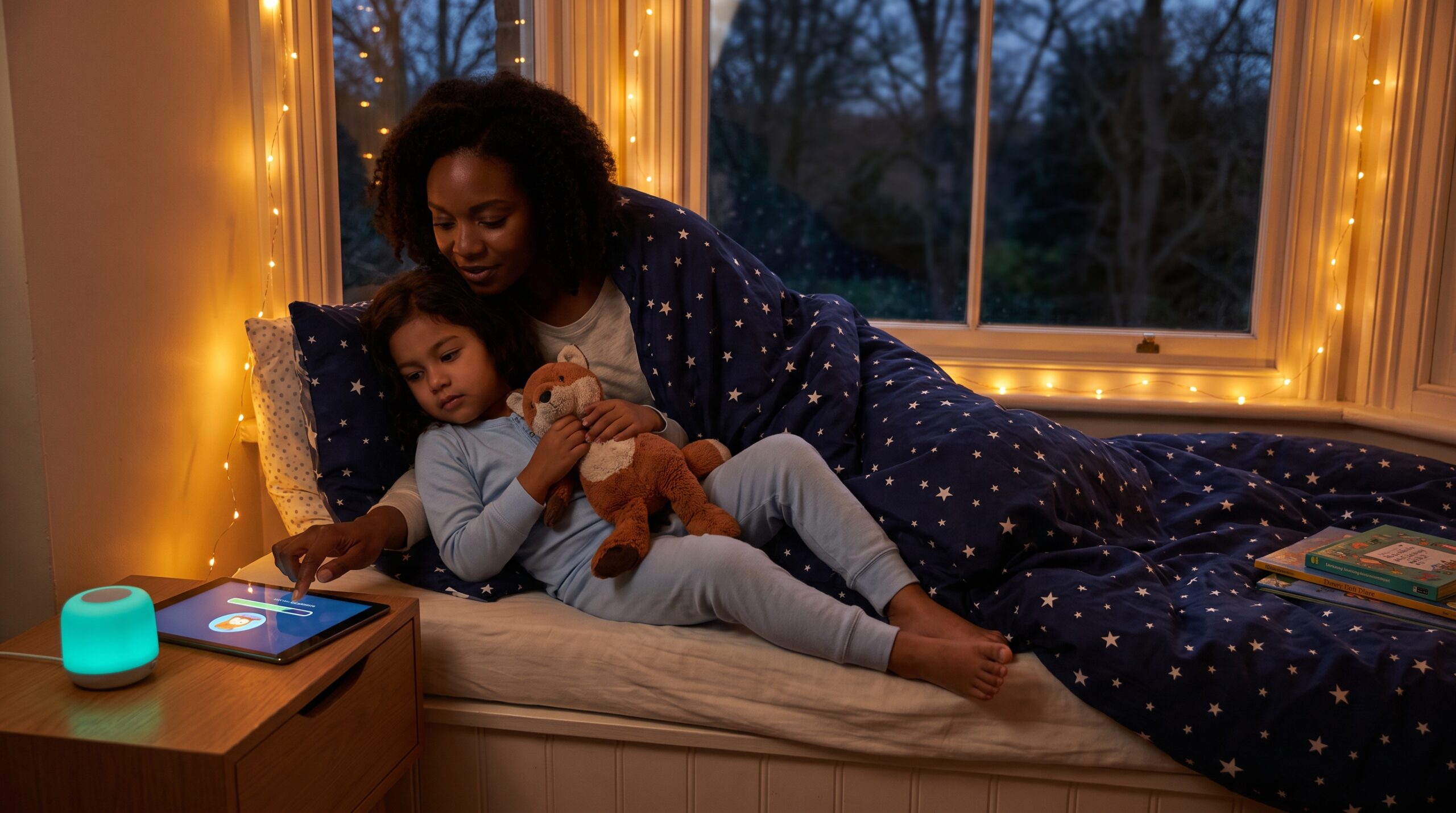
Bedtime mini story ritual is a tiny, steady moment that signals sleep time. Parents and teachers use it to cue calm and close the day with ease. In fact, according to America’s Health Rankings, 59.7% of children ages 0–5 had a family member read, sing, or tell stories to them every day during the past week, highlighting the prevalence and importance of storytelling in bedtime routines for child development.
What the bedtime mini story ritual is
This ritual is short. It usually lasts three to ten minutes, and five minutes is common. It blends a simple tale, low light, and soft voices. Over time, the mini story ritual becomes a clear cue for rest. A 2021 study found that consistent bedtime routines, including storytelling, established as early as 3 months, lead to fewer night-time awakenings, reduced sleep problems, and longer sleep durations by age 3.
Core characteristics
The bedtime mini story ritual has a few consistent traits. First, it repeats. Second, it stays short and predictable. Third, it keeps sensory input low. These traits help the mind and body switch toward sleep. Research indicates that children with a consistent nightly bedtime routine, including storytelling, fell asleep faster, woke less during the night, and slept on average more than an hour longer per night than children without any routine, according to a study published in the journal Sleep.
- Duration: typically 3 to 10 minutes, often about 5 minutes.
- Consistency: same gentle close to the day, night after night.
- Sensory tone: dim light and quiet audio create a calm setting.
- Format variety: audio-only, a whispered tale, or a soft playback.
Benefits and evidence
The bedtime mini story ritual links to earlier bedtimes and shorter time to fall asleep. Pediatric guidance and sleep research support consistent bedtime cues. Moreover, short rituals are doable for busy families. They add steady wins and calmer evenings. Regular bedtime reading is associated with improved sleep outcomes, including earlier bedtime, shorter sleep onset latency, and longer sleep duration, as noted by the American Academy of Pediatrics.
Age fit and adaptation
Toddlers and preschoolers often respond best to slightly longer, predictable rituals. School-age children may prefer a shorter, reflective version. Teens sometimes use brief audio reflections to move away from screens and toward sleep. For infants under six months, pediatric advice still applies, and routines can look different. A randomized implementation trial found that instituting a nightly bedtime routine produced the fastest improvements in sleep outcomes within the first three nights of the two-week intervention.
Environment and tech notes
Low light and low sound help the ritual work. Audio-only playback reduces blue light exposure and keeps attention calm. Storypie supports bedtime story types and audio playback that match the five-minute window. For calm options, explore calming tales on Storypie.
Common challenges
Some families see little change right away. Often the cause is timing or excitement level. Inconsistent nights weaken the cue. If sleep problems persist, consult your pediatric provider for tailored help.
Quick checklist of defining features
- Spark: one simple image or feeling highlighted.
- Length: timeboxed to a few minutes.
- Tone: soft voice and steady pacing.
- Close: a calm, short ending that signals sleep.
In short, the bedtime mini story ritual is a small, mighty routine. It offers a gentle, repeatable ending to busy days. For calm, easy bedtime options, visit Storypie and browse calming tales.