Try the create your own hero weekend challenge for a tiny confidence win. It takes ten minutes. It sparks imagination and feels joyful. In fact, a 2023 study found that 80% of people believe unlocking creativity is critical to economic growth, highlighting its importance in activities like this.
What it is
The create your own hero weekend challenge is a quick, play-based prompt. Invite your child to invent a personal hero. Ask them to name three strengths. Then ask them to draw or act out a short scene. It is simple, repeatable, and social-media friendly. Research shows that children naturally engage in imaginative play, with a prevalence of creative, elaborated imaginary worlds, or “paracosms,” found in around 16.9% to 17.4% of children aged 8-12, making this challenge a fitting activity.
Why this weekend imagination challenge helps
Naming strengths trains language. It gives children words for feeling capable. Also, acting or drawing stretches planning and sequencing. These activities build self-awareness and positive self-talk. Finally, sharing the hero boosts family bonding. Interestingly, a study indicated that subtle superhero priming can increase helping behaviors; for instance, 91.80% of participants exposed to a Superman poster helped the experimenter compared to 75.80% in a neutral-poster condition, showing how hero imagery can motivate positive actions.
How to run the create your own hero weekend challenge (10-minute version)
Keep it short and playful. Use this quick flow to get a tiny win.
- Hook: Two sentences. For example, “Meet your hero. What can they do?”
- Strengths: Ask for three small strengths. Two or three words each work well.
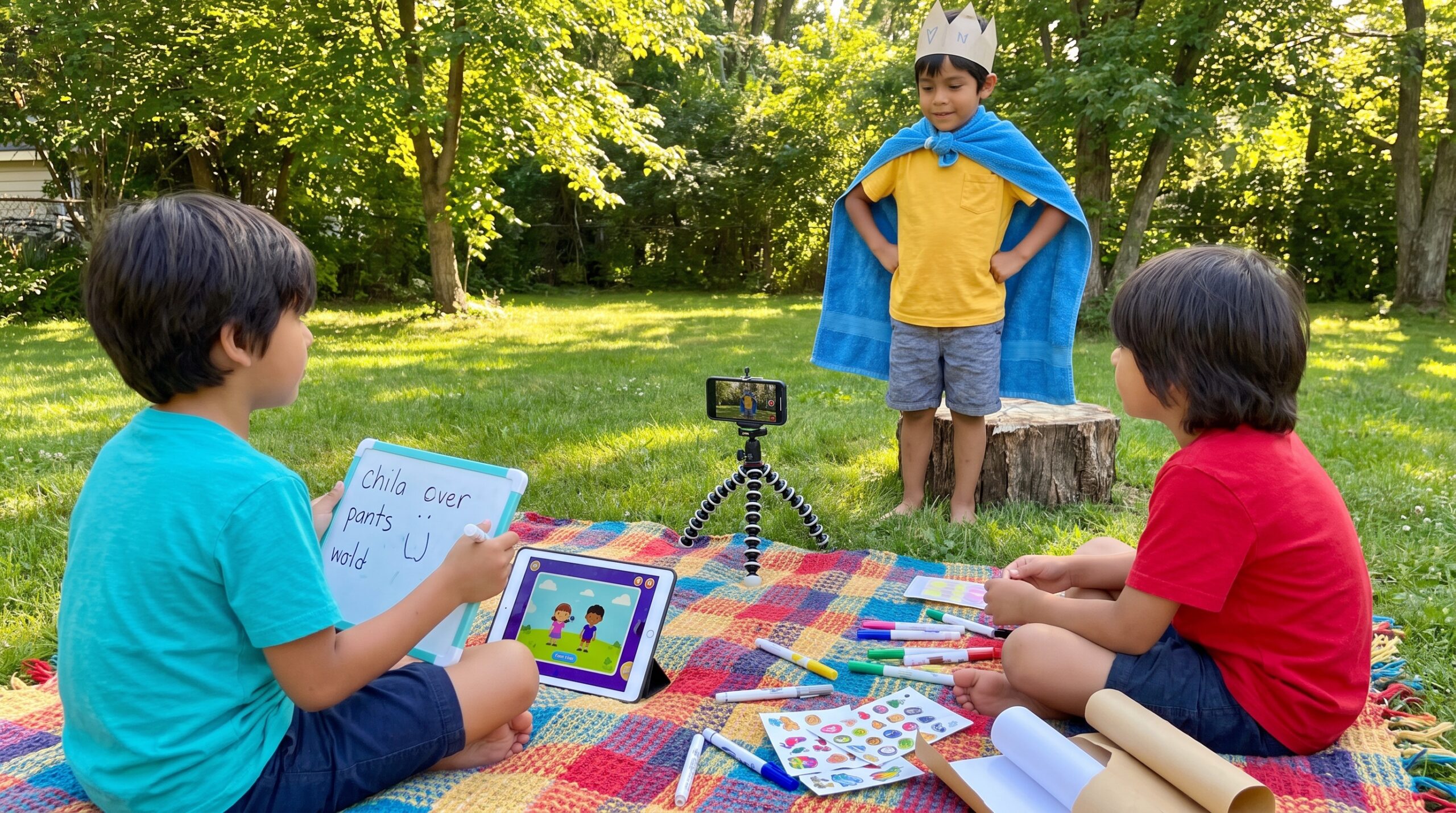
- Scene: Draw, sketch, or act a one-minute scene. Try a hat or blanket for a cape.
- Celebrate: Snap a photo if you share. Or store the story privately for later.
Age tweaks
- Preschool (3 6): One strength. Big-picture drawing. Use visual prompts.
- Early elementary (6 8): Three strengths and a small sketch. Add a tool or costume.
- Older kids (9 12+): Build a backstory. Give a name, a flaw, and a short origin.
A micro example for older kids
Mira the Gardener fixes broken parks. Strengths: fierce patience, clever ideas, and a loud laugh that scares away gloom. She once planted a maze of kindness that helped neighbors find each other. Short, specific, memorable.
Types of heroes kids make
Children make real-world helpers, fantastical beings, or hybrids like firefighter-robot heroes. Encourage diversity in body types, cultures, and abilities. This helps heroes reflect real life and wide imagination. A 2023 study published in the Journal of Creativity found that generative artificial intelligence chatbots have reached human-level creativity, emphasizing the evolving nature of creativity and the value of diverse ideas in hero creation.
Materials and setting
Use minimal gear: paper, markers, a hat, or a blanket for a cape. Pick a calm space like the backyard or kitchen table. For sensory needs, offer tactile tools or allow audio-recording instead of writing.
Sharing and safety
If you post online, protect privacy. Use no full names or school details. Share in parent-only groups for younger kids. Or keep a private record at home.
Save tiny hero stories in a private family library on Storypie to keep creations safe and easy to revisit. Save stories in a private family library on Storypie.
Connect with the challenge
Try a new weekly theme. For example, make community helpers one week and animal heroes the next. Also, families who want a digital option can get the app and save tiny hero stories. Get the Storypie app. Review privacy settings before uploading.
Keep it short. Keep it joyful. The goal is confidence, not perfection. Try this small prompt and watch curiosity grow. Kids may beg to make another hero tomorrow.