
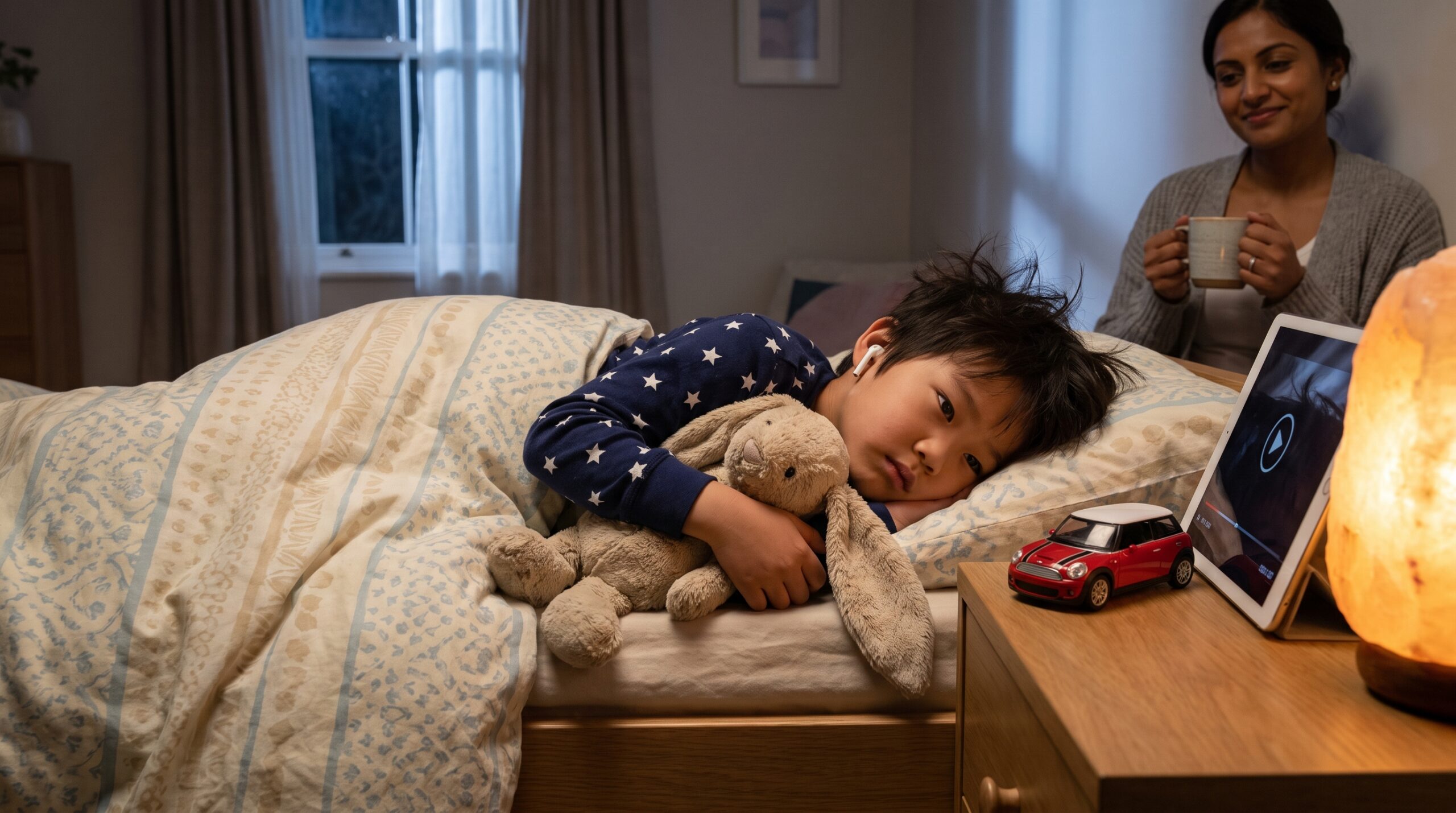
Try a bedtime mini story ritual as a calm cue before sleep. Keep it tiny and mighty. Spend three to seven minutes with soft lights and a gentle voice. According to a 2025 survey, 71% of parents agreed that storytelling helps their children wind down at bedtime, with 49% naming it their preferred method.
What a bedtime mini story ritual looks like
Start small. First, pick a quiet moment after bath and teeth. Next, use the same time each night. Regular timing helps children learn that play is over and rest begins. A 2025 study reported that consistent bedtime routines, including storytelling started as early as 3 months, were associated with fewer night-time awakenings, reduced sleep problems, and longer sleep durations by age 3.
Five-minute example
On busy nights, five minutes fits neatly into the routine. Tell a short starter story in three to five sentences. Then close with a predictable line, for example, “Goodnight, brave star.” This simple routine can enhance sleep quality significantly, as shown in a randomized clinical trial where replacing screen time with reading increased sleep efficiency and reduced night awakenings.
Why the bedtime mini story ritual works
It lowers arousal. Calm voices and dim lights help slow heart rate. It also builds attachment by creating a predictable close moment with a caregiver. Finally, even short stories give children new words and patterns, which supports language over time. Research indicates that a structured bedtime routine, including storytelling, significantly predicts improved sleep duration in children aged 1-3 years, according to a 2024 systematic review.
Three simple effects
- Calming: reduces stress and prepares the body for sleep.
- Connection: strengthens the bond with a caregiver.
- Development: introduces language and narrative in tiny bites.
Age-friendly notes for the ritual
Infants (0 to 12 months): very short vocal routines, soft humming, or a two-line lullaby.
Toddlers (1 to 3 years): simple, repetitive mini stories work best. Use clear endings.
Preschoolers (3 to 5 years): five minutes of a slightly longer tale or one gentle scene with a simple problem and soft resolution.
School-age children: short relaxation stories or guided imagery help slow the mind.
Practical characteristics
Keep it low stimulation. Prefer audio-only or a calm read-aloud. Turn screens off or use airplane mode. Research from a 2024 randomized clinical trial showed that removing screen time in the hour before bed resulted in small-to-medium improvements in sleep efficiency and reductions in night awakenings. Also, set timers and keep volume low.
Repeat one story or a small set to strengthen the cue. However, occasional novelty is fine.
Try this bedtime mini story ritual tonight
- Set the scene: dim lights, cozy blanket, soft voice.
- Pick a 3 to 5 sentence starter that is playful and calm.
- Tell the story slowly in three to five minutes.
- Use a predictable closing line to signal lights-out.
- If you need hands-free, play a Storypie mini audio from the app.
One simple night with a sleepy preschooler can make a big difference. She whispered “One more,” then yawned and closed her eyes. That tiny victory felt golden.
Digital choices and safety
Audio apps and prerecorded stories are convenient. Prefer audio-only and enable Do Not Disturb. Also, use timers and parental controls for safety and peace of mind.
For gentle prompts and delightful characters, try Storypie. Visit Storypie Home or get the app at Storypie Get App.
Final thought
Bedtime rituals are about consistency more than length. A bedtime mini story ritual, repeated nightly, becomes a cue children trust. Try a five-minute Storypie mini story as your calm cue. Play one each night to settle energy and fall asleep faster.