Following directions for kids is a foundational skill for safety, school, and everyday independence. It combines attention, working memory, and receptive language. Soon, small routines will feel like a tiny superpower.
What following directions for kids means
Following directions includes one-step and multi-step instructions. These may be spoken, shown, written, or signed. Toddlers often follow single-step directions with a gesture by age one to two. Also, many two to three year olds follow two-step directions without a gesture. Preschoolers often manage two to three steps. These are general milestones. Individual children vary, and that is normal.
Why the skill matters
Following directions for kids matters for safety. For example, a child who stops on cue avoids danger. Also, the skill supports classroom learning and social routines. Working memory holds steps while a child acts. Executive function helps with waiting and planning. Together, these skills boost confidence and independence. Research shows that in preschool classrooms, compliance with instructions varied by activity: during circle time, compliance was 84%; during center activities it was 68%; and outdoors only 59% (A Descriptive Assessment of Instruction‑Based Interactions in the Preschool Classroom). This illustrates how context affects children’s ability to follow directions, emphasizing the need for structured activities to enhance compliance.
Simple strategies that work
Use clear, short language. Try phrases like “Put your shoes by the door.” Then pause. Let the child process one instruction at a time.
- Give one instruction and wait a beat.
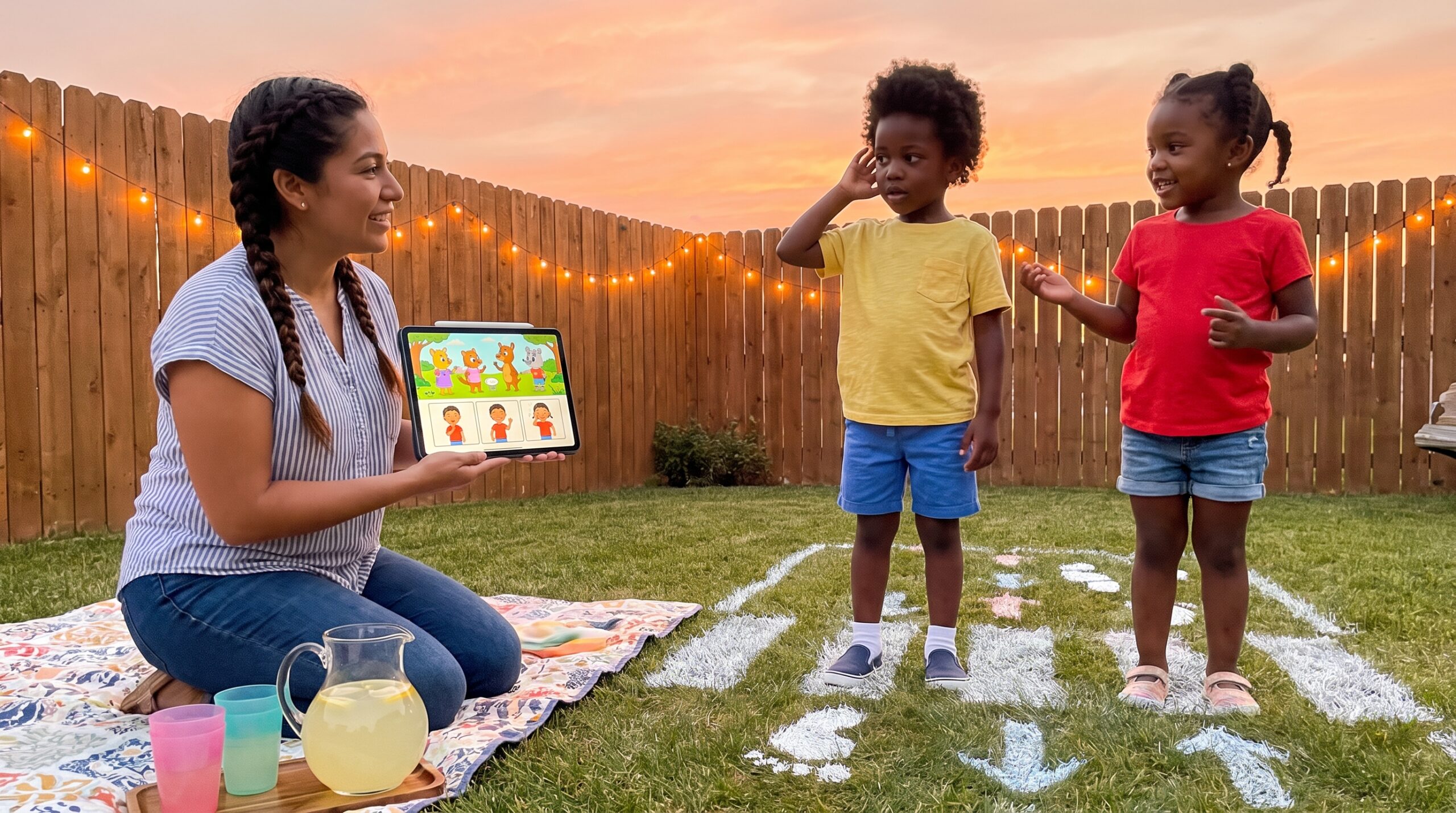
- Use pictures, checklists, or quick drawings to show steps.
- Ask the child to repeat steps back in a playful way.
- Break tasks into small pieces and praise tiny wins.
- Reduce background noise and keep routines predictable.
Also, model tasks aloud and fade prompts over time. These small moves add up fast. In fact, a kindergarten study found that when teachers gave attention contingent on compliance, instruction-following rose from 60% to 83.7% (Journal of Applied Behavior Analysis), highlighting the significant impact of teacher engagement on children’s ability to follow directions.
Playful games to practice
Games make practice fun. Try Simon Says for listening and impulse control. For instance, create a tidy treasure hunt with three-step clues. Follow a simple recipe together to practice sequencing. Obstacle courses build memory and planning. Practice safety drills like stop, look, listen until they become automatic. A recent study published in Memory & Cognition found that when all intersections appeared identical, participants relied on memorizing the serial order of directions, indicating a reliance on memory in navigation tasks (Memory & Cognition). This insight can help in developing activities that strengthen children’s navigation skills.
Measure progress and when to seek help
Track how many steps your child follows and how much help they need. For example, note if they rely on gestures or prompts. After two weeks of practice, you may see better accuracy and speed. However, if concerns persist beyond expected ages, or if there is sudden decline, consult your GP or pediatrician. Professionals who assess these skills include audiologists and speech-language therapists. Interestingly, a 2023 experimental study revealed that about 71.4% of participants correctly followed the instruction to enter a given word, implying that nearly 30% of participants did not read or follow instructions (Shifting students toward testing). This highlights the challenges individuals face in following directions, relevant for understanding instructional compliance in educational settings.
Tools, routines, and next steps
Visual schedules, timers, and step-by-step charts can scaffold practice. Yet real-world routines are most powerful. Model actions, then fade support slowly. Celebrate progress with specific praise.
Read or listen to a story about Following Directions now: Read or listen to a story about Following Directions now: For 3-5 year olds, For 6-8 year olds, For 8-10 year olds, and For 10-12 year olds.
Finally, try a short game tonight. Small steps build safety, focus, and confidence. Storypie offers age-tailored stories and activities to reinforce these skills.