
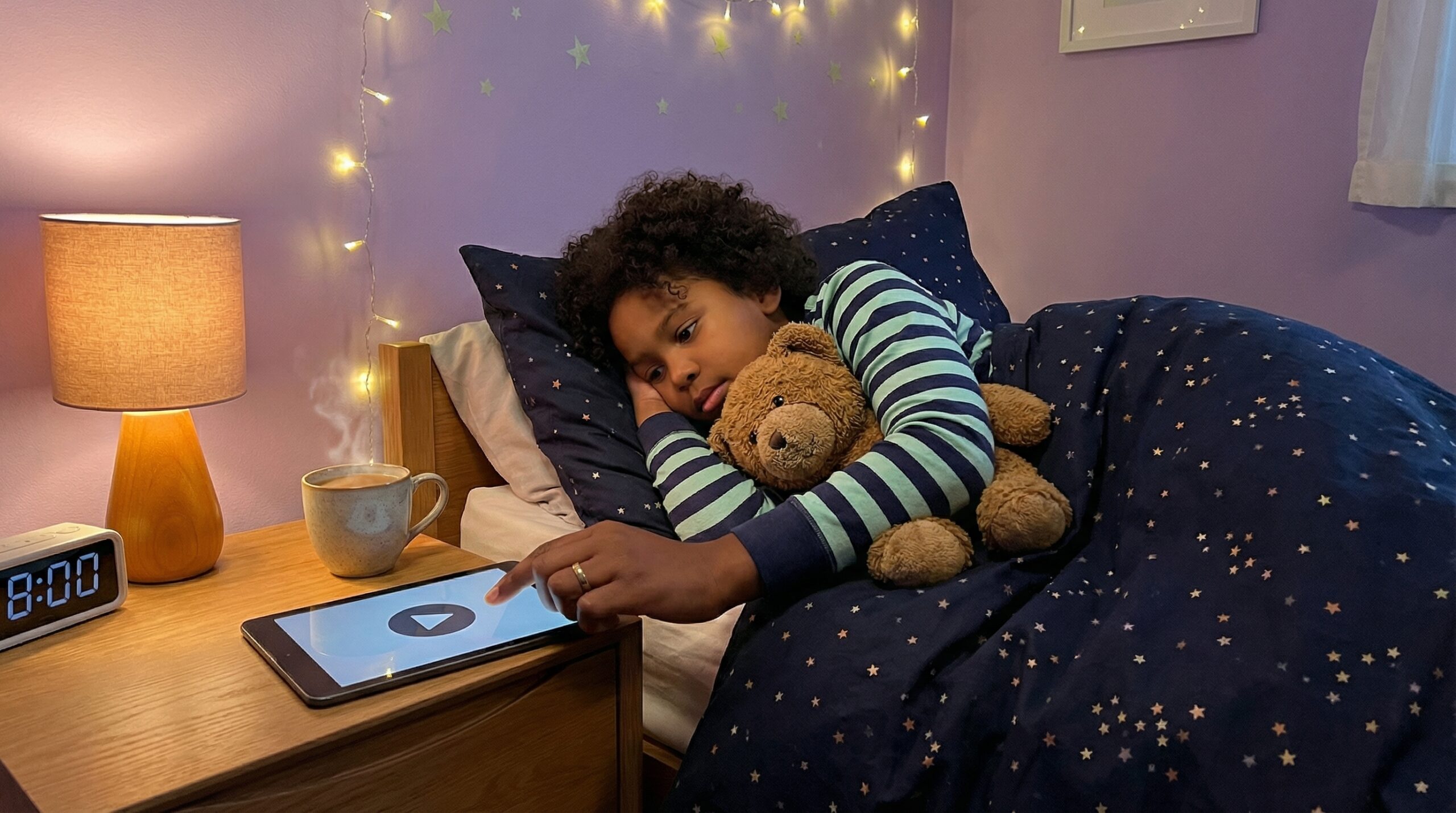
A bedtime mini story ritual is a short, predictable storytelling routine. It usually runs three to ten minutes. Parents and teachers use it to calm children, cue sleep, and create gentle closeness. For busy families, it packs nightly magic into a tiny window. In fact, a 2025 study found that 71% of parents agreed that storytelling helps their children wind down at bedtime, with 49% naming it their preferred method.
Why the bedtime mini story ritual works
The bedtime mini story ritual relies on repetition and calm. Because it repeats, the brain reads it as a sleep cue. Also, the ritual offers steady language exposure and emotional safety. Research shows that 67% of parents reported that a bedtime story is part of their child’s regular bedtime routine. Therefore, it supports quicker sleep onset and less bedtime pushback.
Characteristics and common structure
The ritual has a few clear traits. First, it stays short and predictable. Next, it sets a soothing tone with consistent signals. Then, it ends with a clear closing cue or signature phrase. These features make the ritual easy to repeat night after night.
- Length: typically three to ten minutes
- Predictability: repeated lines, rhythms, or a closing phrase
- Focus: calm voice, simple imagery, low action
- Bonding: caregiver presence or close audio connection
Example signature line
For example, a commonly used line is: “Goodnight, sleepy moon.” Short lines like this become comforting cues over time.
Age adaptations for the ritual
The ritual shifts slightly with development. Infants respond mainly to voice and rhythm. A 2025 Sleep Health survey of parents of young infants found that 62% reported having a bedtime routine for their infant, which was associated with longer consolidated overnight sleep and shorter nighttime awakenings. Toddlers like repetition and simple stories. Preschoolers enjoy a touch more imagery. Early school age children can follow short serialized pieces. Meanwhile, older children may prefer brief episodic installments that respect their growing attention spans.
Technology and practical notes
Audio-first formats often fit the ritual well because they limit screen light. Also, many families blend caregiver voice with short narrated tracks. Storypie hosts a library of short, narrated minis and lets families save favorites for easy nightly repeats. Visit 5-minute minis on Storypie or see the Storypie app page for examples.
Measuring impact
The ritual shows results in clear ways. For example, families often note faster sleep onset and reduced protest. Additionally, a 2025 survey indicated that 90% of parents of 1–6-year-olds reported having a bedtime routine for their child, with 67% including reading bedtime stories. Caregivers report a calmer bedtime mood. If the ritual remains steady for one to two weeks, its cues usually strengthen. Furthermore, a 2026 study found that a two-week nightly bedtime reading routine improved empathy and creativity in children aged 6–8, showing significant gains in cognitive empathy and creative fluency.
In short, the bedtime mini story ritual is a concise, repeatable practice. It blends calm pacing, consistent cues, and short content. As a result, it supports sleep and bonding without a big time commitment.
To explore short, calming minis and make a nightly routine simpler, browse Storypie’s curated selections at Storypie minis.