Germs for kids opens a tiny, hidden world in a gentle way. In this post we explain what germs are. Also, we name a few historical heroes who helped science. Finally, we share simple habits families can use every day.
Germs for kids: What are germs?
Germs is a simple umbrella word for microbes and microscopic agents. In short, germs can help or harm. For example, some bacteria aid digestion. Meanwhile, some viruses cause colds. In fact, a single gram of human feces can contain about one trillion germs, according to CDC handwashing guidance.
- Bacteria – single cell organisms. Some cause strep throat.
- Viruses – smaller agents that need cells to multiply. They cause colds and flu.
- Fungi – such as athlete’s foot.
- Protozoa – single cell animals. Some cause gut infections.
- Prions – rare proteins that affect the brain.
A brief story of discovery
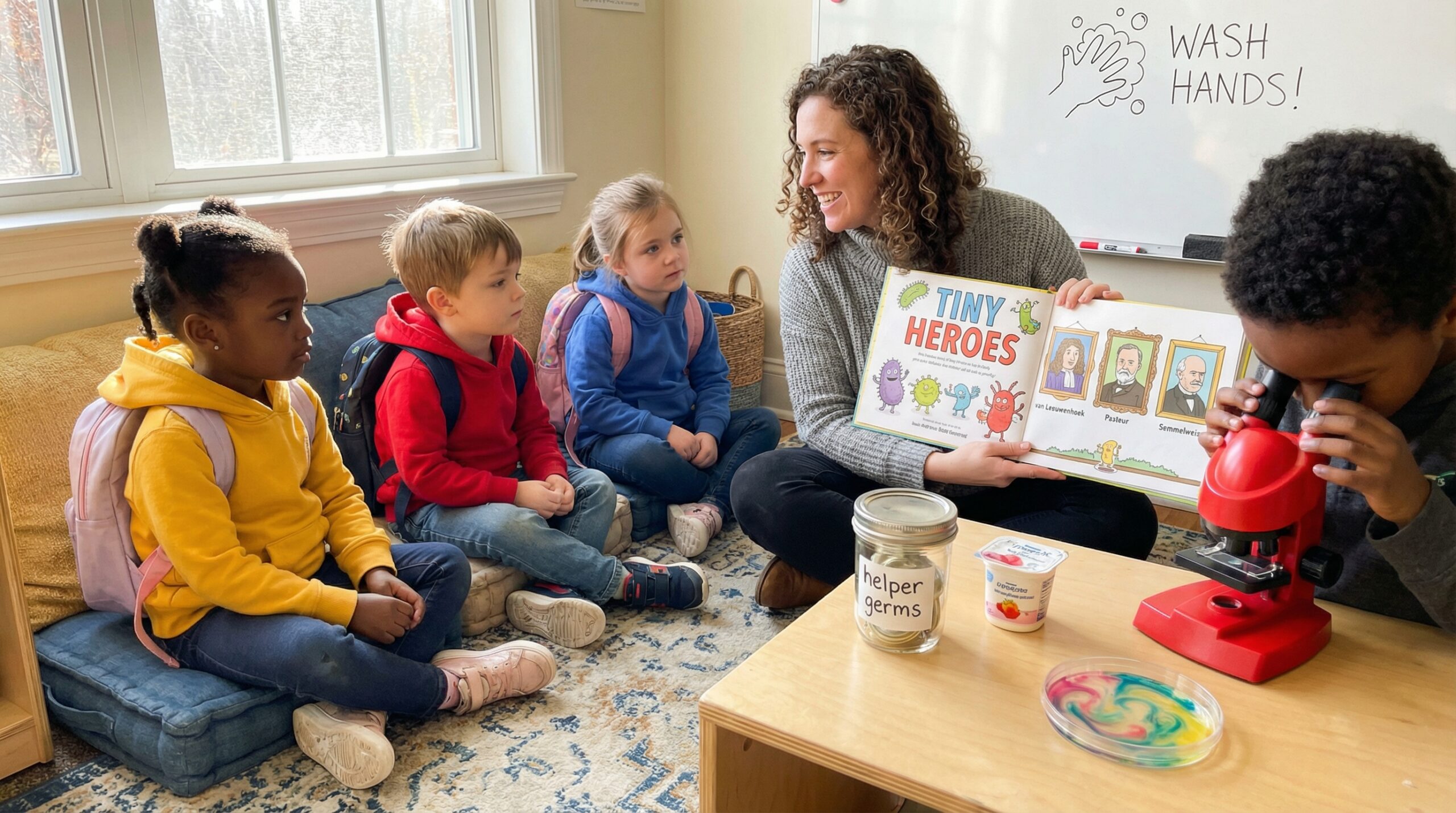
Antonie van Leeuwenhoek first looked through simple lenses in the 1670s. He saw tiny creatures and shared his wonder. In the 1800s Ignaz Semmelweis proved that handwashing cut deaths in maternity wards. Then Louis Pasteur showed that tiny life mattered. He helped create vaccines and pasteurization. Robert Koch linked specific microbes to disease and shaped modern lab methods.
Where germs live and how they spread
Germs live almost everywhere. You find them on skin and in the mouth. Also, they live in soil, water, food, and on doorknobs. They spread in a few common ways. Most environmental microbes do not harm us. At the same time, a small number cause illness. It’s important to note that in 2023, the CDC reported that more than 2.8 million antimicrobial-resistant infections occur annually in the United States, resulting in over 35,000 deaths each year, highlighting the importance of effective hygiene practices.
- Direct contact or touching contaminated surfaces
- Respiratory droplets when people cough or sneeze
- Some can travel in the air for short times
- Fecal to oral routes from unwashed hands or contaminated food
- Vectors like mosquitoes carry some germs
How germs make us sick, and how many help
A harmful microbe may enter the body, multiply, and then trigger symptoms. Fever, cough, vomiting, and diarrhea are common signs. However, our microbiome also helps us. Helpful microbes digest food and train the immune system. They also make foods like yogurt and sourdough. Plus, microbes help in composting and cleanup. What a busy microscopic world!
Prevention basics for families
Simple habits protect families and build curiosity instead of fear. For instance, handwashing works very well. According to CDC research, handwashing interventions reduce diarrheal illness by about 23–40% and reduce respiratory illnesses (e.g., colds) by about 16–21%. This demonstrates how effective handwashing can be in keeping families healthy.
Handwashing how to:
- Use soap and water for at least 20 seconds.
- Cover front and back of hands, between fingers, thumbs, and wrists.
- Rinse and dry thoroughly.
When soap is not available, use an alcohol based sanitizer with at least 60 percent alcohol. Vaccines train the immune system to recognize germs and prevent many illnesses. Also, practice safe food handling. Clean high touch surfaces during illness. Finally, keep rooms ventilated by opening windows or using fans.
Antibiotics, resistance and common myths
Antibiotics treat bacterial infections only. They do not work against viruses. Overuse or misuse can breed antibiotic resistant bacteria. These bacteria become harder to treat. So follow prescriber guidance: the right drug, the right dose, and the right duration. The 2024 National and State Healthcare-Associated Infections (HAI) Progress Report indicated a 9% decrease in central line-associated bloodstream infections (CLABSI) and a 10% decrease in catheter-associated urinary tract infections (CAUTI) in acute care hospitals compared to 2023, showing the effectiveness of improved hygiene practices in healthcare settings.
Practical activities and when to seek care
Try playful demos to spark curiosity. For example, try a glitter germ handwashing demo or the pepper and soap experiment. Also, viewing microscope images can amaze kids.
Call a clinician for these signs:
- Difficulty breathing
- Very high or prolonged fever
- Dehydration or persistent vomiting
- Severe pain or sudden lethargy
Read or listen to a story about Germs now: Read or listen to a story about Germs now: For 3-5 year olds, For 6-8 year olds, For 8-10 year olds, and For 10-12 year olds.
A final nudge
Use simple language and avoid fear. Keep habits delightfully simple and curious. This post is educational and not medical advice. For worrying or severe symptoms contact a healthcare professional. Also, explore more kid-friendly stories on Storypie to keep learning fun.