
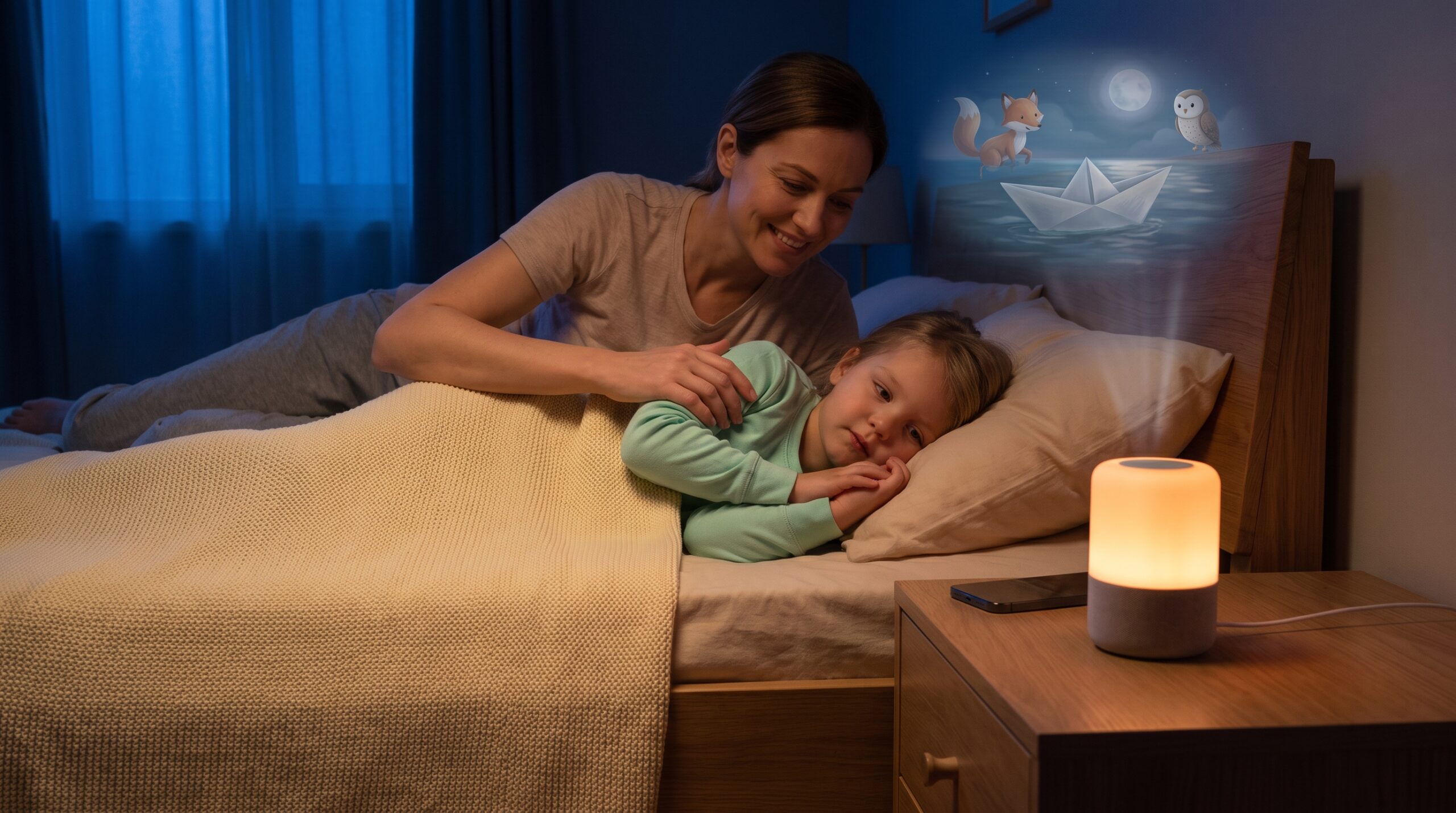
Audio-first cognitive load matters for story time. When sound leads, children use less willpower to follow along. Instead, they spend more brainpower imagining scenes and meanings. A 2024 study found that viewers reported significantly higher cognitive load when watching subtitled videos without sound, emphasizing the importance of audio in reducing cognitive load and supporting the audio-first approach.
Audio-first cognitive load: What it means
Audio-first puts sound at the center. The story is spoken, often with soft music or gentle atmosphere. Visuals are secondary or absent. As a result, eyes stay free and working memory focuses on words and ideas. For parents and teachers, that is quietly powerful.
Why cognitive load matters
Working memory has limits. When kids split attention between pictures and narration, their brains do extra bookkeeping. Consequently, they have less space for meaning and imagination. Mayer’s modality principle supports this. In short, fewer visual inputs reduce extraneous load. This frees mental space for the story to grow inside the child’s head. Research indicates that students who listen to material they have also read retain 20–40% more on follow-up tests than peers who only read, highlighting the effectiveness of combining audio and reading for enhanced retention, which is relevant to audio-first learning.
How audio-first sparks imagination
Listening invites children to build pictures in their minds. Neuroscience shows imagining a scene uses many of the same visual brain networks as seeing one. Therefore, a simple line like, The little fox tiptoed across the moonlit bridge prompts a vivid internal picture. That active imagining improves comprehension, memory, and emotional engagement. It feels like tiny bedtime magic.
Developmental wins
Audio-first supports vocabulary and listening comprehension. Also it helps narrative understanding for early readers. For children with dyslexia or visual impairment, audio can be more accessible. Calm audio also lowers arousal. Thus it fits bedtime; it avoids bright screens that can delay sleep. A theoretical framework paper published recently estimates that optimal sustained engagement for audio-only narrative lies at approximately 13–15 minutes, due to cortical processing constraints, which reinforces the argument for audio-first strategies.
Limitations, safety, and small precautions
Not every child prefers audio-only. Some benefit from visual anchors. Also keep volume safe with headphones. Supervise younger listeners and choose age-appropriate stories. These common sense steps keep listening both fun and safe.
A quick anecdote
I played a five minute audio sketch for a restless seven year old. After two minutes she whispered a new detail and then fell wonderfully silent, imagining the rest. That quiet focus stayed with me. Audio can be low-key yet deeply engaging.
Practical bedtime tips
- Pick a 10 to 15 minute audio story. Short stories fit most bedtime windows.
- Dim the lights and set volume low. Let the voice carry the scene.
- Choose calm tempo and soft sound design. Loud action works better by day.
Try a gentle Storypie audio tonight and notice how the room changes. For a quick start, try a short Storypie audio with this link: Try a short Storypie audio. You can also explore more Storypie stories in the app for bedtime-friendly picks: Storypie stories.
Bottom line
Audio-first reduces unnecessary cognitive load and gives imagination the lead role. It is inclusive and rooted in oral tradition. Above all, it fits modern family life as a low-screen, high-imagination practice. A 2024 study published in PLOS ONE found that watching subtitled videos without sound significantly increased self-reported cognitive load, highlighting how sound alleviates cognitive burden. Try it tonight and watch small routines turn into tiny magic. Sweet dreams and curious mornings.