
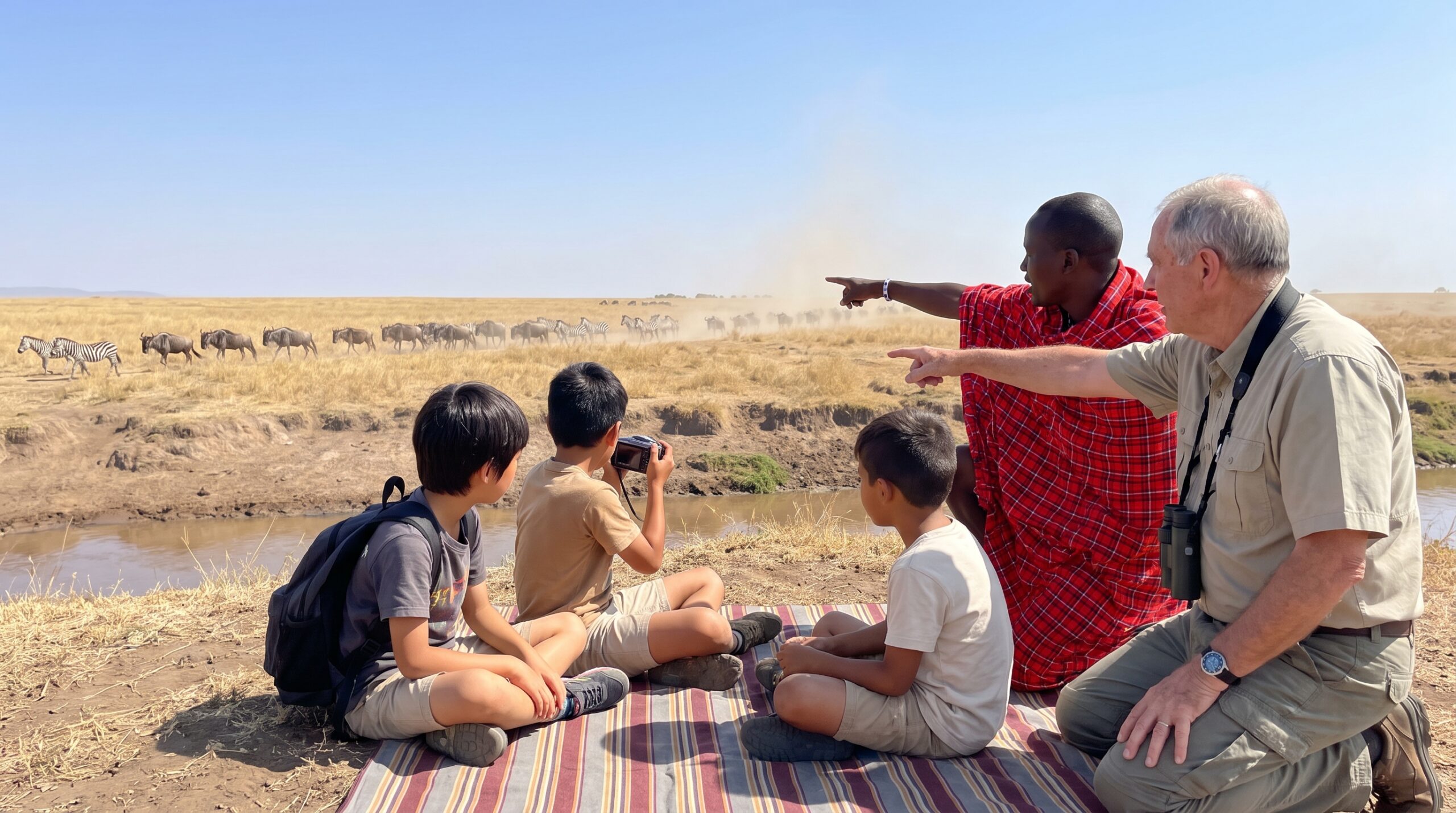
Serengeti National Park family guide starts here. The Serengeti sits in northern Tanzania beside Kenya’s Masai Mara. First, the name comes from the Maasai word siringet, which means endless plains. The park covers about 14,763 square kilometers (approximately 5,700 square miles) and was officially established in 1959, making it one of Africa’s most iconic national parks. Also, it lies at the heart of a much larger Serengeti ecosystem.
Read or listen to a story about Serengeti National Park now: For 3-5 year olds, For 3-5 year olds, For 6-8 year olds, For 8-10 year olds, and For 10-12 year olds.
Serengeti National Park at a glance
The landscape is a joyful patchwork. Vast grassland meets riverine forest, kopjes, woodlands and seasonal marshes. That mix supports huge herds and hungry predators. Each year more than a million wildebeest move across the plains. In addition, hundreds of thousands of zebra and gazelle take part. This great movement is the Great Migration, nature’s biggest road trip.
Wildlife, people and the Great Migration
Wildlife is vivid and varied. Expect wildebeest, plains zebra, Thomson’s and Grant’s gazelles, buffalo and elephant. Also, predators include lion, leopard, cheetah and spotted hyena. African wild dogs appear too. Birdlife tops 500 species. Seeing thousands of newborn calves is joyful and rare. Meanwhile, river crossings can feel dramatic and intense.
People live here too. The Maasai are semi-nomadic herders who share the land. Community projects link Maasai knowledge with conservation and visitor experiences. Conservation heroes like Bernhard Grzimek helped win protection for the park. Serengeti became a national park in 1951. Later, UNESCO named it a World Heritage Site in 1981.
Threats and conservation work
Threats remain. Poaching, land pressure, proposed roads and climate changes all matter. Fortunately, people work hard to protect the plains. Anti-poaching patrols operate on the ground. Community conservation shares revenue and helps local families. Scientists monitor wildlife to guide smart decisions. Small actions by visitors can also help.
Plan your family visit
Best months depend on what you want to see. For calves, visit January to March. For dramatic river crossings, choose June to September. Dry season viewing and easier roads often run June to October. Fly into Seronera or Kogatende airstrips. Alternatively, drive from Arusha with a trusted guide.
Three rules for a family safari:
- Stay in the vehicle.
- Listen to the ranger.
- Keep hands and bodies inside.
Quick tips:
- Pack layers and sun protection.
- Bring binoculars and a migration calendar.
- Play Serengeti soundscapes at bedtime to spark imagination.
Child-friendly activities
Families can enjoy short guided drives and safe ranger walks. Many lodges offer family tents and kid-friendly programs. Older children may enjoy balloon safaris where available. Use maps, animal cards and short films to explain the migration. For a historical story, some older kids will like the documentary Serengeti Shall Not Die.
Finally, protecting Serengeti National Park is doable. Choose responsible tours and support local communities. Teach kids to notice tracks, calls and the sky. Small actions by many people add up to big hope.
This summer morning, bring the Serengeti to your child’s ears. Play grassy plains, the Great Migration, Maasai keepers and conservation heroes. Tip: try a Storypie bedtime tale to spark curiosity.
Get the Storypie app and explore more family stories. Read more at Storypie.