
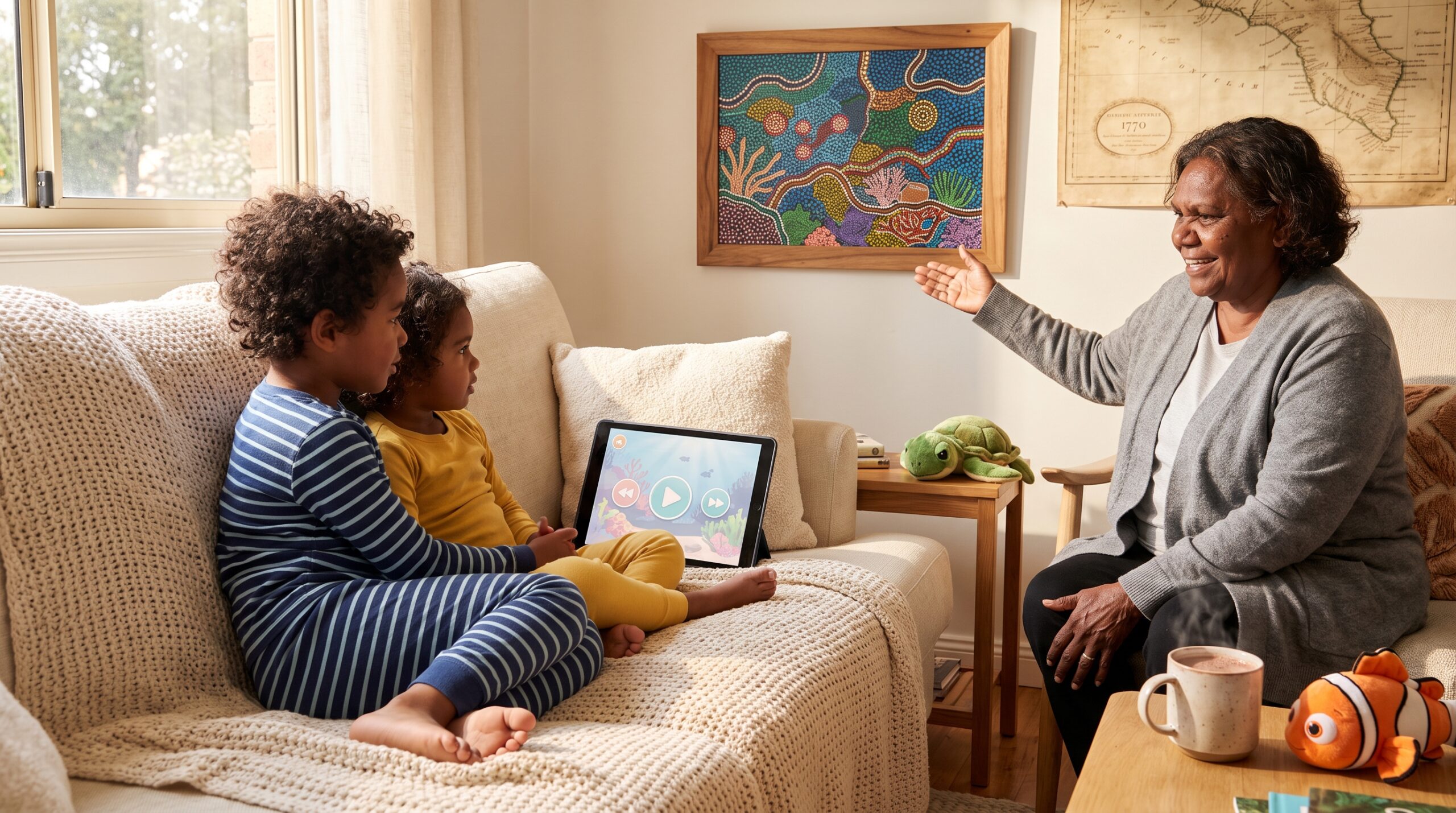
The Great Barrier Reef for kids shines as the world’s largest coral system. Storypie shares a short audio story told from the Reef’s perspective. It was built by tiny corals and algae. Aboriginal and Torres Strait Islander peoples have cared for it for thousands of years. Play this on a cozy winter morning cuddle to spark a gentle conservation chat.
Great Barrier Reef for kids: Quick facts
The Reef lies off Queensland’s northeast coast. It stretches about 2,300 kilometres. The area covers roughly 344,400 square kilometres and includes nearly 2,900 reefs and about 900 islands. As of April 2025, the Reef is home to over 1,600 species of fish and over 600 species of corals. Parts of the Reef are visible from space. Bright, bold, and full of life, it delights explorers of all ages.
What is coral?
Corals are tiny animals related to jellyfish. They live in colonies and build reefs with hard skeletons. Many corals host microscopic algae called zooxanthellae. The algae live inside coral tissues and use sunlight to make food. Because of this partnership, corals grow faster. Also, algae give corals much of their colour. It’s a tiny teamwork wonder.
Life on the Reef
The Reef is a dazzling, living classroom full of colour. It supports more than 1,500 fish species and hundreds of corals. You will find turtles, dugongs, reef sharks, rays, seabirds and migrating whales. Seagrass meadows and mangroves join the system too. Tiny sponges and sea stars play important roles. In short, the Reef hosts a lively underwater neighbourhood.
People, culture and care
Aboriginal and Torres Strait Islander peoples have deep cultural ties to the Reef. Islands, waters and stories shape daily life and cultural practice. Europeans first mapped parts of the Reef in 1770 when James Cook sailed past. Today, science and Traditional Owner knowledge work together to study and manage sea country. This teamwork guides care and protection.
Threats and protection
The Reef faces big threats from warming seas and climate change. In 2024, the Great Barrier Reef experienced its largest annual coral loss in 39 years, with live coral cover decreasing by almost one-third in the southern region, 25% in the northern region, and 14% in the central region, according to Associated Press. Warming causes coral bleaching when corals lose their algae. In 2024, heat stress in the Southern GBR reached record levels, with Degree Heating Weeks (DHWs) peaking at 15.6 in some coastal areas; as a result, 76.3% of the 38 surveyed reefs experienced coral cover declines ranging from 9.7% to 57.2%, as reported in Coral Reefs. Ocean acidification, runoff, cyclones and crown-of-thorns outbreaks also harm reefs. Because of these pressures, managers monitor the Reef closely. The Great Barrier Reef Marine Park started in 1975. The Reef is also a UNESCO World Heritage site. Managers use zoning, water-quality programs, crown-of-thorns control, restoration trials and long-term monitoring to protect it.
How families can help
Families and kids can act with simple steps. Try these friendly actions:
- Reduce single-use plastic.
- Choose reef-safe sunscreen.
- Use less fertiliser and avoid pouring chemicals down drains.
- Follow guides when visiting and never touch coral.
- Choose sustainable seafood and join local citizen science projects.
Read or listen to a story about The Great Barrier Reef now: For 3-5 year olds, For 3-5 year olds, For 6-8 year olds, For 8-10 year olds, and For 10-12 year olds.
Also, find this and other short stories on Storypie. Get the app to listen anytime: Get the app.
Listen together, ask gentle questions, and celebrate small steps toward reef care every day.