
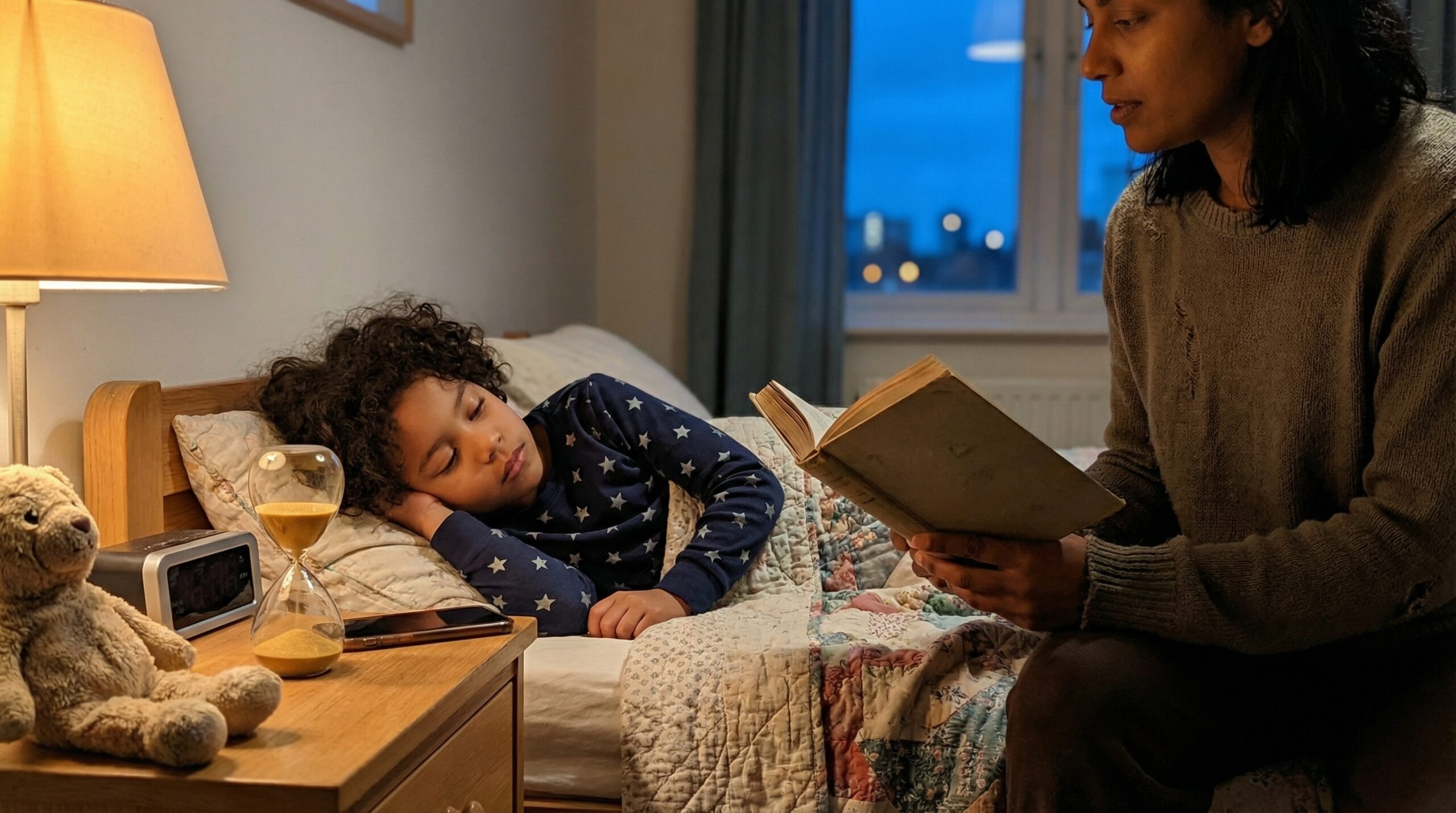
A bedtime mini story ritual gives busy families a five-minute wind-down. It is a short, repeatable routine that helps children shift from play to sleep. Parents read or tell a brief story that lasts two to seven minutes. Then calm replaces chaos and the night begins gently.
Why the bedtime mini story ritual works
Short, consistent routines improve sleep for many children. Also, predictable pre-bed activities lower bedtime resistance. Health groups advise limited screen time before bed. A single five-minute tale helps children relax, regulate emotions, and fall asleep faster. In fact, a 2025 study found that 71% of parents agreed that storytelling helps their children wind down at bedtime, with 49% naming it their preferred method. Curation beats clutter. So pick one short book or a few familiar lines and use them nightly. Research indicates that consistent bedtime routines, including storytelling started as early as 3 months, are associated with fewer night-time awakenings and longer sleep durations by age 3, highlighting the importance of starting these rituals early.
Design a simple five-minute ritual
Keep the ritual easy to repeat. First, choose a fixed time and a cozy spot. Next, dim lights and lower noise. Then make the seat inviting with a blanket or a favorite stuffed friend. For toddlers, show one or two picture pages. For preschoolers, tell a calm five-minute story. For school-age kids, read a short chapter excerpt or share a quiet check-in about the day.
If you are away or exhausted, a recorded reading or a voice note keeps the ritual predictable. Predictability is the key. Night after night, the same pattern becomes a powerful sleep signal. A 2024 systematic review concluded that consistent, relaxing bedtime routines, including storytelling, were associated with better child sleep outcomes.
How to run the five-minute routine
Start with a clear cue. For example, a soft song, a lamp turned on, or a favorite phrase signals the start. Then read or tell the story slowly and quietly. Finally, end with the same closing line or gesture. This closing cue tells the child it is time for sleep. Keep stories low on action and rich in soothing language. These steps adapt easily for travel, babysitters, or daycare handovers.
Age-friendly tweaks
- Infants: very short verses or lullabies with cuddles.
- Toddlers: one short picture book or a repeated rhyme.
- Preschoolers: a five-minute story to process the day.
- School-age: a brief chapter excerpt or a calm conversation.
Across ages, the bedtime mini story ritual builds parent-child connection. It also supports vocabulary and early literacy. A large longitudinal study found that language-based bedtime routines at age 3 were associated with increased nighttime sleep duration at age 5 by approximately 15.6 minutes, illustrating the long-term benefits of storytelling. Replacing screens near bedtime helps natural sleep hormones work. Small nightly repetitions create big benefits over time.
On hectic evenings and next steps
On busy nights this ritual feels like a secret superpower. Five quiet minutes can teach calm, grow language, and wrap the day in belonging. It is not perfection that matters. Instead, what matters is return and consistency. When the child drifts to sleep after the tiny, magical moment, you are succeeding.
For quick, gentle bedside ideas try Storypie. The app offers short tales and simple prompts to keep your five-minute wind-down fresh. Visit Storypie for quick bedside tale ideas.