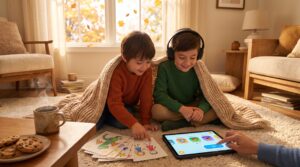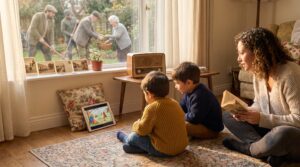
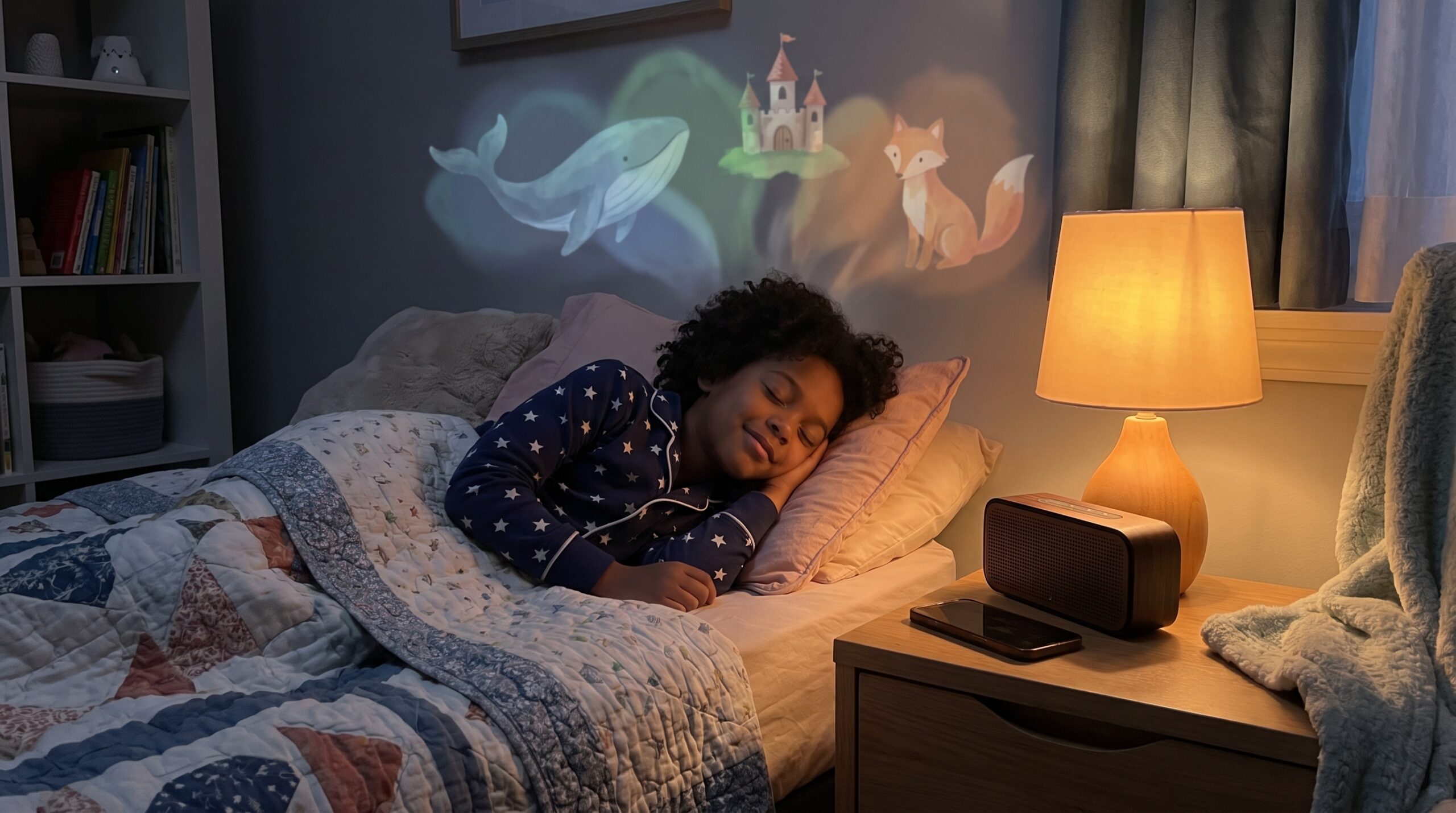
Audio-first cognitive load matters for how kids listen, learn, and imagine. I build audio-first stories and products for a living. I also tuck kids into bed every night. Over time I noticed one simple pattern. When you remove flashing pictures, children do the heavy lifting of imagination. They paint tiny, magical pictures inside their heads. Audio-first opens that space.
What audio-first means
Audio-first means a story made to work with your ears first. Narration, voices, and soundscapes lead. Visuals are optional. Therefore the story stands on sound and language. This design asks listeners to build settings and characters inside their minds.
Why audio-first cognitive load matters for kids
Cognitive load is the mental work the brain uses to learn. Too much input overwhelms it. Screens add layers like images, text, and animations. Each layer asks for attention. As a result the brain splits focus. Audio-only removes many visual demands. Thus children can focus on meaning and feeling. That lowers extraneous load and frees more brain power for imagining. A 2024 EEG-based study demonstrated that audio characteristics can reliably estimate cognitive load, achieving a peak F1-score of 0.98, highlighting the measurable impact of audio on cognitive load.
How this helps attention
Audio asks for sustained listening. So attention becomes practice. Children learn to follow a voice and hold details in mind. Also they learn to wait for answers. Consequently narrative focus grows over time.
How audio-first cognitive load fuels imagination
Sound makes the listener create. The brain builds characters, places, and action from words and cues. For example a gentle bell and a low voice can suggest a snowy village. In turn that building strengthens visual imagery and creative thinking. Research in cognitive science supports this link. For many kids, less visual clutter equals deeper mental pictures. For instance, a 2024 study found that viewers reported significantly higher cognitive load when watching subtitled videos without sound, providing concrete evidence of how audio can alleviate cognitive load.
Language and listening gains
Listening to well-made audio grows vocabulary. Children hear sentence rhythm and new words in context. Therefore language comprehension improves. In addition many learners, including kids with dyslexia or low vision, gain better access through listening. So audio-first becomes both joyful and powerful.
A tiny real-life example
One night I played a two-minute forest tale to a small group. Ten minutes later every child drew a whole forest. I showed no pictures. They had filled it in themselves. That is the quiet magic of audio-first.
Simple bedside steps to try tonight
- Dim the lights and set a calm speaker near the bed.
- Pick a short, soothing story to play for about 10 to 15 minutes.
- Pause after the story and ask one gentle question.
- For a ready choice, explore calming tales on the Stories page.
Practical benefits and safety notes
Audio beats blue light before sleep. Short, calming stories help the brain wind down. Keep volumes moderate and avoid earbuds for very young children. Choose age-appropriate content. Also listen together when you can. Shared listening builds emotional vocabulary and family connection.
Limitations and balance
Audio-first complements visual literacy. Children still need books, drawing time, and hands-on play. Very young infants need face-to-face cues from caregivers. So use audio as part of a balanced media diet.
Try a five-night experiment
Try five evenings of audio-first wind-downs and watch for change. Track how quickly your child settles. If you want an easy start, get the app to try more tales: Get the Storypie app. Audio-first lowers cognitive load and opens room for big imaginations. It really works.