The Danube River for kids begins in the Black Forest and flows all the way to the Black Sea. It is Europe’s second-longest river, about 2,857 km long. Also, it weaves through ten countries and many stories.
Danube River for kids: route and quick facts
The river starts where the Brigach and the Breg meet in Donaueschingen. Then it travels east and east again. It empties into the Black Sea through the wide Danube Delta, which covers roughly 3,124.40 km² and teems with life.
Countries and cities along the way
The Danube flows through or along 10 countries: Germany, Austria, Slovakia, Hungary, Croatia, Serbia, Romania, Bulgaria, Moldova, and Ukraine. For example, it passes four capitals you can pin on a map: Vienna, Bratislava, Budapest, and Belgrade. Ask children which city is upstream or downstream. That small question sparks big thinking. The Danube River Basin is home to about 79 million people, emphasizing the river’s importance to the region.
Rivers that join the Danube
Many tributaries swell the Danube. The Inn, Sava, Tisza, Drava, Morava, and Olt add water and stories. Downstream, the long-term average flow reaches about 6,000 to 7,000 m3/s. Also, the whole basin drains around 800,000 to 820,000 km2 of land.
Nature and wildlife along the Danube
Floodplain forests, reedbeds, and marshes ring the river. They host pelicans, herons, fish, and frogs. The Danube Delta is a UNESCO World Heritage Site and a Biosphere Reserve. Little explorers spot big birds and tiny crabs in the mud. Bring a sketchbook. Watch light on water. Listen for the reeds rustling.
People, history, and ways the river helps
People shaped the Danube too. For instance, the Rhine-Main-Danube Canal links the Danube to the Rhine and the North Sea. Also, iron-and-concrete projects like the Iron Gates build hydroelectric power and a dramatic gorge between Serbia and Romania. The river carries cargo, ferries tourists, and feeds many towns. It also carries centuries of history and melodies like The Blue Danube.
Care for the river and shared rules
Rivers need care. Pollution, dams, invasive species, and climate change threaten habitats. In 2024, VERBUND’s Danube power plants collected and disposed of 7,200 tonnes of floating debris, including large logs and various waste materials, illustrating ongoing environmental management efforts in the Danube. Countries work together through groups such as the International Commission for the Protection of the Danube River. Shared rivers need shared rules. That is a helpful idea to share with curious kids.
Quick family activities
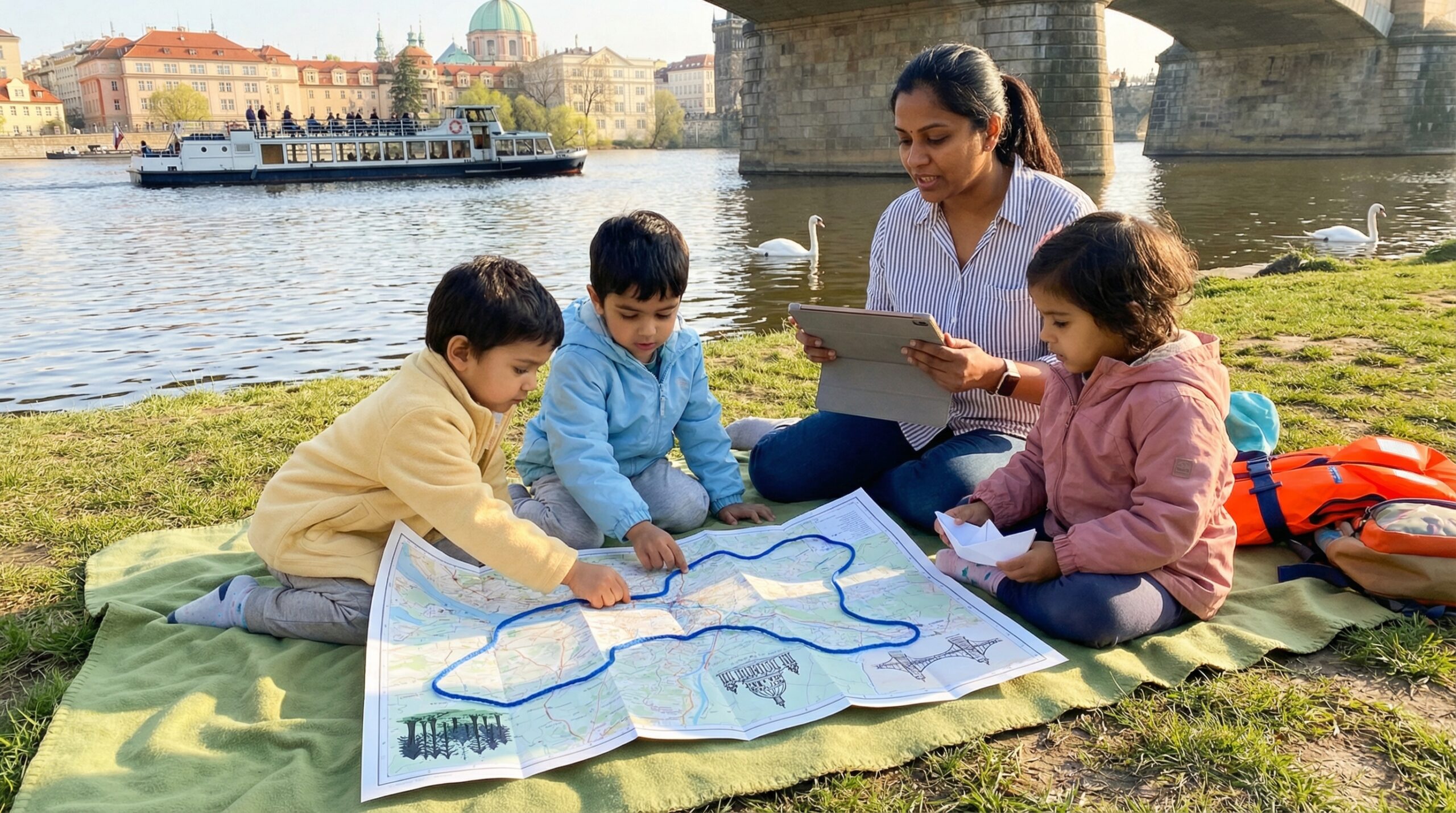
- Five-minute map hunt: Give a paper map or screen. Trace the river from Donaueschingen to the Black Sea. Count countries and mark the four capitals.
- Delta nature sketch: Bring crayons and a small jar. Sketch reeds, birds, or a tiny crab after a safe river walk.
- City comparison: Pick Vienna, Bratislava, Budapest, and Belgrade. Which skyline looks oldest? Which has a big bridge? Tiny observations lead to bigger questions.
Safety note
Stay on managed paths. Keep a hand on small explorers near banks. Choose supervised riverfronts for family visits.
Read or listen to a story about Danube River now: For 3-5 year olds, For 3-5 year olds, For 6-8 year olds, For 8-10 year olds, and For 10-12 year olds.
Also, try a short ritual for story time: a bell, a bookmark, or a map card. Then listen as the Danube tells its long, calm tale. For more family stories and the app, visit Storypie.