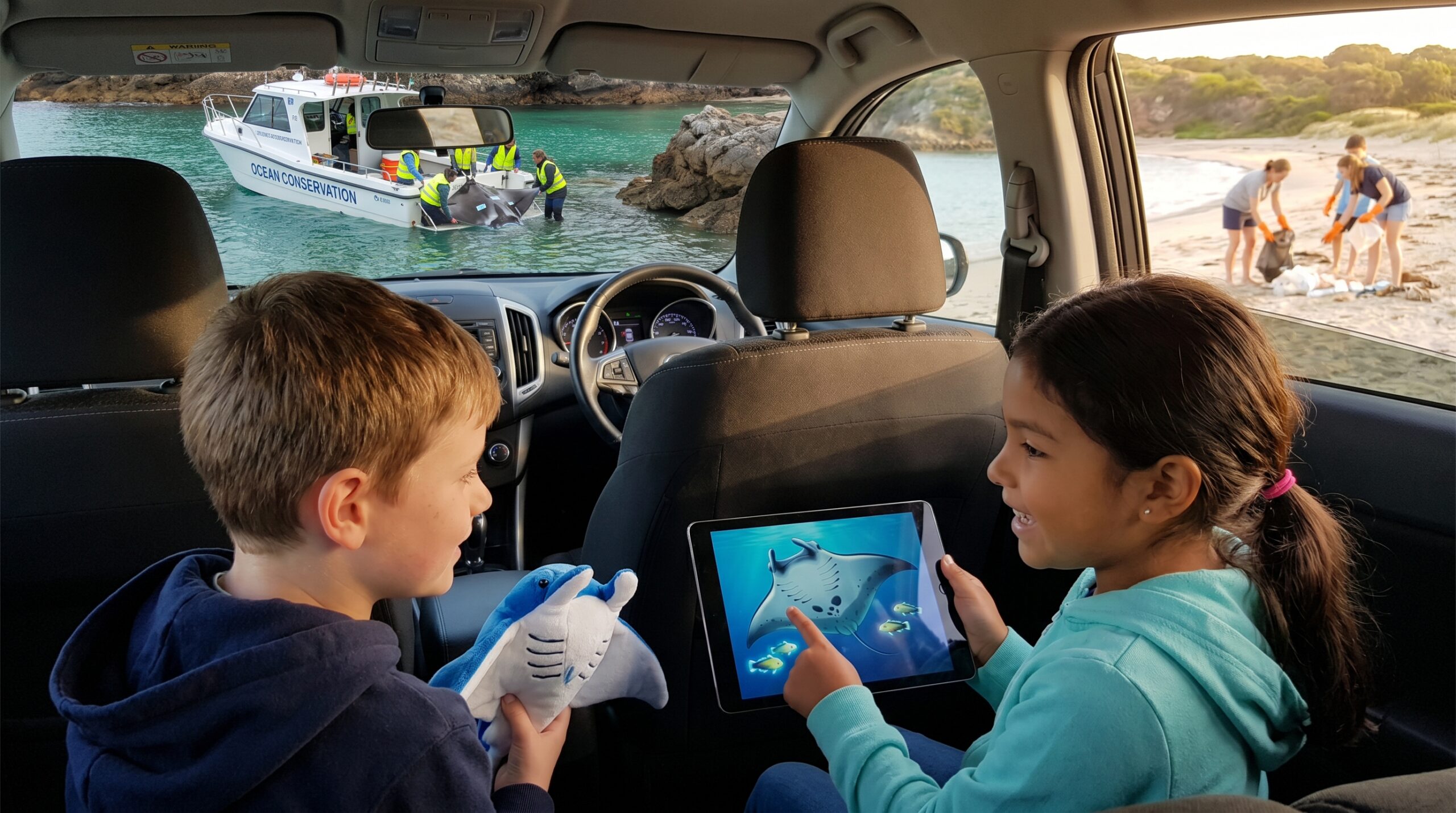
Giant Manta Ray for Families: Meet a Gentle Giant
Meet the giant manta ray for families. This gentle giant lives in warm seas around the world. Kids and grownups alike find them calm and curious. Also, the name manta comes from Spanish. Scientists call this species Mobula birostris. Some sailors once called them devilfish because of horn-like fins. What a show, really!
Size, look, and unique markings
Adults span 4 to 5 meters across, which is about the size of a small car. Some reach 6 meters or more, and they can actually reach a wingspan of up to 29 feet (8.8 meters) and weigh as much as 5,300 pounds (2,404 kilograms). Their pectoral fins look like big wings. Two cephalic fins help funnel plankton into a wide mouth. Meanwhile, the belly carries a unique spot pattern. That pattern acts like a fingerprint. Scientists photograph bellies to track individuals. It is clever and simple.
Where giant mantas live
Giant manta rays prefer tropical and subtropical seas. Look for them near reefs, seamounts, and upwelling zones. There, plankton rises and feeds them. Some mantas migrate long distances to follow food. They can also dive deep when hunting. In short, they roam and explore.
How they feed
Mantas are filter feeders. They sweep tiny animals called plankton from the water. Often they cruise slowly while feeding. Also, they perform barrel-rolls through dense plankton patches. Their cephalic fins guide food into their mouths. Simple, clever, and effective.
Friends, behavior, and surprises
Mantas visit reef cleaning stations where small fish pick off parasites. They return to the same spots again and again. Sometimes large groups gather for feeding and social behavior. They also breach the surface, leaping into the air. Scientists think breaching may help communication or courtship. Mantas often show curiosity and approach divers. They are gentle and unforgettable.
Life cycle and conservation note
Mantas grow slowly and can live for decades, with a lifespan of up to 45 years. Females mature around 6 to 10 years, reaching sexual maturity at a disc width of approximately 12.5 to 16.4 feet (3.8 to 5 meters), while males mature at about 11.5 to 13.1 feet (3.5 to 4 meters). Pregnancy lasts about 12 to 13 months, with most births giving a single pup. Therefore, populations recover slowly after losses. Natural predators include large sharks and orcas. However, human threats are bigger.
Threats and protections
People cause major harm through targeted fishing for gill plates, bycatch, and entanglement. Pollution and boat strikes also pose risks. Yet international protections now include mantas in trade and conservation agreements. Many countries offer legal protection. Responsible ecotourism gives local communities reasons to protect manta habitat. That helps conservation in practical ways.
How scientists study giant manta rays
Researchers use belly-spot photo ID, acoustic tags, and satellite tags. Additionally, diver reports and photo databases help map movements and estimate populations. These tools form the backbone of manta conservation.
How families can help
Families can take small, helpful actions that add up. For example:
- Give mantas space and do not touch them.
- Pick reef-safe sunscreen to protect sea life.
- Reduce single-use plastics at home.
- Choose eco-conscious tour operators for manta watching.
- Join local beach cleanups and support community efforts.
Above all, teach kids to watch quietly and say wow. Stories spark curiosity and care. Storypie offers a gentle, hopeful tale you can play during a drive or before bed.
Read or listen to a story about Giant Manta Ray now: For 3-5 year olds, For 6-8 year olds, For 8-10 year olds, and For 10-12 year olds.
Also explore more on Storypie for family-friendly nature stories. Enjoy the wonder, keep it kind, and watch young minds widen like manta wings.