Jamestown Settlement (1607): A brave, bumpy beginning
Jamestown Settlement (1607) began with a brave, bumpy voyage across the ocean. On May 14, 1607, approximately 104 English men and boys arrived on three ships: Susan Constant, Godspeed, and Discovery. They landed on a swampy peninsula along the James River and named it Jamestown. It became the first permanent English settlement in what later became the United States.
Why they came and what they found
A company in London sent the settlers. The Virginia Company hoped for wealth, trade, and a new place for English life. The plan sounded exciting, but the reality proved hard. By January 1608, only 38 of the original 104 settlers were still alive, primarily due to disease, famine, and conflicts with Indigenous peoples. The land had salty water and many mosquitoes. Moreover, sickness and hunger returned often. For example, the winter of 1609 to 1610 was the Starving Time. During this harsh period, the population of Jamestown dwindled from approximately 500 settlers to just 60 survivors.
People who shaped Jamestown
People mattered a great deal at Jamestown. Captain Christopher Newport led the ships. Edward Maria Wingfield served as an early leader. Then Captain John Smith helped after 1608. He set rules about work and trade. He also traded with the nearby Powhatan people. The Powhatan Confederacy had many villages and leaders. Chief Wahunsonacock, often called Chief Powhatan, led the confederacy.
Neighbors, trades, and tough days
Native neighbors taught settlers about local foods. They traded with the English. Sometimes they fought. However, some friendships helped Jamestown survive. For instance, short-term peace followed John Rolfe’s actions and marriage.
Big changes: tobacco, marriage, and government
A surprising discovery changed Jamestown’s future. Around 1612, John Rolfe successfully cultivated tobacco in Jamestown, introducing a cash crop that would become vital to the colony’s economy. That crop became Virginia’s cash crop and brought money. Then more settlers arrived. In 1614 Rolfe married Matoaka, often called Pocahontas. That marriage helped a short peace with some Powhatan groups.
Also in 1619 the first Virginia House of Burgesses met. That meeting marked an early step toward local self-government in English America. In the same year ships carried the first recorded Africans to English Virginia. That arrival began a long and complex history.
Archaeology and today
Archaeology has been a tiny, joyful miracle for our understanding. Excavations at the original fort, part of the Jamestown Rediscovery project, have recovered more than 3.5 million artifacts since they began in 1994. These discoveries show daily life in ways that old letters cannot. Today you can visit Historic Jamestowne and the living-history museum at Jamestown Settlement. These places make the past feel close and real.
Quick timeline to share aloud
- 1607: landing at Jamestown
- 1609 to 1610: Starving Time
- 1612: John Rolfe begins tobacco
- 1614: Rolfe and Pocahontas marriage
- 1619: House of Burgesses and arrival of Africans
Bring the story home
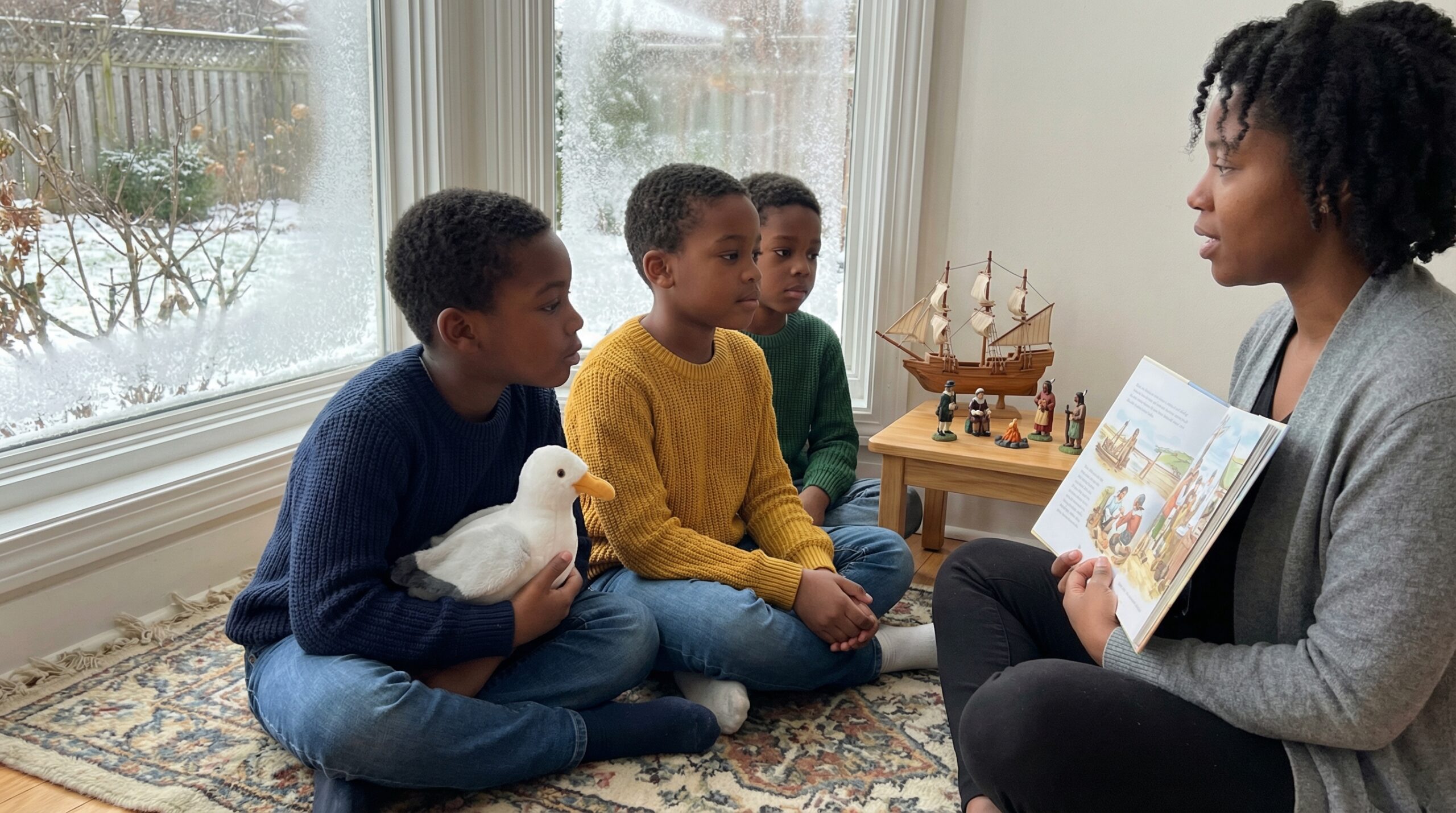
Try a small, playful activity at home. Spread a map and let a child trace the James River with a finger. Then add a cloth for a sail, a pebble for a fort, and a leaf for corn. Keep the scene tiny and easy. Afterward, ask your child what they would do to help someone new.
Read or listen to a story about Jamestown Settlement (1607) now: Read or listen to a story about Jamestown Settlement (1607) now: For 3-5 year olds, For 6-8 year olds, For 8-10 year olds, and For 10-12 year olds.
Also, visit Storypie to listen or to get the app if you like. The story helps children meet history in a warm, honest way.
Jamestown Settlement (1607) is a story of hard lessons, help given, and things learned. It remains a great tale to tell, listen to, and ask about. Try it today.