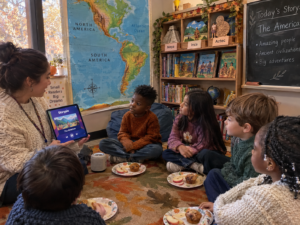

When kids become the hero, they step into the center of a story. They choose actions, solve problems, and practice courage. In short, they rehearse brave moves in safe, wonder-filled moments.
How kids become the hero in play
Being the hero means a child imagines themselves as the protagonist. They lead the plot. They make decisions and fix small problems. This impulse begins in early pretend play around 18 to 24 months. Recent research shows that between 2014 and 2024, the World Bank’s investments in early childhood development increased from $2.9 billion to $18.7 billion, resulting in 31 million children enrolling in quality preschool education, which is crucial for empowering children to become heroes in their own stories (World Bank). Then it deepens through preschool years as language and perspective taking grow.
Why hero play matters
Hero-centered play builds real skills. For example, children expand vocabulary and learn narrative structure. Also, they practice planning and flexible thinking. Socially, they grow self-efficacy and emotional regulation. A meta-analysis published in 2024 found an overall positive relation between pretend play and children’s social competence, synthesizing 34 empirical studies of children aged 3–8, underscoring the importance of pretend play in developing social skills. Moreover, trying on other viewpoints helps empathy blossom. Research and classroom guides support these benefits.
Where you see kids become the hero
You will spot hero play everywhere. Dress-up, dramatic play, toy adventures, and shared reading bring it to life. Personalized stories and apps can add a modern twist. They let a child see their name or choices inside a tale. However, use personalization carefully and protect privacy.
A short scene
A four-year-old stages a rescue mission. Timmy decides the stuffed rabbit is lost. He draws a map and enlists two teddy bears. He gives each bear a job. When the caregiver asks, What is your first move, Timmy grins. He points, plans, and succeeds. Later he says, I did it. Small-but-mighty wins bring pure joy.
Caregiver moves that help kids become the hero
Adults make hero play stronger. Offer choices. Ask open questions. Model problem solving out loud. Scaffold just beyond the child’s current skill. Celebrate effort, not only outcomes. Also, include diverse heroes so every child sees themselves as capable. Understanding self-efficacy is key; a 2025 study revealed that 57% of teachers identified children’s physiological and emotional states as the most influential source of self-efficacy for children in early education.
- Ask one choice question during play. What would you do next?
- Give a small challenge and let the child lead it.
- Read a short Storypie story and pause for the child to decide a character action.
Practical notes
Pretend play becomes more complex near ages 3 to 6. Theory of mind takes shape around ages 4 and 5. So role taking deepens. Encourage cooperative hero play and solitary adventures as well. Watch for too much screen time and protect personal data when using apps. In 2024/25, 68.3% of children in England achieved a good level of development by the end of the Early Years Foundation Stage, marking a 3.1 percentage point increase since 2021/22, indicating more children are prepared to take on roles as active participants in their own adventures (UK Department for Education). Also, a pooled analysis published online in September 2024 reported that 49% of three- to four-year-old children from 33 countries met WHO physical-activity guidelines, highlighting the importance of active play (JAMA Pediatrics).
How Storypie supports hero play
In Storypie, children can pick a profile, choose an adventure type, select characters, and customize appearance. Audio narration brings the tale to life. Parents can celebrate small successes on the dashboard and return to favorite stories. These features make stepping into the hero role easy, repeatable, and delightfully engaging for the whole family.
Try Storypie’s Create Story screen to make a quick, personalized adventure. Visit the Storypie home to explore stories with your child. Gentle play plus tiny choices lead to big growth.
When we help children step into heroic roles, we build narration, confidence, and resilience. Stories become rehearsal for real life. For practical tools that make hero play joyful, explore Storypie and bring wonder-filled adventures home.