
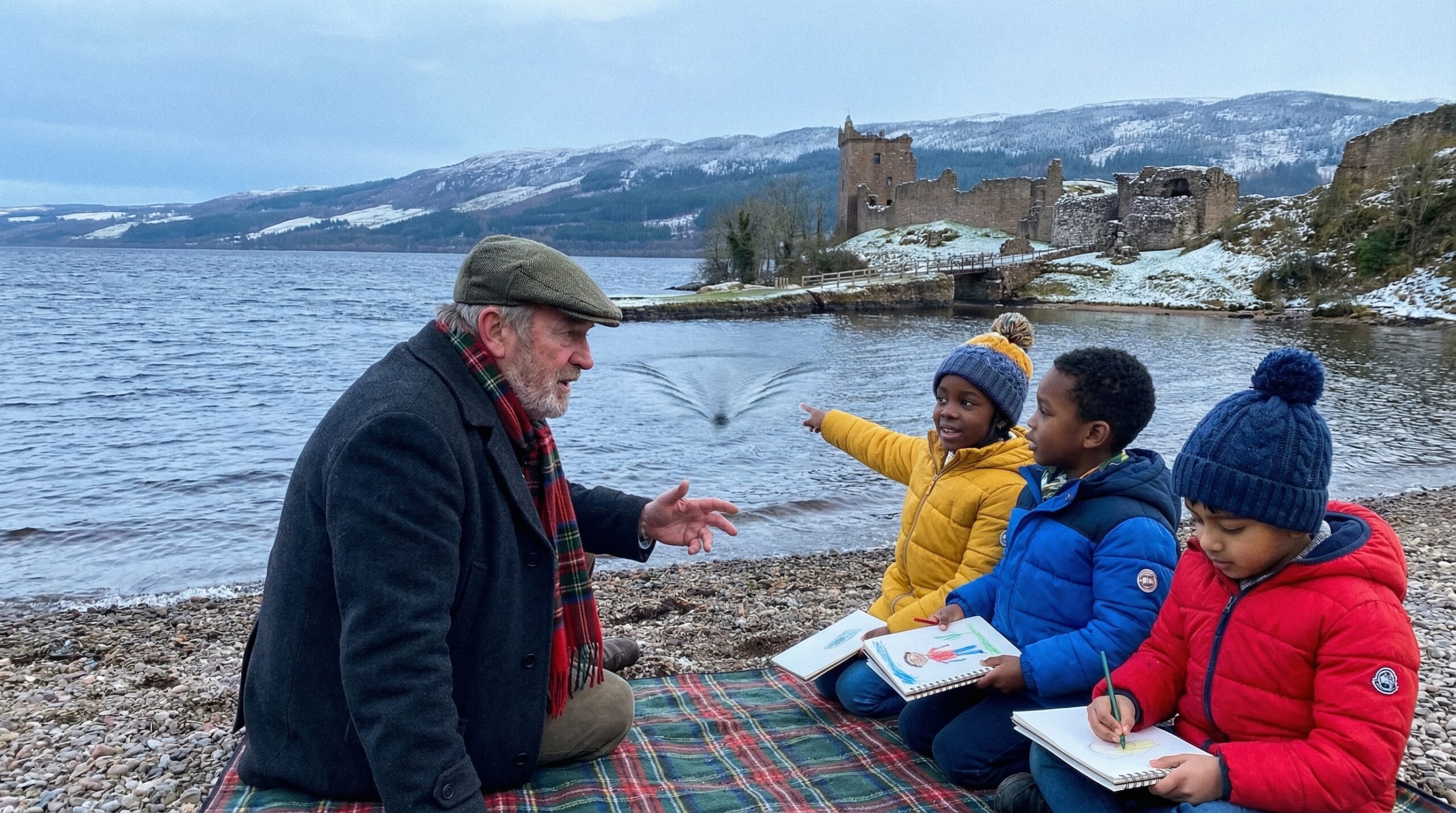
The Loch Ness Monster Scottish stirs curiosity and delight across the Highlands. The loch itself lies in the Great Glen. It runs about 23 miles and reaches nearly 750 feet deep. It holds more freshwater than all the lakes of England and Wales combined. That setting makes the story extra mysterious and extra grand.
Loch Ness: the place behind the legend
Loch Ness sits in a long valley carved by ice. It feels big and ancient. The water stays cold most of the year. Visitors often bring binoculars and warm coats.
For many people the size and depth feed the idea of a large creature. However, the loch also creates strange waves and reflections. Long, slow seiches can make the surface behave oddly. From a distance, waves, logs, or swimming animals can look uncanny.
Loch Ness Monster Scottish: stories and sightings
The tale of the Loch Ness Monster Scottish begins early. One of the oldest stories comes from St. Columba in the sixth century. In that account a dangerous water creature threatened a swimmer. Later, reports rose again after a 1933 sighting. The press spread the story far and wide. As of October 2025, there have been 1,163 officially recorded sightings of the Loch Ness Monster, showcasing the ongoing intrigue and cultural significance of this legendary creature.
In 1934 the Surgeon’s Photograph became an iconic image. Decades later people revealed it was a clever hoax. That twist brought more fascination, and more fun mischief, to the legend.
Searches and science over time
In the twentieth century many observers reported sightings. Amateur watchers used cameras and binoculars. In 1987 Operation Deepscan sent a fleet of boats across the loch. They used sonar to listen for echoes and map underwater shapes.
Sonar sends sound pulses and listens for returning echoes. It helps show objects below the surface. In 2018 scientists ran an environmental DNA survey. They sampled loch water for genetic traces. The study found fish DNA and abundant eel DNA. It did not find evidence of a large unknown reptile. In fact, analysis of the Loch Ness eDNA data detected DNA from roughly 3,000 species and showed a very large amount of eel DNA, while no reptilian sequences were found, suggesting that a ‘giant eel’ explanation remains plausible.
In August 2023, the largest search for the Loch Ness Monster in 50 years was conducted, utilizing modern technology such as thermal-imaging drones, infrared cameras, and hydrophones, demonstrating the continued efforts to investigate this enduring mystery according to the Associated Press.
Why a plesiosaur is unlikely
Many people imagine Nessie as a plesiosaur. That idea is dramatic and fun. Yet plesiosaurs went extinct 65 million years ago. They lived in oceans, not a single freshwater loch.
Also, a breeding population would need food and room. It would also leave fossils or other proof. Science finds that scenario implausible. Still, the image of a long-necked creature inspires lively imaginations.
Everyday explanations and how the legend helps
Most sightings have simple explanations. Seals, otters, large eels, floating logs, and birds can all appear mysterious. Optical illusions and the brain’s wish to see something special play a role.
At the same time the legend benefits the Highlands. Loch Ness inspires books, films, souvenirs, and boat tours. Visitor centres, including the Loch Ness Centre and Exhibition, welcome curious families. Research shows that the Loch Ness Monster legend contributes nearly £41 million annually to the Scottish economy, showcasing its importance to local tourism and the economy.
Family tips and a gentle invite
Loch Ness makes a great teaching place. Tell stories, then look at the evidence together. Ask simple questions about distance, light, and other causes. Keep safety first near deep, cold water. Stay on marked paths and wear lifejackets on boats.
For a cozy family moment, bring a thermos and binoculars. Listen to tales and let imagination bloom. Also, try a friendly activity on Storypie to spark wonder. Read or listen to a story about The Loch Ness Monster – Scottish now: For 3-5 year olds, For 6-8 year olds, For 8-10 year olds, and For 10-12 year olds. You can also get the app to enjoy stories together.
Visit the loch, enjoy the museum, and savor a tale that balances imagination and inquiry. Happy exploring, and may your family find a little mystery on the water.