
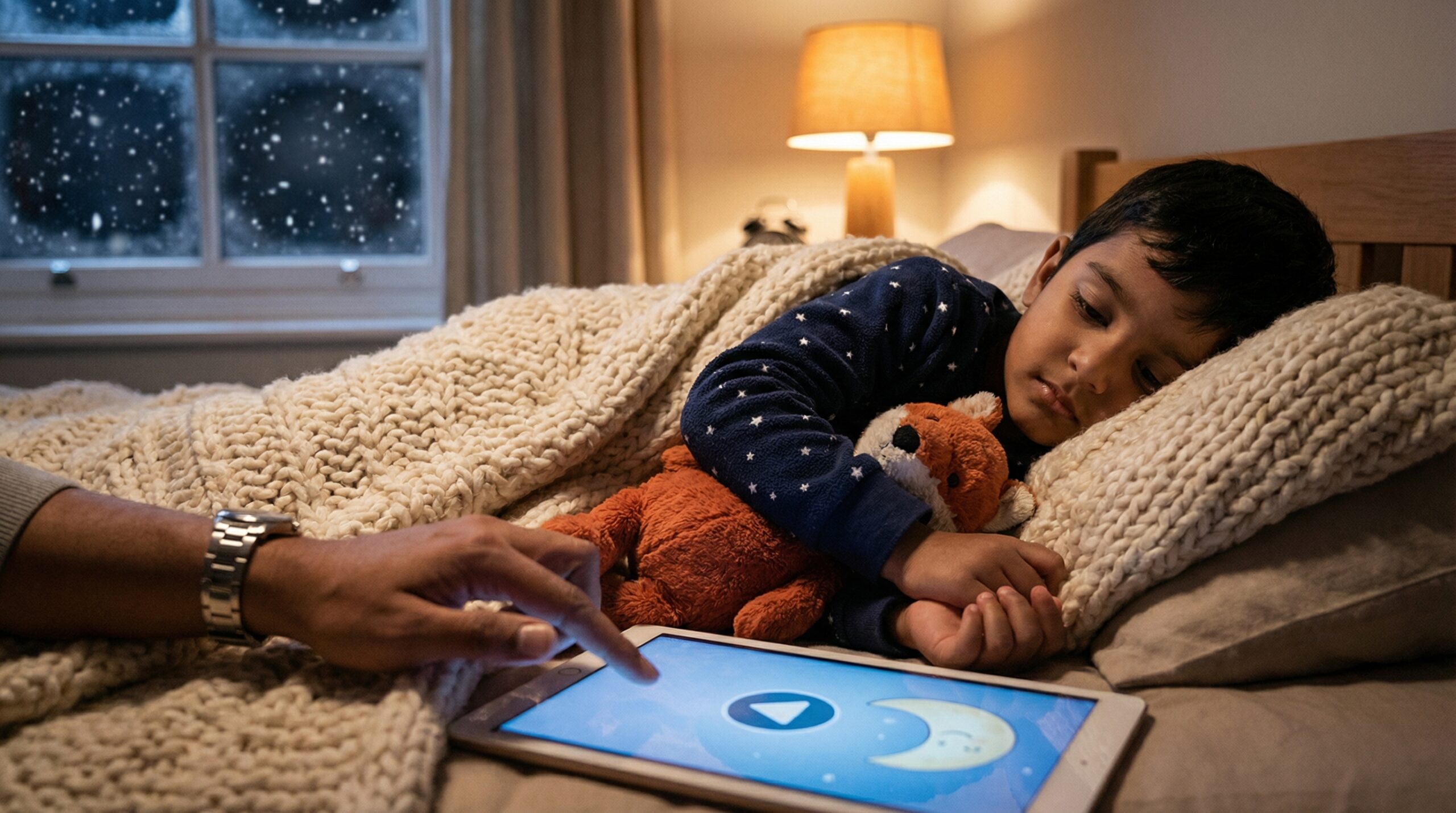
Mini story bedtime ritual: a simple signal for sleep
A mini story bedtime ritual gives a short, gentle ending to the day. Parents and teachers often use this mini story bedtime ritual to help children shift from play to rest. In fact, a nationally representative C.S. Mott Children’s Hospital poll revealed that 90% of parents of 1–6‑year‑olds reported having a bedtime routine for their child, with 67% including reading bedtime stories. This highlights the importance of storytelling in helping children wind down. Keep it predictable, calm, and just a little cozy.
What the ritual looks like
This ritual lasts about three to ten minutes. Five minutes is a sweet, practical choice. It usually uses a soft voice or audio only, so lights stay dim. The mini story bedtime ritual is child-centered and low fuss. It offers a steady routine children can trust. Research shows that 71% of parents believe storytelling helps their children wind down at bedtime, with 49% naming it their preferred method for relaxation. This supports the effectiveness of storytelling as a calming bedtime ritual for children.
Why the mini story bedtime ritual matters
Regular cues shape sleep habits. When a child gets the same sensory signals night after night, the brain begins to expect sleep. As a result, sleep often begins faster and nights stay steadier. In a longitudinal study published in the Journal of Developmental & Behavioral Pediatrics, children exhibited that greater night-to-night variability in sleep onset timing was linked to increased impulsivity and poorer emotion regulation. This emphasizes the importance of consistent bedtime routines, which can be supported by a mini story ritual. The ritual also supports language exposure and closeness. Hearing short stories builds vocabulary and rhythm. Cuddles during the ritual help children feel safe and calm.
Practical gains
In busy homes, a compact ritual respects time. It gives emotional closure to the day. Also, it fits small attention spans. For toddlers and early readers, short calm pieces work best. A 2025 study reported that 42% of adults said that 10–20 minutes of bedtime reading improved their sleep quality, indicating that integrating a mini story ritual can be beneficial not just for children but for parents as well.
How families keep it simple
Curation beats clutter. Keep a small rotation of short stories on a low shelf or in a small basket. Pick one hero story for the week to limit choices. Also, prefer audio-first sources or low-brightness playback to reduce screen glow.
Cozy cues
- Dim the lights and add a warm blanket.
- Use a soft voice or play gentle audio.
- Keep devices out of the bed and use parental controls when needed.
Formats, safety, and a note on sleep troubles
The ritual works as live reading, prerecorded audio, smart speaker play, or app narration. Audio-only formats lower visual stimulation. When using apps, check settings and privacy. For persistent sleep problems, consult a pediatrician or sleep specialist to rule out underlying issues. Notably, nearly 1 in 5 parents (19%) reported having given their young child melatonin to help with sleep, and about one-third (31%) said they often stay in the room until the child falls asleep. This context highlights the potential benefits of a calming bedtime story ritual as an alternative to sleep aids.
Quick checklist: mini story bedtime ritual
- Keep stories short and calm.
- Prefer audio-only or low-brightness play.
- Maintain a small rotating library.
- Create cozy cues: blanket, dim light, soft voice.
- Keep devices out of the bed and enable parental controls.
Tiny rituals change evenings. Try a five-minute Storypie audio-first tale tonight to test the habit. Visit the Storypie app to browse calm mini stories and gentle audio for kids: Get the Storypie app. For more about Storypie and the app, see the Storypie homepage.
Finally, remember this is a small habit with big returns. The mini story bedtime ritual is simple, dependable, and delightfully cozy.