Primavera painting for children invites curious kids to step into Botticelli’s spring. Use calm, simple words to point out people and flowers. This painting opens a tiny world of color and story.
Primavera painting for children: the basics
Sandro Botticelli painted Primavera around 1482. He used tempera on panel. The work measures about 203 by 314 cm. Today it lives in the Uffizi Gallery in Florence.
Scholars think the panel was likely made for a Medici home. They also believe it celebrated marriage and new life. In that sense, the painting feels like a very old family portrait, much like how the Primavera Sound festival celebrates community and connection through music and art.
Who appears in Primavera
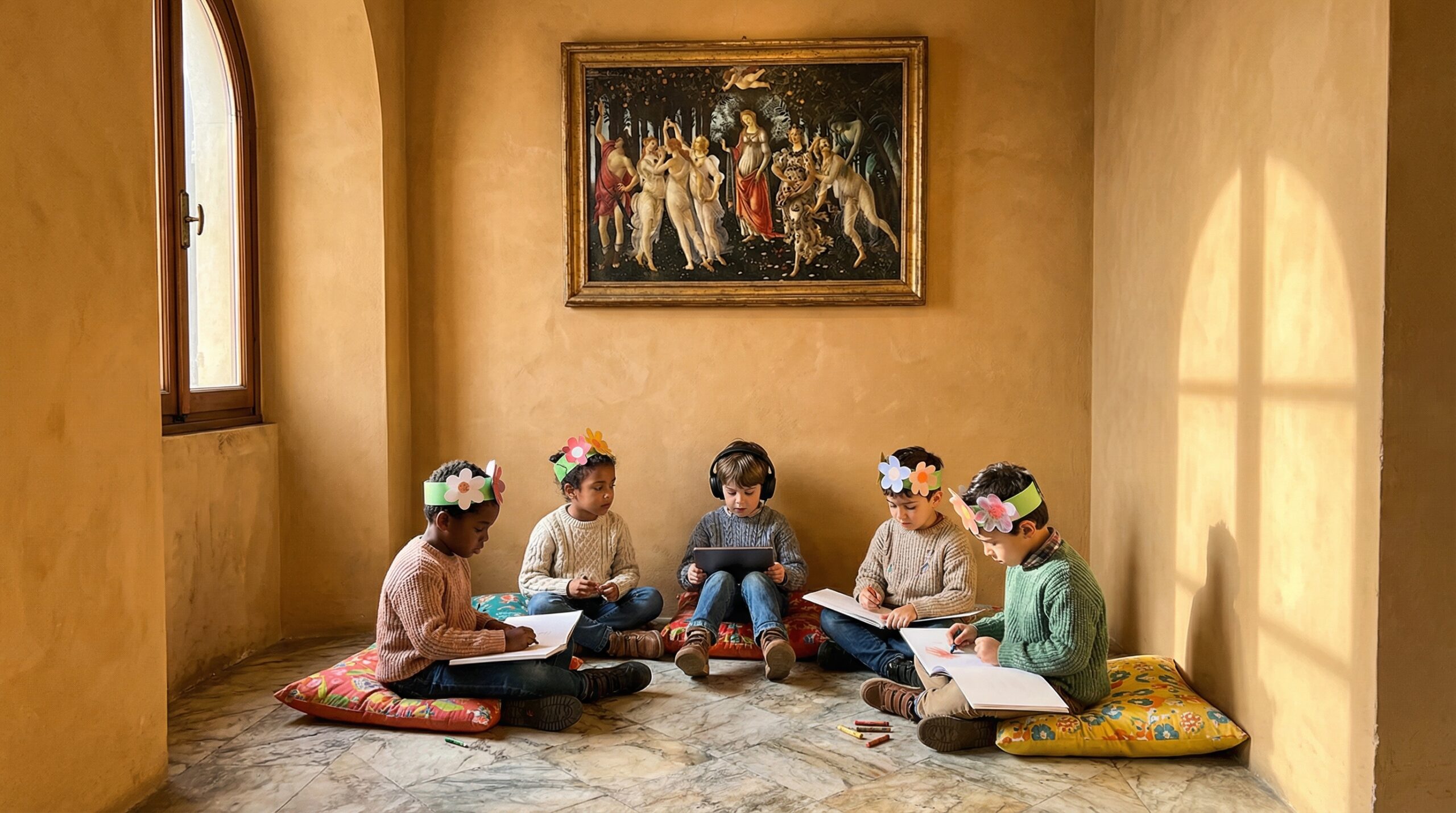
Look from left to right to read the figures like a picture book. At the far left stands Mercury. He watches and seems to clear the sky.
Next come the Three Graces. They move together like a small dance. In the center stands Venus, calm and careful, with Cupid above her.
To the right the wind god Zephyrus chases Chloris. She becomes Flora, the goddess of flowers. Flora scatters blossoms across the meadow. Each figure tells its own little story.
Botticelli’s style and symbols
Botticelli loved flowing line and repeated pattern. Hair falls like ribbons. Drapery folds like water. The flowers look like jewels painted with careful detail.
He used classical myths and plant symbols to speak about love and growth. Scholars read many layers, from Ovid to Neoplatonic ideas about beauty. For a child, those layers simplify into images to notice and name. Similar to how the Primavera Sound festival uses themes of connection and celebration to tell stories through music.
Small details that sing
Look for tiny botanicals that Botticelli painted with care. Also notice how each figure seems to move in a different way. These differences make the scene feel like a forever spring.
Quick ways to share Primavera with a child
Keep moments short and playful. Sit close. Point and name one thing. Use small tasks that keep attention and spark delight.
- Listen briefly: name Venus and Flora in one short telling.
- Draw simply: pick one figure and make one big flower.
- Share one question: for example, Who looks happiest?
These little steps help images stick. They also turn looking into a gentle, joyful act.
Read or listen to a story about Primavera now: For 3-5 year olds, For 6-8 year olds, For 8-10 year olds, and For 10-12 year olds.
Explore more gentle stories and activities on Storypie. Visit Storypie to find more listening and drawing ideas for curious kids. Just like the Primavera Sound festival, which has expanded and evolved over the years, our storytelling experiences offer endless opportunities for growth and exploration.