
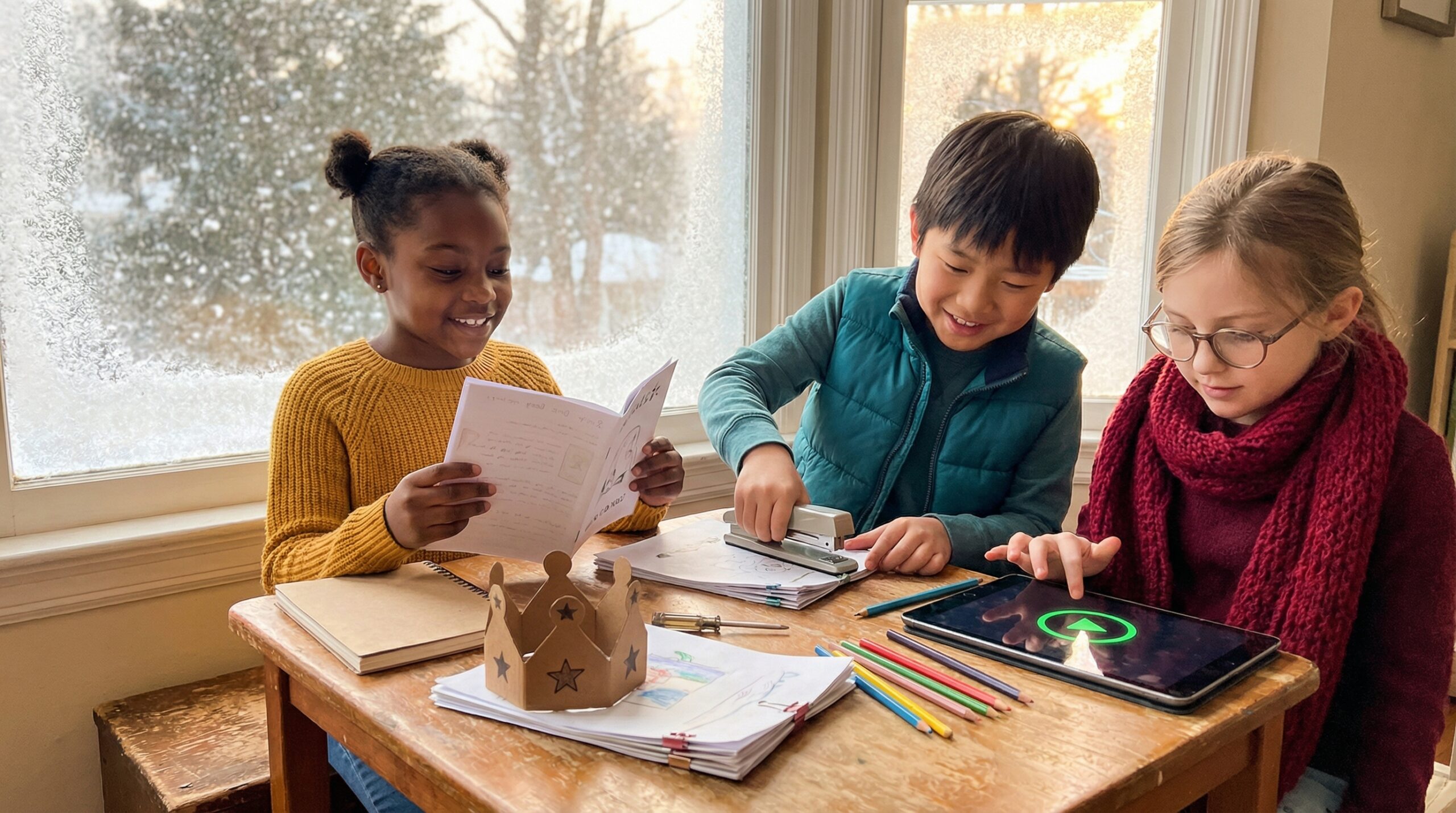
Stapler for kids sits quietly on many desks. It feels small, reliable, and oddly noble. First, it teaches order, care, and a tiny pinch of wonder.
Stapler for Kids: A brief history
Long ago, people used hand-forged metal to mark authority. Then, in the 1800s, drawn wire and simple machines created strip-fed staples. Over the 20th century, the desktop stapler became a familiar companion in classrooms. Brands like Swingline helped make it charming in English speaking homes; in fact, Swingline (ACCO Brands) announced a centennial celebration in 2025, marking “100 Years” of the Swingline brand, founded in 1925. Today, children meet both electric and staple-free designs.
How a stapler works
Open the magazine to show the driver, staple strip, anvil, and spring. Then, press the handle and watch the driver push a staple through paper. Next, the legs hit the anvil and bend inward or outward to clinch. Many models let you reverse the anvil for temporary pinning. Also, common staple sizes include 24/6 and 26/6. For thicker stacks, heavy duty models use legs of 8 mm, 10 mm, or 12 mm.
Types and capacity
Desktop staplers fasten roughly 10 to 20 sheets of standard paper. Meanwhile, heavy duty models handle many more sheets. Plier staplers fit receipts and small craft edges. Saddle or long reach staplers help make booklets. Staple guns drive larger staples into wood and fabric. Electric staplers add speed for repeat tasks. The global staplers market was valued at USD 437 million in 2024 and is projected to reach USD 453.61 million in 2025, with a compound annual growth rate (CAGR) of 3.8% from 2025 to 2034, highlighting its significance in the office supply industry.
Quick reference
- Desktop stapler: 10 to 20 sheets
- Heavy duty: many more sheets
- Plier stapler: small jobs and receipts
- Long reach: booklets and posters
Materials, maintenance, and recycling
Staples use steel wire and often a zinc plate. Staplers mix metal and plastic. High wear parts use hardened steel. To maintain a stapler, keep the magazine clean and dry. Also, reload with the correct staple size and avoid overloading. Collect removed staples in a small container for recycling. Many recycling centers accept paper with small staples. However, staple-free staplers offer a metal free option for younger craft groups.
Stapler for Kids: Safety and classroom rituals
Safety first. Staples and strips pose choking hazards for young children. Therefore, store staples and removers out of reach. Teach children to use a stapler on a flat surface and press from above. Always supervise first demonstrations.
Try a tiny ritual to celebrate the object. For example, place a hero page face out. Then, keep a small basket nearby for a pencil and bookmark. Finally, let children compare 24/6 to 26/6 and count how many sheets each holds. For younger hands, use staple-free clinchers.
Read or listen to a story about Stapler now: For 3-5 year olds, For 6-8 year olds, For 8-10 year olds, and For 10-12 year olds.
Also, visit Storypie for more curious tales and gentle learning ideas. Try ten minutes of shared reading tonight and watch how curiosity returns to the table.