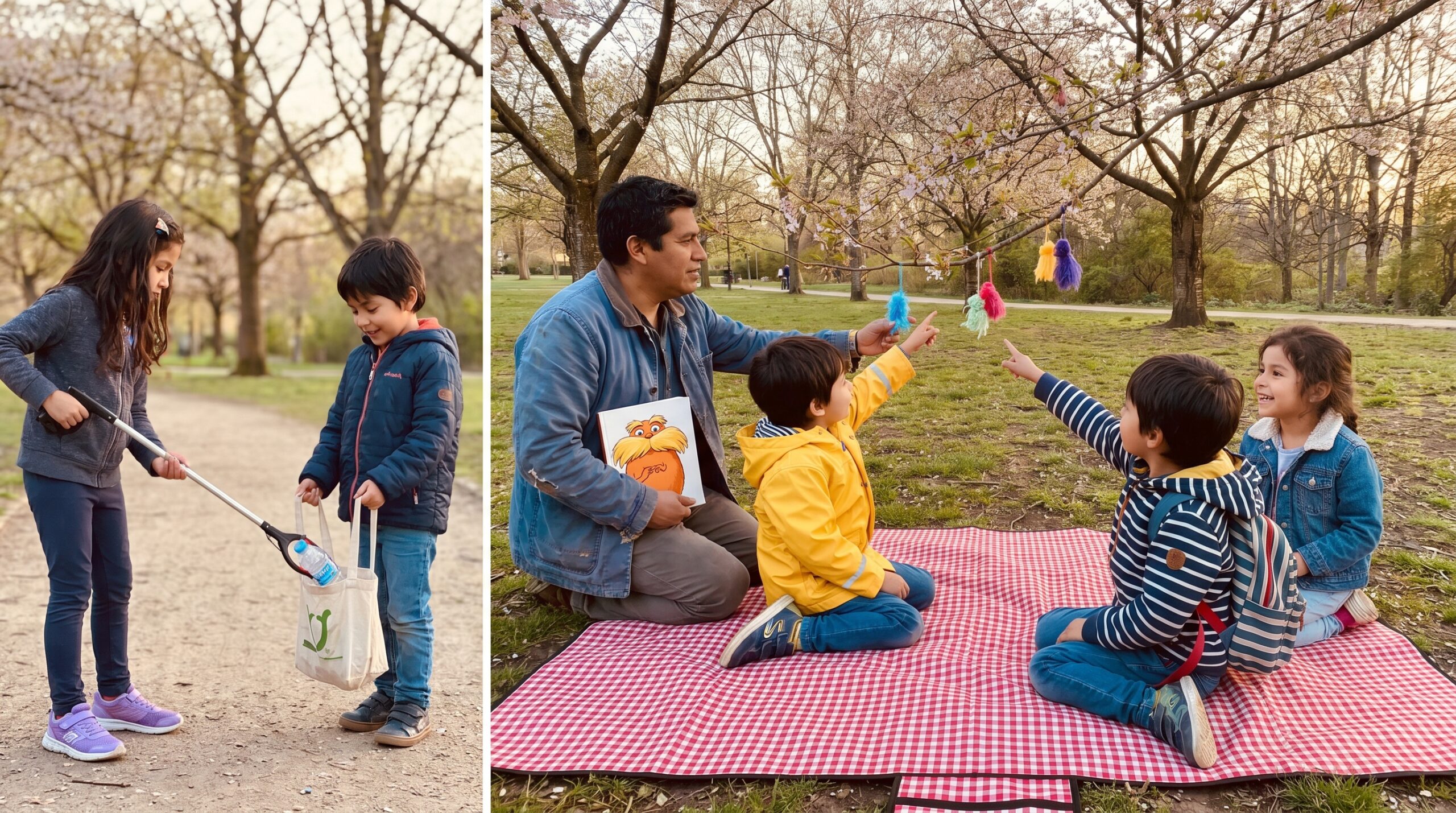
I love reading The Lorax book on Storypie. Each spring I read it aloud and watch kids lean in. Dr. Seuss’s bright rhyme and fierce message stick, like a Truffula tuft. After listening tonight, try a ten-minute walk and pick up one piece of litter. Small action, big lesson.
Why The Lorax book works aloud
Theodor Seuss Geisel, known as Dr. Seuss, wrote and illustrated the book in 1971, with its first publication by Random House on August 12, 1971. So, the rhythm moves fast. The rhyme snaps. Kids giggle at weird words and bright pictures. Also, the Once-ler tells the story and admits his mistakes. The Lorax speaks for the trees and warns us. The tone feels urgent and also lovely.
Main characters and memorable images
The Lorax book features a handful of unforgettable figures. First, the Lorax is tiny and grumpy. Yet, he speaks up for nature. Next, the Once-ler narrates and learns a hard lesson. Then, Truffula Trees appear as colorful tufts. Also, the Thneed is a funny, silly product that everyone wants. Finally, the book shows animals who suffer: Brown Bar-ba-loots, Swomee-Swans, and Humming-Fish. One famous line lands hard: “Unless someone like you cares a whole awful lot, nothing is going to get better. It’s not.” Kids often quote that line like a bright handle.
Quick character snapshots
- The Lorax: tiny, direct, and protective.
- The Once-ler: storyteller who admits regret.
- Truffula Trees: colorful, whimsical tufts.
- Animals: Brown Bar-ba-loots, Swomee-Swans, Humming-Fish.
Cultural note and classroom use
The Lorax book crossed into film in 2012, which brought the tale to more families. The feature-film adaptation opened domestically to $70,217,070 and went on to earn $349,305,397 worldwide, highlighting its cultural impact beyond the original book. Teachers and parents use the story to begin talks about recycling and choices. However, some readers debate the message and call it anti-business. I find balanced conversations help children think. In my experience, short plays, posters, and questions work well in class. Also, the author’s life spans 1904 to 1991, and his voice still feels utterly irresistible.
Simple ways to follow up after The Lorax book
Read or listen to a story about The Lorax (book) now: For 3-5 year olds, For 3-5 year olds, For 6-8 year olds, For 8-10 year olds, and For 10-12 year olds.
Try one small plan tonight. For example:
- Ten-minute litter walk. Pick up one piece and talk briefly about why it matters.
- Plant a seed. Then, challenge your child to water it three times this week.
- Make paper Truffula Trees. Quick craft, huge delight.
- Start a tiny recycling bin together. Celebrate the first day you fill it.
I still mess up sometimes. Once I rushed the ending and missed a teachable question. Now I pause and ask: Who speaks for the trees? What could we do tomorrow? Try it tonight on Storypie. We make it easy to listen together. Kid action: choose one small thing to do after the story and do it together.
In fact, on April 6, 2021, Dr. Seuss Enterprises announced a 50th-anniversary program for The Lorax that included new Lorax titles printed on recycled paper and a promotion to donate $1 per copy sold to the reforestation nonprofit One Tree Planted. This ongoing commitment shows the lasting relevance of Dr. Seuss’s message about caring for our environment.