
Introduction
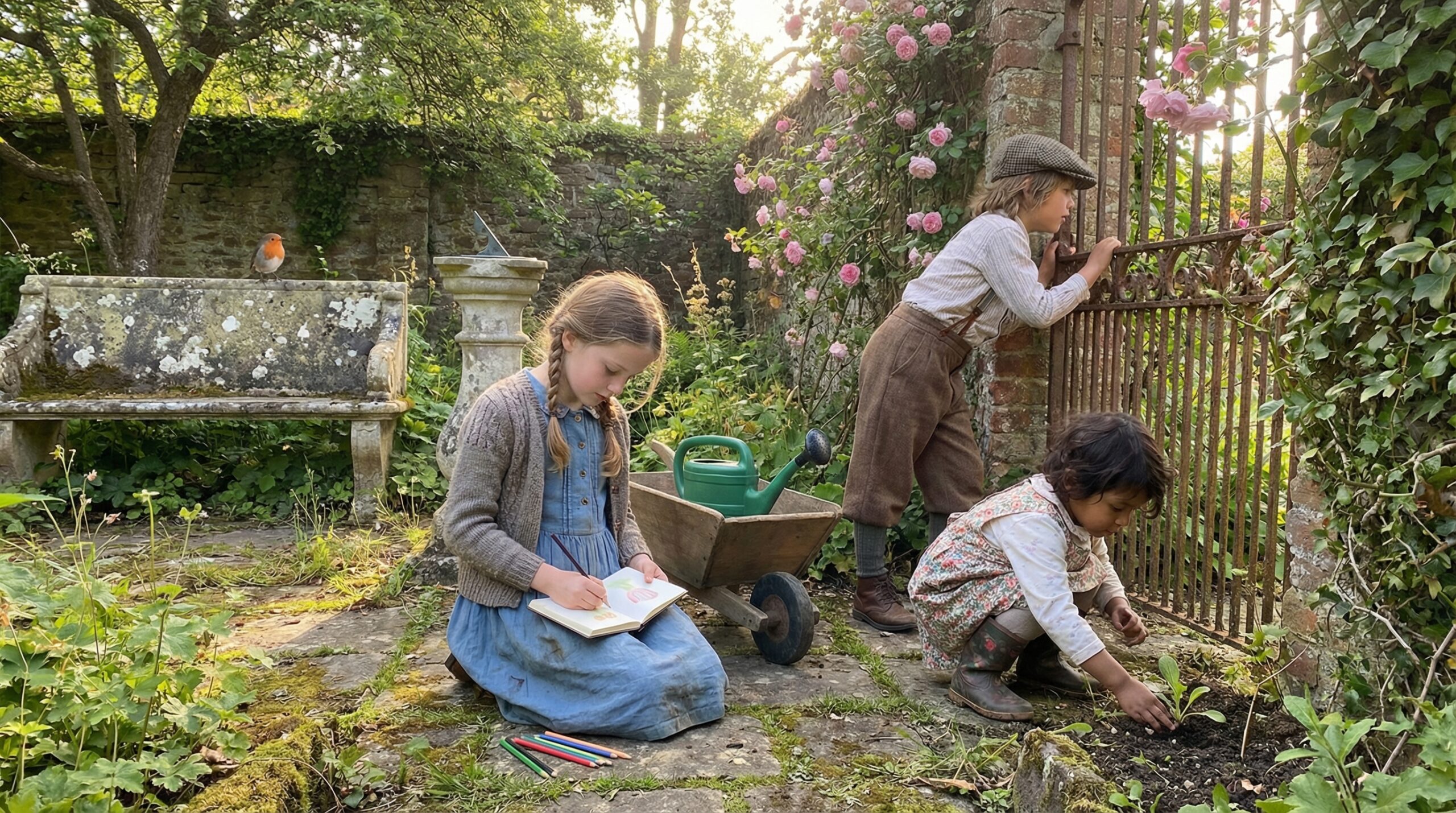
The Secret Garden (novel) is Frances Hodgson Burnett’s gentle Edwardian classic. First published in book form on August 25, 1911, by the Frederick A. Stokes Company in New York, it tells of repair, friendship, and the slow work of nature. Mary Lennox arrives at Misselthwaite Manor after a hard childhood in India. The house is cold and a locked garden waits.
Plot and memorable characters
Mary starts stubborn and alone. Then she meets servants and local folk who shape her days. Martha, Ben Weatherstaff, and Mrs Medlock appear as vivid personalities. Mary follows a robin, finds a hidden key, and opens a secret door. Dickon Sowerby, a local boy who knows animals, helps tend the plot. Colin Craven, the sickly son of the manor, also changes. Together the children and the garden bring life back.
How The Secret Garden (novel) shows nature as therapy
Burnett places seasons, soil, robin songs, and green shoots at the center of healing. Gardening is practical work and quiet ritual. Planting bulbs and watching buds break becomes a steady cure. Moreover, the novel gives children agency. The change feels earned and visible.
Reading qualities and tone
The book reads slowly and rewards patience. For that reason, it delights middle grade readers and family audiences. Also, it works especially well in illustrated or older unabridged editions. The language mixes warmth and firmness. In fact, Burnett balances moral feeling with playful wonder.
Themes and historical context
This is clear Edwardian fiction. It carries a British imperial backdrop. Mary was born in India, and the empire quietly frames some events. Class and servant relations shape life at the manor. Adults grieve and leave. The opening contains parental deaths and references to illness. Therefore, caregivers often prepare younger listeners for those scenes.
Simple activities that echo the book
The Secret Garden (novel) inspires tactile, small-scale projects. For example, families enjoy planting a pot of bulbs or keeping a tiny growth journal. Also, drawing a secret garden on paper captures the book’s imagination. These small rituals echo Burnett’s idea that attention and care change things.
Read or listen
Read or listen to a story about The Secret Garden (novel) now: For 3-5 year olds, For 6-8 year olds, For 8-10 year olds, and For 10-12 year olds.
Why The Secret Garden (novel) still matters
The novel nudges modern readers toward outdoor play, empathy, and slow work. It remains tactile, restorative, and quietly brilliant. Notably, in OCLC/WorldCat’s ‘Library 100’, The Secret Garden is ranked #32 among the top 500 novels based on how widely it is held in libraries worldwide. Additionally, it has been translated into over 40 languages, reflecting its global popularity. Finally, if you want a book that smells faintly of damp soil and new leaves, this is a very good pick.
For more reading and listening options, visit our collection page at Read or listen to a story about The Secret Garden (novel) now. Also, explore Storypie for related children’s classics and audio stories.