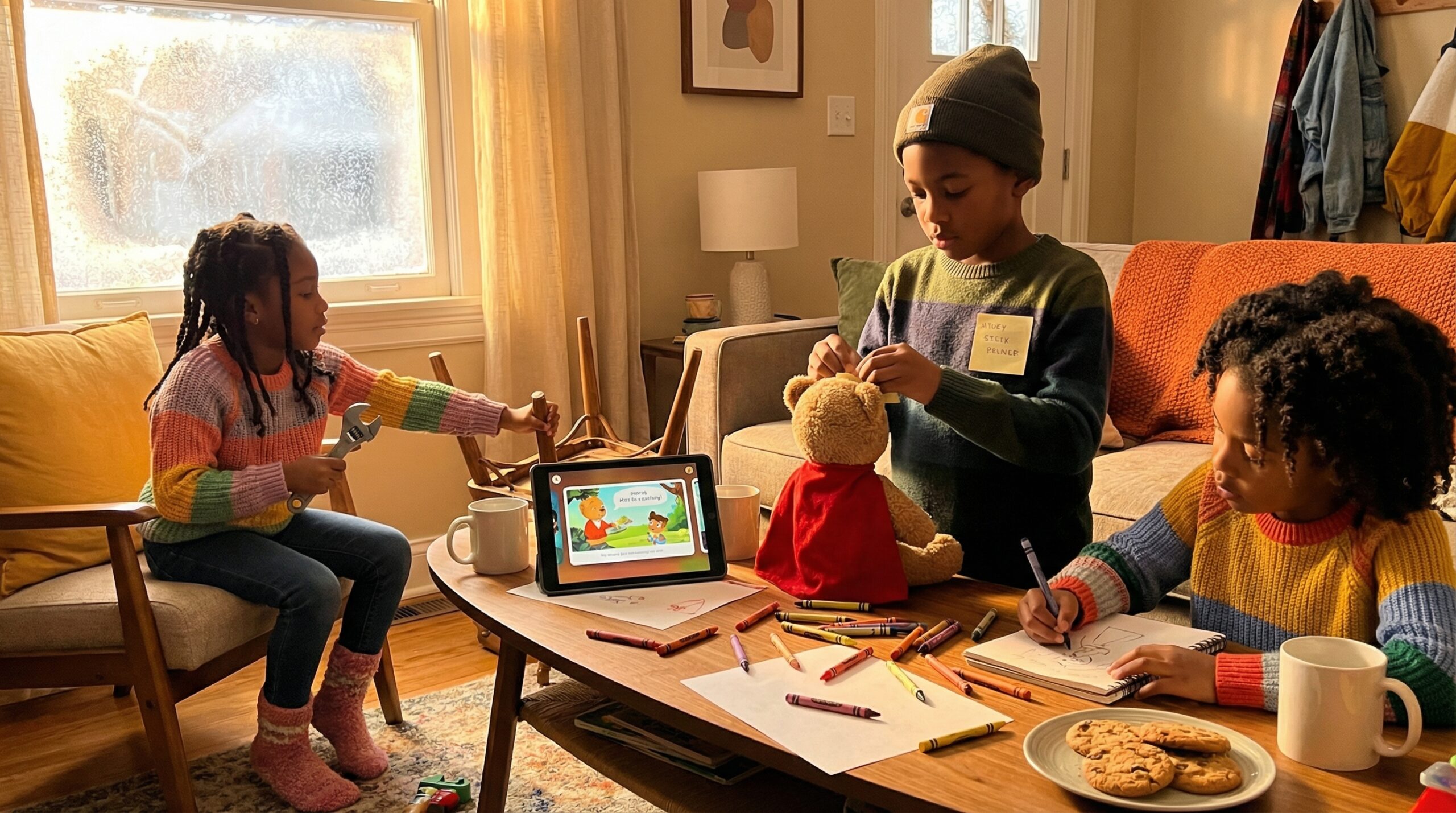
This weekend imagination challenge create your own hero invites children to invent a small helper who fixes a concrete thing at home. It takes 10 to 30 minutes, needs little prep, and sparks joy. In fact, a 2024 study by Crayola found that 92% of children aged 6 to 12 believe that being creative boosts their confidence.
Why the Weekend imagination challenge create your own hero matters
Pretend play builds language, planning, and social thinking. Naming a hero and listing two to three traits supports perspective taking. Also, picking one small fix gives children a clear, achievable goal. They feel effective and proud. Tiny wins lead to big grins. Research shows that pretend play is positively related to social competence in early childhood, as noted in a 2024 meta-analysis published in Educational Psychology Review.
What this challenge looks like
First, prompt the child with one simple question. Next, let them ideate for ten to twenty minutes. Then, offer a short follow-up like a badge or a voice note. The structure keeps the activity quick and playful. Programs that promote structured imaginative activities have shown a 100% increase in children’s creative thinking and a 92% increase in teachers’ skills, according to the Institute of Imagination.
Quick structure for the challenge
- Prompt (5 minutes): Ask, “Invent a hero who fixes one small thing at home. What do they fix?”
- Ideation (10 to 20 minutes): Draw, act, or tell a short scene.
- Follow-up (optional): Make a badge, act out a scene, or record a short voice note in the Storypie app.
Adaptations by age
- Toddlers (2 to 4): Role-play simple actions and repeat a hero phrase.
- Preschoolers (4 to 6): Draw the hero and name three traits.
- Early school-age (7 to 10): Design a small tool and write a one-paragraph backstory.
Example scene and parent prompts
Here is a short example to spark ideas. Child: “My hero is Patch. Patch fixes lost socks.” Parent: “What does Patch do first?” Child: “Patch looks under the bed, sings a soft song, and leaves a sticker on the sock.” Use open questions to guide play. Ask: What small thing would your hero fix now? Name two words that describe how they help. How does the person feel when the hero arrives?
How parents can respond
Reflect the child’s words, add new vocabulary, and celebrate effort. For example say: “So they felt relieved and cozy. That word is relieved. Nice!” This response grows language and empathy.
Benefits and tips
The weekend imagination challenge create your own hero builds vocabulary, planning skills, and social-emotional knowing. Family co-play adds language input and bonding. Also, keep the activity low pressure and inclusive. Invite many hero identities and avoid stereotypes. Remarkably, a randomized study of children showed that even a single 15-minute social playful interaction can improve selective attention and positive mood, as published in Scientific Reports.
Finally, no special materials are required. Use paper, crayons, stickers, scarves, or record a short story in the Storypie app. Try saving a voice note or story to remember the moment. Children around the world face barriers to play, with a 2025 report by Right To Play highlighting that 160 million children are working instead of playing or learning, underscoring the critical need for play-based learning to support children’s development.
Ready to try this cozy practice? Visit the Storypie app to record or save a hero story: Storypie app. Learn more about Storypie here: Storypie.