English

Andean Condor
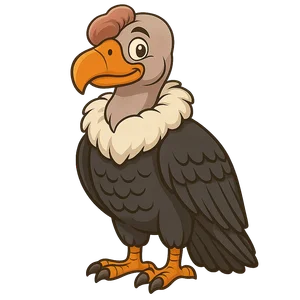
The Andean Condor is one of the world's largest flying birds…
Reads at Grades 6–8 Listens at Grades 4–8
Print & create
Answer keys·No prep·Free with an account
28 worksheets · answer keys · full story · quiz · Ages 10-12 · CEFR B2
Plus adds 164,000+ more stories in 27 languages, audio for every one, and printables for all of them.
Just want Andean Condor?
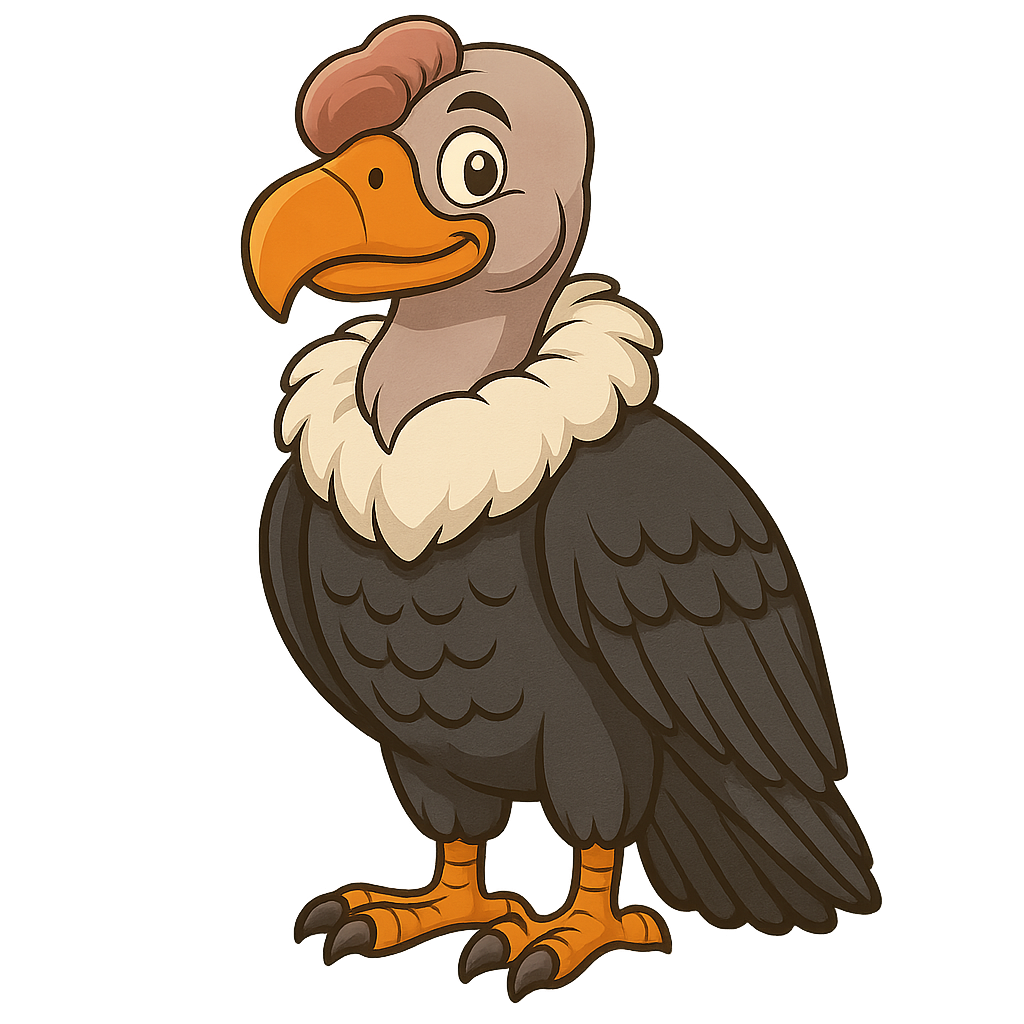
Hello, my friend. From my home high in the Andes Mountains, the world unfolds below me like a map. I am an Andean Condor, and this is my kingdom. The air up here is thin and crisp, and the peaks stretch as far as my sharp eyes can see. I am one of the largest flying birds on Earth, and when I stretch my wings, they measure over 10 feet from tip to tip. This incredible wingspan allows me to ride the wind currents with an elegance that few creatures can match. For centuries, my kind has been a powerful symbol for the people of South America; you can see our image representing countries like Chile, Colombia, and Ecuador. Long before these countries even existed, scientists gave my species a formal name to study us. It was in 1758 that we were officially named Vultur gryphus, a title that has followed us through history.
My own story began on a remote, rocky cliffside around the year 1990. I hatched from a single egg, a precious new life that my parents would protect with all their strength. Andean Condors mate for life, and their devotion is remarkable. They raise only one chick every two years, pouring all their energy into ensuring that one fledgling is strong enough to survive. For six long months, I was entirely dependent on them. They brought me food and shielded me from the harsh mountain weather. The day I took my first flight was both terrifying and exhilarating. I leaped from the ledge and felt the wind catch my wings for the first time. But my education was far from over. I stayed with my family for nearly two more years, learning the essential skills of survival. They taught me how to read the wind, to find the thermal updrafts that would carry me for miles, and, most importantly, how to locate food across the vast landscape.
The Andean Condor's Sky-High Story
Hello, my friend. From my home high in the Andes Mountains, the world unfolds below me like a map. I am an Andean Condor, and this is my kingdom. The air up here is thin and crisp, and the peaks stretch as far as my sharp eyes can see. I am one of the largest flying birds on Earth, and when I stretch my wings, they measure over 10 feet from tip to tip. This incredible wingspan allows me to ride the wind currents with an elegance that few creatures can match. For centuries, my kind has been a powerful symbol for the people of South America; you can see our image representing countries like Chile, Colombia, and Ecuador. Long before these countries even existed, scientists gave my species a formal name to study us. It was in 1758 that we were officially named Vultur gryphus, a title that has followed us through history.
My own story began on a remote, rocky cliffside around the year 1990. I hatched from a single egg, a precious new life that my parents would protect with all their strength. Andean Condors mate for life, and their devotion is remarkable. They raise only one chick every two years, pouring all their energy into ensuring that one fledgling is strong enough to survive. For six long months, I was entirely dependent on them. They brought me food and shielded me from the harsh mountain weather. The day I took my first flight was both terrifying and exhilarating. I leaped from the ledge and felt the wind catch my wings for the first time. But my education was far from over. I stayed with my family for nearly two more years, learning the essential skills of survival. They taught me how to read the wind, to find the thermal updrafts that would carry me for miles, and, most importantly, how to locate food across the vast landscape.
My body is a marvel of adaptation, perfectly designed for a life in the sky. My greatest skill is soaring. I can glide for hours on end, barely flapping my wings, by using columns of rising warm air called thermal updrafts. These currents act like invisible elevators, lifting me higher and higher into the atmosphere. From this vantage point, my eyesight becomes my most powerful tool. It is incredibly sharp, allowing me to spot a potential meal from miles away, something no human could ever do. You might have noticed that I have a bald head, which some find unusual. But this feature is not for looks; it is a clever and practical adaptation. As a scavenger, my diet consists of animals that have already died. A bald head is much easier to keep clean while I eat, which helps me stay healthy. My role as nature’s cleanup crew is vital to the health of my mountain home.
Despite our importance, my species faced many hardships during the 20th century. A great misunderstanding began to spread among some humans. They saw our large size and sharp beaks and wrongly believed that we were a threat to their farm animals. Because of this fear, many of my ancestors were hunted and poisoned. At the same time, our habitat began to shrink. As human populations grew, the wild spaces we depended on for nesting and finding food became smaller and harder to come by. It was a difficult period for us, a time when our very survival seemed uncertain.
Fortunately, a new chapter began for my species as people started to understand our true role in the ecosystem. They learned that we are not hunters of livestock but essential scavengers. This change in perspective sparked the beginning of major conservation efforts. In the late 1980s, dedicated scientists and conservationists created amazing programs to help our numbers recover. One of the most significant moments came on June 29th, 1989, when the first Andean Condors that had been bred and raised in human care were released back into the wild in Colombia. These programs were a turning point, offering a second chance to condors and proving that with care and understanding, we could be brought back from the brink.
Today, I continue to soar over the Andes, a living symbol of the wild spirit of these mountains. My legacy is written in the wind. As a scavenger, I play a vital role by cleaning the land of carcasses, which helps prevent the spread of disease and keeps the entire ecosystem in balance. My story is a powerful reminder that every creature, no matter its appearance or habits, has an important purpose. It shows that when humans and animals work together, we can protect the magnificent beauty of our world for future generations. My kind continues to fly over these peaks, a testament to the success of conservation and the enduring power of hope.
Wow facts
About
The Andean Condor is one of the world's largest flying birds, known for its impressive wingspan and its role as a scavenger in the Andes Mountains of South America. It is a culturally significant bird and a focus of conservation efforts.
Take a Quiz
Question 1 of 5
What is the main message or lesson of the Andean Condor's story?
Explore next





Want to do even more?
Go beyond exploring. Unlock tools that turn every story into real learning.

Storypie Plus for families
Full stories, quizzes, and printables. Nights and car rides, sorted.
- Unlimited audio stories
- Create Mode: your child stars in the story
- Offline downloads
- Printable worksheets & coloring pages

Why Storypie for Schools
Students engaged. Prep in seconds. Evenings back to you.
- Worksheets & Quizzes
- Classroom Management
- Formative Assessment
- Custom Curriculum & Lesson Plans
- 27 Languages

Why Storypie for Homeschool
Curriculum done. They'll ask for more. Hours back in your day.
- Worksheet Generator
- First-Person Audio Stories
- Built-in Comprehension Quizzes
- Custom Curriculum & Lesson Plans
- Print & Go Activities