English


Capybaras
The capybara (Hydrochoerus hydrochaeris) is a giant cavy rodent native to South America.
Reads at Grades 3–5 Listens at Grades 1–5
 Screen-free speaker. Built for your kids.
No card, no commitment. One email when there is real news, and one click to stop.
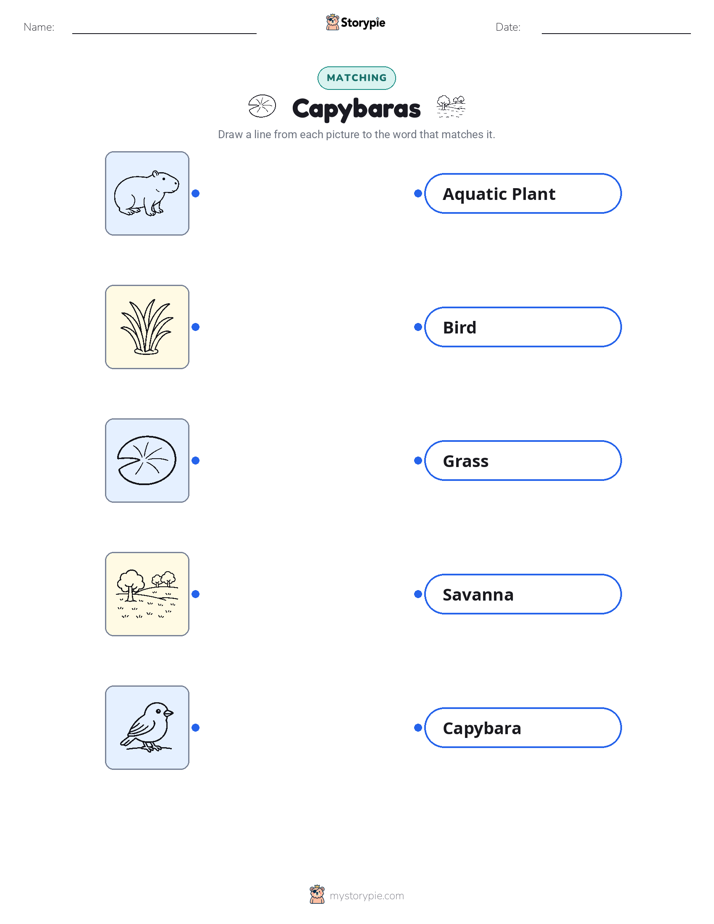
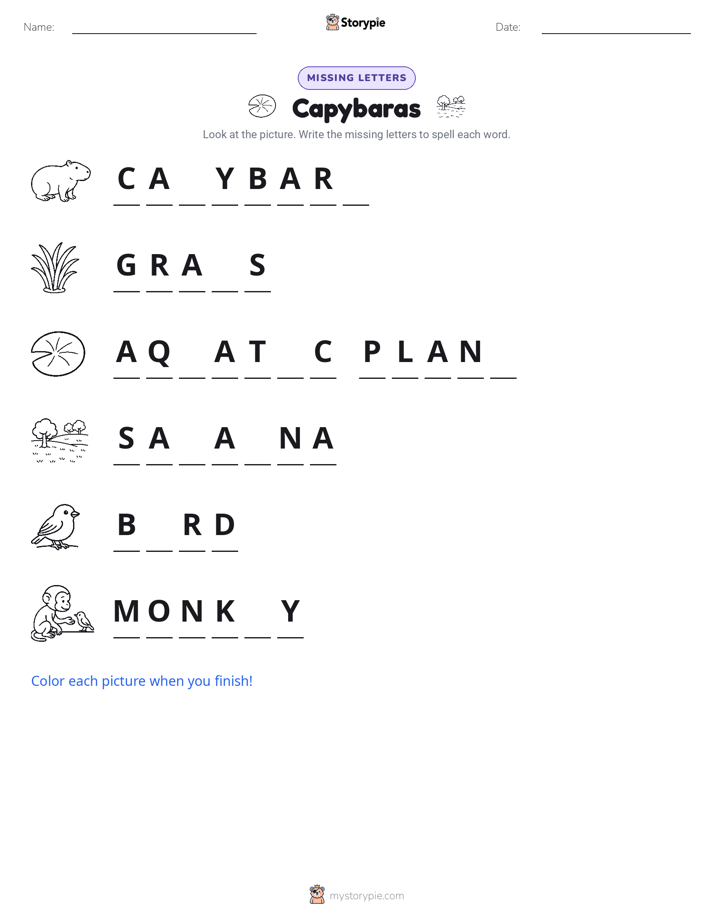
Print & create
Answer keys·No prep·Free with an account
28 worksheets · answer keys · full story · quiz · Ages 8-10 · CEFR B1
Plus adds 102,000+ more stories in 27 languages, audio for every one, and printables for all of them.
Just want Capybaras?
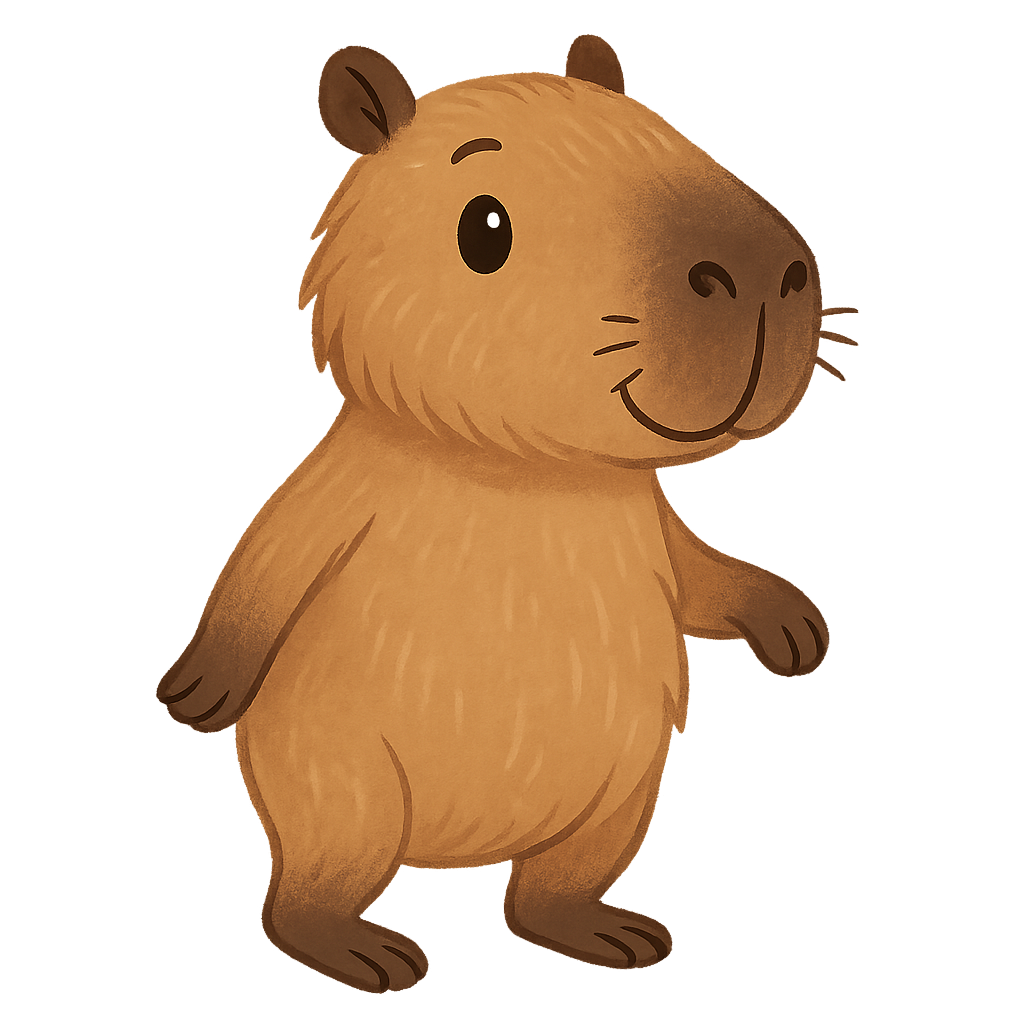
Hello there! My name is Capybara, and I have a special title: I am the world's largest rodent! If you can imagine a giant guinea pig with coarse brown fur and slightly webbed feet, that's me. My home is in the beautiful, warm wetlands of South America. I feel most comfortable near the water's edge, where I can spend my days splashing around to stay cool. The water is also where I find my favorite meals. I love to munch on tasty water hyacinths and other grasses that grow along the riverbanks. Life here is a wonderful mix of swimming, snacking, and soaking up the sun.
My body is perfectly designed for a life that is split between the land and the water. This is called a semi-aquatic life. One of my most amazing features is the placement of my eyes, ears, and nose. They are all right on the very top of my head! This allows me to sink my body almost completely underwater, hiding from danger while still being able to see, hear, and smell what's happening above the surface. My webbed toes are like little paddles, helping me swim gracefully through the rivers and marshes. I also have teeth that never stop growing, which is very useful because chewing on tough plants all day wears them down. My family has lived this way for a very long time, but it wasn't until 1766 that scientists gave my species its official scientific name, *Hydrochoerus hydrochaeris*.
I am a very social animal and love being surrounded by my family. We live in large groups, and sometimes there can be more than twenty of us together! Living in a big family isn't just fun; it's also very important for our safety. We have to watch out for predators like jaguars and caimans. To keep everyone safe, we have our own special language. We use barks, whistles, and clicks to communicate with one another. If one of us spots danger, a quick bark can warn the entire group to dive into the water for safety. When we're not on alert, one of our favorite activities is to gather together on the riverbanks to relax and sunbathe.
A Capybara's Story
Hello there! My name is Capybara, and I have a special title: I am the world's largest rodent! If you can imagine a giant guinea pig with coarse brown fur and slightly webbed feet, that's me. My home is in the beautiful, warm wetlands of South America. I feel most comfortable near the water's edge, where I can spend my days splashing around to stay cool. The water is also where I find my favorite meals. I love to munch on tasty water hyacinths and other grasses that grow along the riverbanks. Life here is a wonderful mix of swimming, snacking, and soaking up the sun.
My body is perfectly designed for a life that is split between the land and the water. This is called a semi-aquatic life. One of my most amazing features is the placement of my eyes, ears, and nose. They are all right on the very top of my head! This allows me to sink my body almost completely underwater, hiding from danger while still being able to see, hear, and smell what's happening above the surface. My webbed toes are like little paddles, helping me swim gracefully through the rivers and marshes. I also have teeth that never stop growing, which is very useful because chewing on tough plants all day wears them down. My family has lived this way for a very long time, but it wasn't until 1766 that scientists gave my species its official scientific name, Hydrochoerus hydrochaeris.
I am a very social animal and love being surrounded by my family. We live in large groups, and sometimes there can be more than twenty of us together! Living in a big family isn't just fun; it's also very important for our safety. We have to watch out for predators like jaguars and caimans. To keep everyone safe, we have our own special language. We use barks, whistles, and clicks to communicate with one another. If one of us spots danger, a quick bark can warn the entire group to dive into the water for safety. When we're not on alert, one of our favorite activities is to gather together on the riverbanks to relax and sunbathe.
I have a reputation for being one of the calmest and friendliest animals in the entire ecosystem. I don't mind sharing my space, and other animals seem to know this. It’s quite common for little birds, like jacanas, to perch right on my back. They get a safe place to rest, and sometimes they even find tasty insects in my fur. I’ve even had monkeys use me as a step stool to reach a low branch! My peaceful nature helps create a relaxed atmosphere for all the creatures who live near the water. I am a calm neighbor, and I enjoy the company of my fellow animals.
My story is still happening every day in the wetlands of South America. As a grazer, I have an important job to do. By eating the grasses, I help keep them trimmed and healthy, which benefits the entire habitat. When you see a capybara like me resting by the water, it is a good sign that the river or marsh is thriving and full of life. By protecting our watery homes from pollution and destruction, people help make sure that my family and I can continue to swim, snack, and socialize for many, many years to come.
Wow facts
About
The capybara (Hydrochoerus hydrochaeris) is a giant cavy rodent native to South America. It is the largest living rodent in the world, known for its semi-aquatic lifestyle and highly social behavior.
Take a Quiz
Question 1 of 5
Why are the capybara's eyes, ears, and nose located on the top of its head?
Explore next




Want to do even more?
Go beyond exploring. Unlock tools that turn every story into real learning.

Storypie Plus for families
Full stories, quizzes, and printables. Nights and car rides, sorted.
- Unlimited audio stories
- Create Mode: your child stars in the story
- Offline downloads
- Printable worksheets & coloring pages

Why Storypie for Schools
Students engaged. Prep in seconds. Evenings back to you.
- Worksheets & Quizzes
- Classroom Management
- Formative Assessment
- Custom Curriculum & Lesson Plans
- 27 Languages

Why Storypie for Homeschool
Curriculum done. They'll ask for more. Hours back in your day.
- Worksheet Generator
- First-Person Audio Stories
- Built-in Comprehension Quizzes
- Custom Curriculum & Lesson Plans
- Print & Go Activities