English


The Capybara's Story
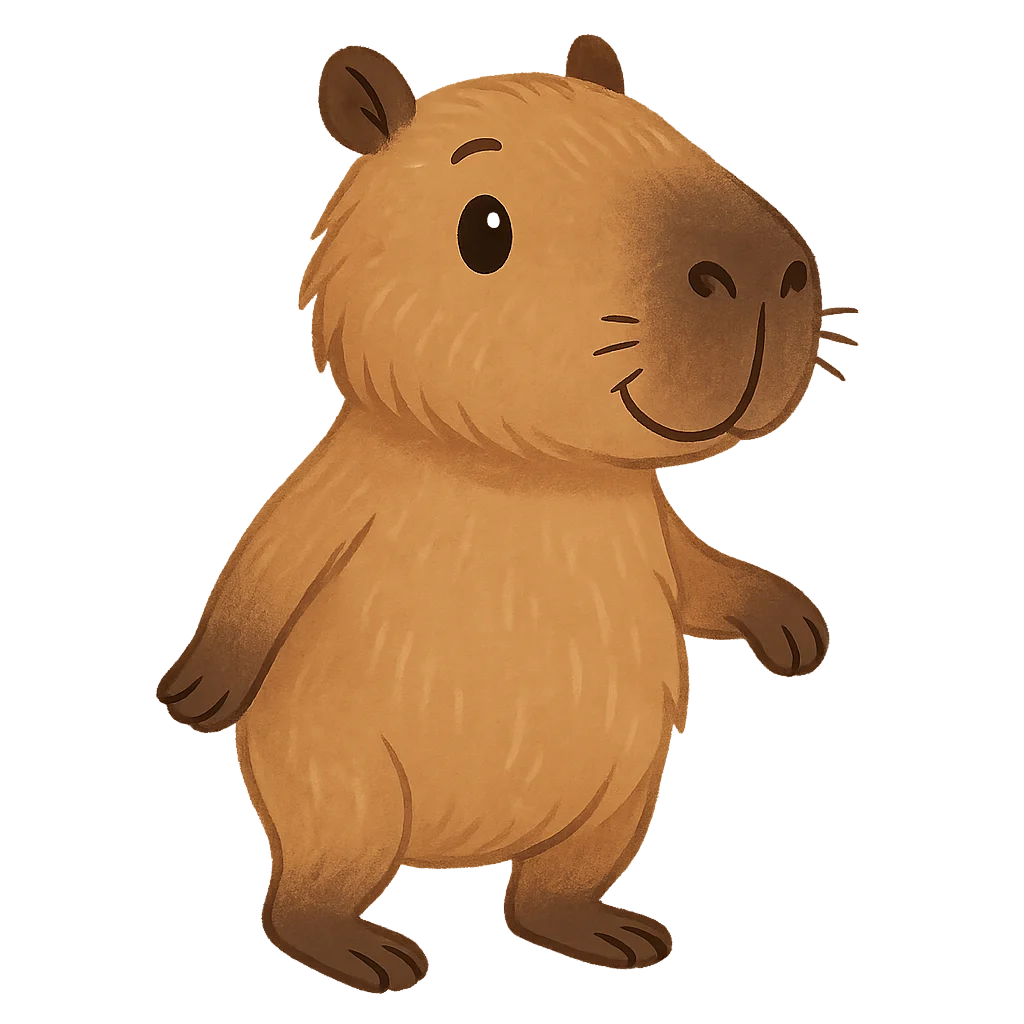
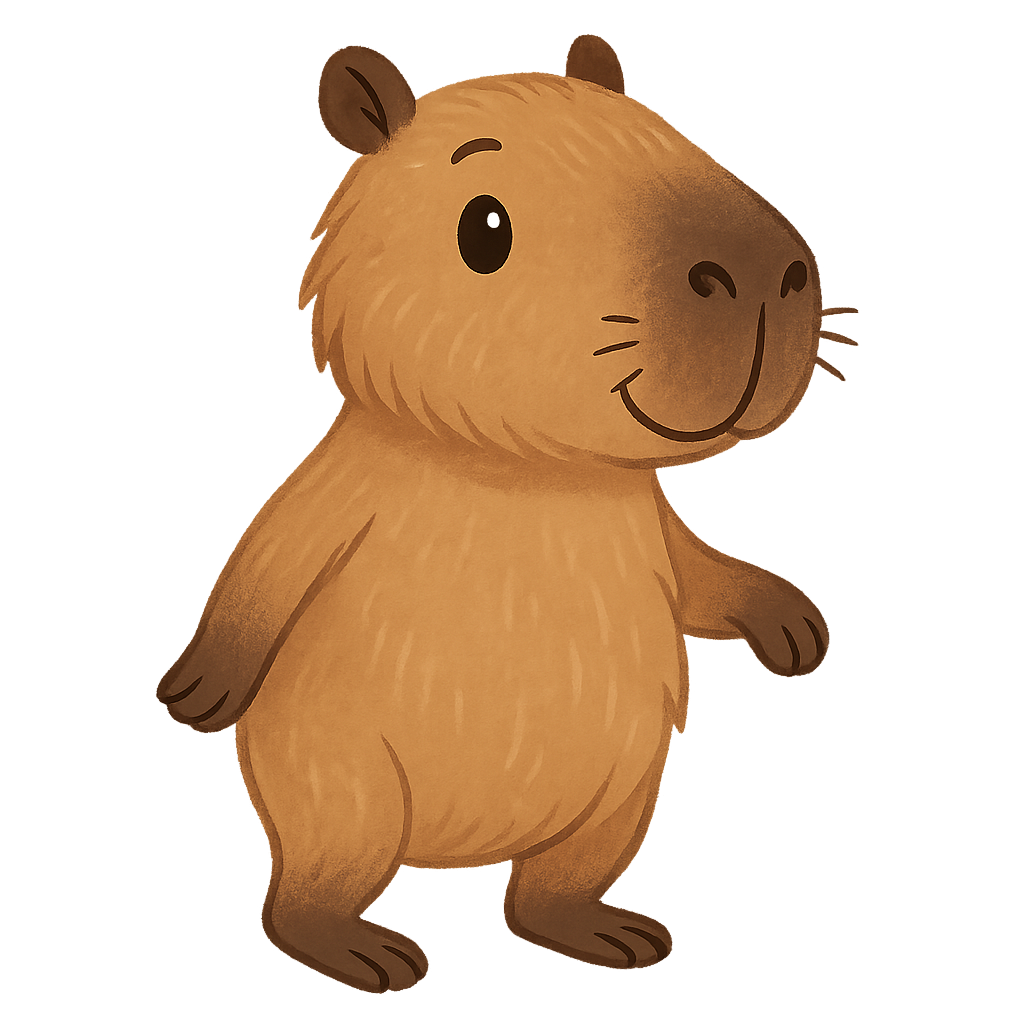
Hello from the water's edge. My name is Capybara, and I have the special distinction of being the world's largest rodent. My home is in the warm, wet savannas and lush forests of South America, where I am never far from a river, lake, or pond. Water is essential to my life and my community. We capybaras are incredibly social animals, and I live with my extended family in a large, close-knit group. We do everything together, from grazing to swimming to resting. Long ago, in 1766, scientists gave my species its official name, Hydrochoerus hydrochaeris. It’s a bit of a mouthful, but it means 'water pig.' I think it’s a fitting name, as I spend so much of my time in and around the water, and it’s where I feel most at home.
My body is perfectly suited for a semi-aquatic life. Everything about my design helps me thrive in my watery world. My eyes, ears, and nose are all located high on my head, which is a fantastic adaptation. It allows me to sink my body almost completely underwater, with just the top of my head showing. From this hidden vantage point, I can breathe, see, and hear everything happening around me. This is crucial for staying safe, as it helps me keep a watchful eye out for predators like jaguars and caimans that share my habitat. When I need to move quickly in the water, my slightly webbed feet give me the power to swim gracefully. One of my favorite skills is the ability to hold my breath for up to five minutes. It’s the perfect trick for escaping a threat or simply enjoying a peaceful moment beneath the surface on a hot day.
My days are mostly spent grazing. My diet consists almost entirely of grasses and aquatic plants. These plants can be quite tough and fibrous, which would wear down the teeth of many other animals. To solve this problem, my front teeth never stop growing throughout my entire life, ensuring I always have a sharp set for chewing. I also have a fascinating and practical way of making sure I get every bit of nutrition from my food. Because the grasses are so hard to digest, I sometimes eat special droppings I produce. It might sound unusual, but this process, known as autocoprophagy, allows my digestive system a second chance to absorb all the vital nutrients. It’s an efficient strategy that ensures no energy goes to waste, which is very important for a grazer like me.
Life within my large family group is built on communication and cooperation. We have a whole language of sounds to talk to one another, including barks, whistles, clicks, and purrs. These calls help us stay together, warn of danger, and keep our social bonds strong. Beyond my own kind, I have a reputation for being one of the most calm and friendly animals in our ecosystem. I am very tolerant of other creatures, and they seem to know it. It’s not uncommon to see birds perching on my back, using me as a lookout post while they search for insects. Sometimes, monkeys will even climb aboard and treat me like a comfortable, furry chair. We don’t mind the company at all. It feels as if we are the social center of our habitat, a sort of moving island where other animals can come to rest and feel safe.
I play an important and multifaceted role in the great web of life. As a dedicated grazer, I help maintain the health of the savanna by keeping the grasses trimmed, which influences the entire landscape. I am also a key part of the food chain. My existence provides a vital source of food for top predators. While being prey might sound frightening, it is a natural and necessary role that supports the balance of my entire ecosystem. My relationship with humans has also evolved over time. In some regions of South America, particularly in Venezuela, people began ranching capybaras in the 1960s. This practice is managed sustainably, providing a source of meat and leather that helps protect my wild relatives by reducing the pressure from over-hunting.
A Legacy of Calm and Community
My story is one of peace, community, and ecological balance. I hope to show the world that even a gentle, calm animal has a powerful and positive impact on its environment. Currently, my species is doing well, and our populations are stable across our native range, which is wonderful news. I hope my calm nature and social lifestyle serve as a reminder to people about the importance of community and living in harmony with the world around us. Every single animal, from the stealthiest jaguar to the largest rodent, plays a critical part in making our world the vibrant and amazing place it is.