
 English
 For Schools
 For Homeschool

The Star of the Tide Pool
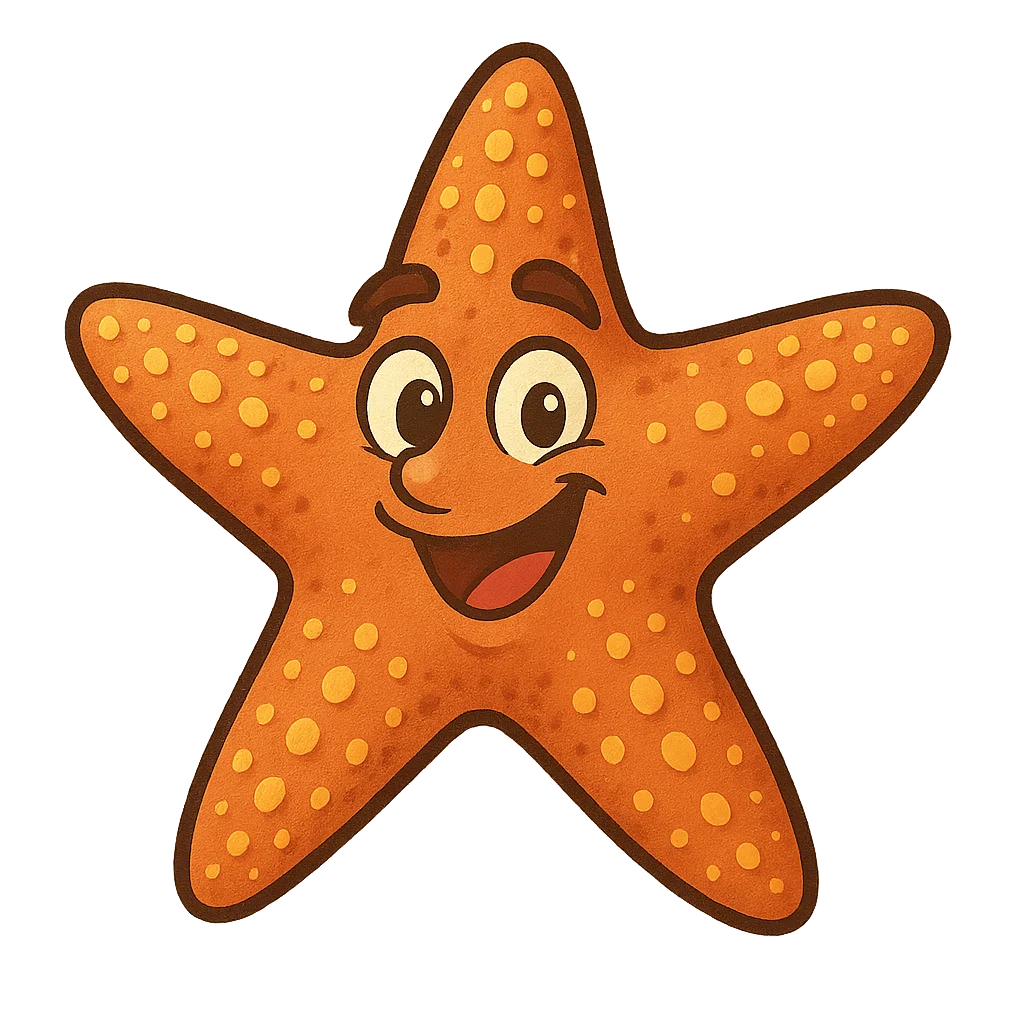
Hello. My name is Pisaster ochraceus, but you can call me an Ochre Sea Star. If you visit the rocky coast along the Pacific Ocean in North America, you might see me clinging to the rocks in a tide pool. I can be many brilliant colors, from deep purple and bright orange to a calm, earthy brown. My five arms are covered in bumpy little spines that help protect me. Even though you can see me easily today, scientists didn't officially describe my species until the year 1835. My home is a busy place, full of crashing waves and lots of other sea creatures. The cool, salty water washes over me, and I hold on tight, waiting for the tide to bring me my next meal. It’s a wonderful life here, full of color and movement, and I have a very special job to do.
I may look like I stay in one spot, but I am always on the move. I don't have feet like you do; instead, I have thousands of tiny tube feet on the underside of my arms. They work like little suction cups, gripping the rocks so I can crawl along the seabed, even when the waves are strong. I don't have eyes like yours, either. At the very tip of each of my five arms, I have a simple eyespot. It can’t see shapes or colors, but it helps me sense light and darkness, which guides me toward safe, shady spots or helps me know when it's a good time to hunt. When I find a tasty mussel, my favorite food, I do something quite amazing. I use my strong arms to slowly pull its two shells apart just a little bit. Then, I push my own stomach out of my mouth and into the mussel shell to digest my food right there. It’s a very unique way to eat.
My job in the tide pool is so important that scientists call me a “keystone species.” That means my whole habitat depends on me to stay balanced, just like a stone arch depends on the keystone at the top to keep it from falling. A scientist named Robert T. Paine showed just how important I was back in 1966. He conducted an experiment where he removed all of the Ochre Sea Stars from one area of a tide pool. Without me there to eat the mussels, the mussels multiplied and took over everything. They covered the rocks so completely that other creatures, like barnacles and algae, had no room to live. His study proved that by eating mussels, I create space for many other plants and animals to thrive. I keep my home diverse and healthy just by having my dinner.
Life in the ocean can have its challenges. Around the year 2013, many of my fellow sea stars started to get sick. A disease called Sea Star Wasting Syndrome spread along the coast, and it was a very difficult time for us. Some studies suggest that warmer ocean waters may exacerbate the effects of Sea Star Wasting Syndrome, though a direct causal link has not been definitively established. It made many of us weak, and our populations shrank. But sea stars are resilient. We have been living in these oceans for a very long time, and we are strong survivors. Even after that hard time, new generations of sea stars are being born. Scientists are closely monitoring ochre sea star populations and have observed hopeful signs that these communities are slowly beginning to recover, showing just how tough we really are.
My story, especially the discovery made in 1966, helps people understand that every single creature in an ecosystem has a vital part to play. I am a guardian of the coast. By eating mussels and keeping their numbers in check, I help make sure that the entire tide pool community remains a bustling and balanced home for dozens of other species. I can live for up to 20 years, and I spend all my days crawling over the rocks, doing my part to keep my world healthy and strong. My simple life has a big impact, and that is my legacy.
Activities
Take a Quiz
Test what you learned with a fun quiz!
Get creative with colors!
Print a coloring book page of this topic.