English

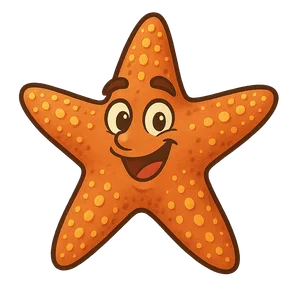
Ochre Sea Star
The Ochre Sea Star (Pisaster ochraceus) is a keystone species found in the intertidal zones of the North…
Reads at Grades 6–8 Listens at Grades 4–8
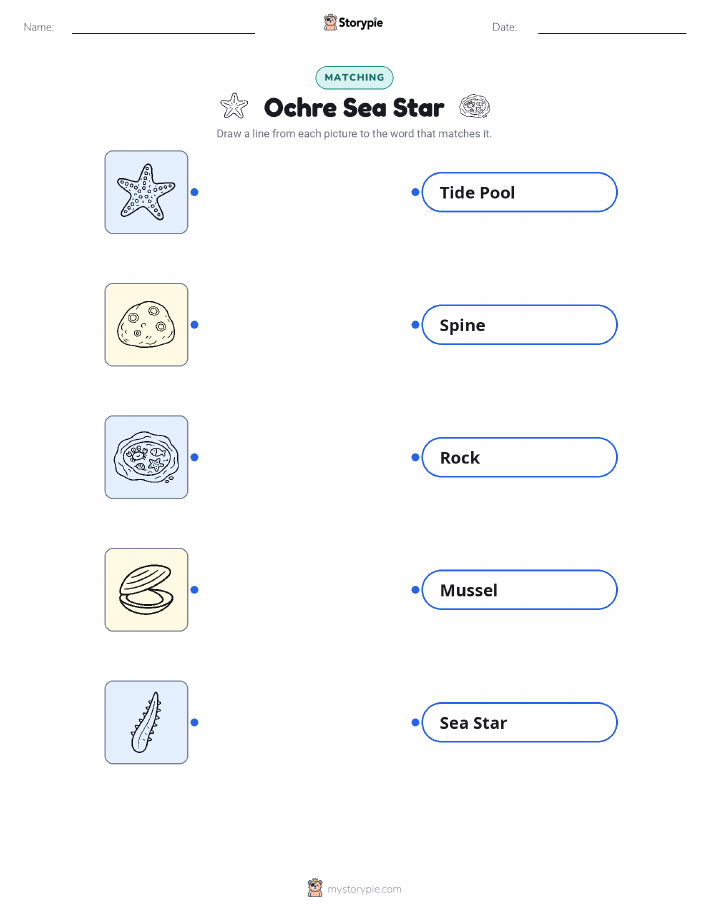
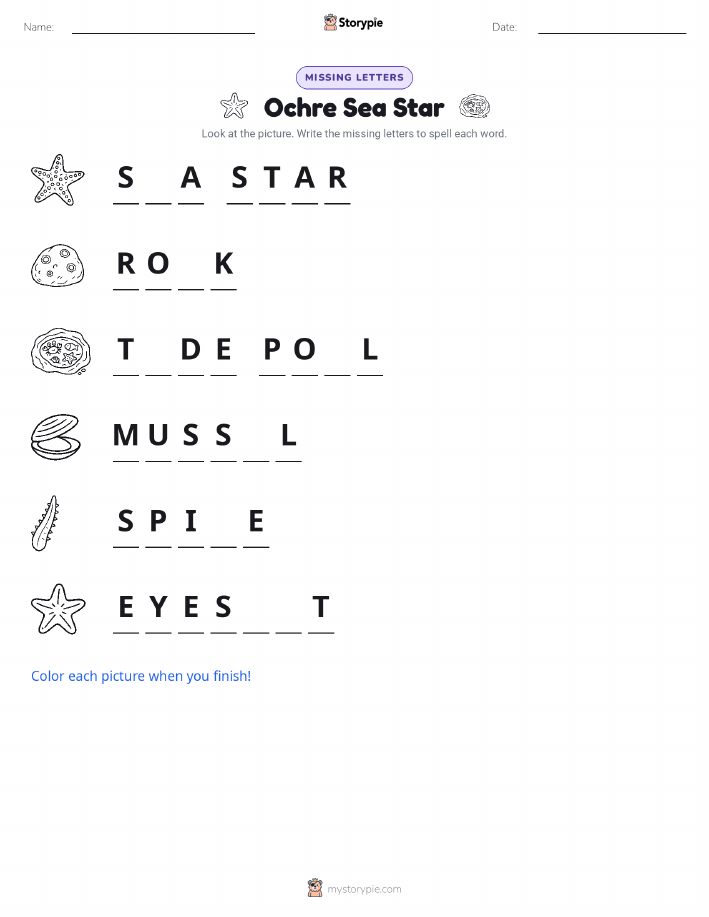
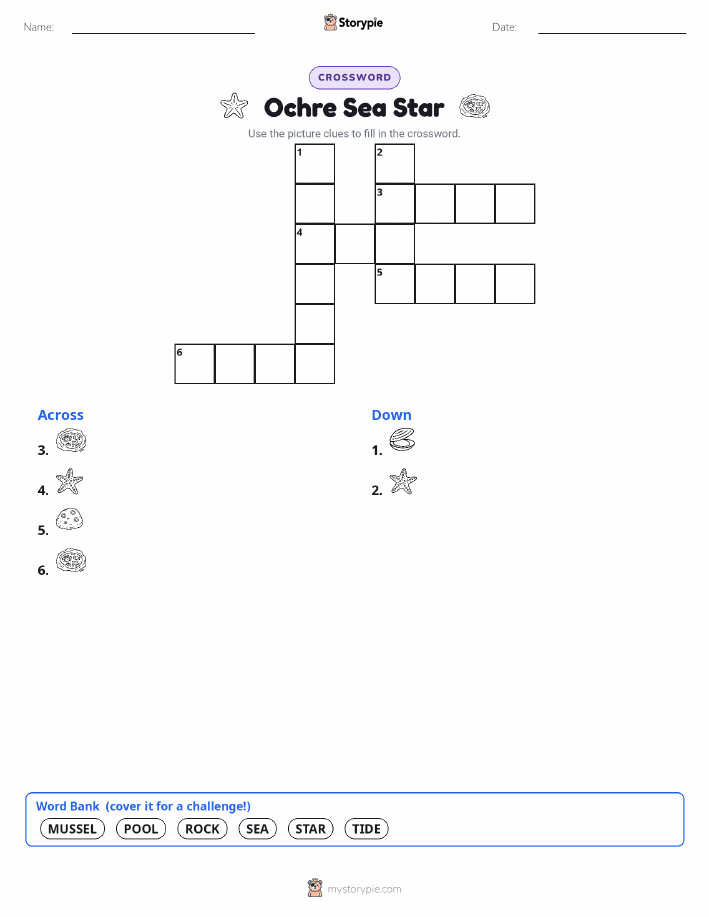
Print & create
Answer keys·No prep·Free with an account
28 worksheets · answer keys · full story · quiz · Ages 10-12 · CEFR B2
Plus adds 244,000+ more stories in 27 languages, audio for every one, and printables for all of them.
Just want Ochre Sea Star?
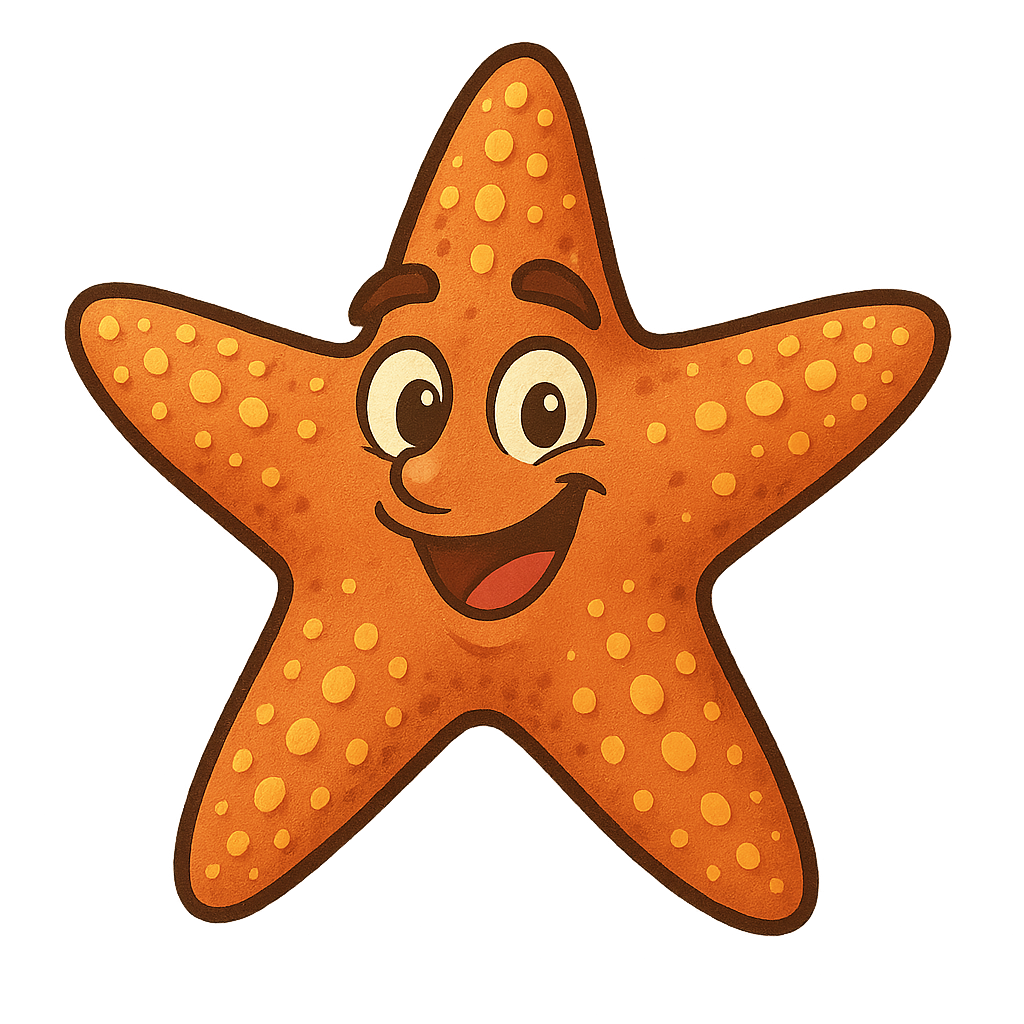
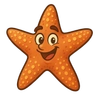
Hello. You might not recognize me at first, but if you’ve ever explored the rocky shores of the Pacific coast of North America, we’ve probably met. I am an Ochre Sea Star, a guardian of the tide pools. My scientific name is Pisaster ochraceus, but you can think of me as the star of the show. My body is a central disk with five strong arms radiating outwards, and I come in a beautiful array of colors. Some of my relatives are a deep, royal purple, while others are a brilliant orange or a muted brown. My entire body is covered in a pattern of small, bumpy white spines, which gives me a rough texture and helps protect me from predators. It might look like I don't move much, but I am always on the go, thanks to a remarkable adaptation. On the underside of my arms are hundreds of tiny, flexible tube feet. Each one has a little suction cup at the end. I use these feet to slowly but surely crawl over sharp rocks and slippery seaweed. When the ocean waves crash against the shore, a force that could sweep away other creatures, my tube feet act like powerful anchors, holding me firmly in place. They are also incredibly sensitive, allowing me to taste and smell the water around me, guiding me toward my next meal.
I am a very specialized hunter, and I have a favorite meal: the California mussel. These mussels live in dense beds, clinging to the rocks in great numbers. Finding them is easy, but getting to the soft meal inside their hard, bluish-black shells requires strength and a very special trick. Once I locate a tasty-looking mussel, I use my hundreds of tube feet to get a firm grip on both sides of its shell. Then, I begin to pull. It’s a slow and steady contest of endurance. The mussel is strong and can keep its shell clamped shut, but I am patient. I apply constant pressure with my five arms, and eventually, the mussel’s muscles tire. It only needs to open its shell a tiny fraction of an inch, just a sliver of a gap, for me to make my move. This is when I perform my most amazing feat. I push my own stomach out of my mouth, which is on my underside, and slide it directly into the opening in the mussel shell. My stomach then digests the mussel right inside its own home. It’s a superpower that allows me to eat things much larger than my mouth, making me one of the most effective predators in the entire tide pool.
The Star of the Tides
Hello. You might not recognize me at first, but if you’ve ever explored the rocky shores of the Pacific coast of North America, we’ve probably met. I am an Ochre Sea Star, a guardian of the tide pools. My scientific name is Pisaster ochraceus, but you can think of me as the star of the show. My body is a central disk with five strong arms radiating outwards, and I come in a beautiful array of colors. Some of my relatives are a deep, royal purple, while others are a brilliant orange or a muted brown. My entire body is covered in a pattern of small, bumpy white spines, which gives me a rough texture and helps protect me from predators. It might look like I don't move much, but I am always on the go, thanks to a remarkable adaptation. On the underside of my arms are hundreds of tiny, flexible tube feet. Each one has a little suction cup at the end. I use these feet to slowly but surely crawl over sharp rocks and slippery seaweed. When the ocean waves crash against the shore, a force that could sweep away other creatures, my tube feet act like powerful anchors, holding me firmly in place. They are also incredibly sensitive, allowing me to taste and smell the water around me, guiding me toward my next meal.
I am a very specialized hunter, and I have a favorite meal: the California mussel. These mussels live in dense beds, clinging to the rocks in great numbers. Finding them is easy, but getting to the soft meal inside their hard, bluish-black shells requires strength and a very special trick. Once I locate a tasty-looking mussel, I use my hundreds of tube feet to get a firm grip on both sides of its shell. Then, I begin to pull. It’s a slow and steady contest of endurance. The mussel is strong and can keep its shell clamped shut, but I am patient. I apply constant pressure with my five arms, and eventually, the mussel’s muscles tire. It only needs to open its shell a tiny fraction of an inch, just a sliver of a gap, for me to make my move. This is when I perform my most amazing feat. I push my own stomach out of my mouth, which is on my underside, and slide it directly into the opening in the mussel shell. My stomach then digests the mussel right inside its own home. It’s a superpower that allows me to eat things much larger than my mouth, making me one of the most effective predators in the entire tide pool.
My role as a hunter is more than just about finding food; it is the most important job I have, and it shapes my entire habitat. In 1969, scientists gave this job a special name, and it was all because of me and my kind. They called us a “keystone species.” A keystone is the central stone in an arch that holds all the others in place. Without it, the arch collapses. I am that stone for my ecosystem. A scientist named Robert T. Paine demonstrated this with a famous experiment he conducted during the 1960s in Makah Bay, Washington. In one area of the rocky shore, he carefully removed every single Ochre Sea Star. Then, he watched to see what would happen. Without me there to hunt the California mussels, their population exploded. They multiplied and spread, covering every available surface on the rocks. Soon, there was no room for anyone else. The colorful sea anemones, the crusty barnacles, and the different species of algae all disappeared, crowded out by the mussels. The once diverse and vibrant community became a monotonous, single-species zone. Dr. Paine’s experiment proved that by keeping the mussel population in check, I create space and opportunity for many other creatures to thrive, maintaining the beautiful balance of life in the tide pool.
For a very long time, I carried out my duties without any major threats. But starting around 2013, a serious challenge emerged from the ocean waters. A mysterious and devastating illness known as Sea Star Wasting Disease began to affect sea star populations all along the coast. It was a frightening time for my species. The disease would cause us to become weak and lethargic. Our arms, which were normally so strong, would twist into unnatural positions. Eventually, our bodies would begin to decay and seem to melt away until there was nothing left. Scientists were very worried as they watched so many of us disappear. As we vanished from the tide pools, the old pattern that Dr. Paine had observed in the 1960s began to repeat itself. The mussels, free from their primary predator, started to take over the rocks once more. The delicate balance of the ecosystem I had maintained for so long was at risk, and the health of the entire shoreline was in jeopardy.
Legacy & Remembering
Although Sea Star Wasting Disease was a devastating chapter in my story, it is not the end. My kind are resilient, and we are fighters. The sickness took a heavy toll, but my story is one of survival and hope. In the years since the outbreak began in 2013, scientists have observed something wonderful. In many places along the coast, young Ochre Sea Stars are beginning to appear again, a sign that our populations are starting to recover. Researchers are studying us closely, trying to understand how some of us survived and how we are rebuilding our communities. My journey continues. I am still the guardian of the tide pools, the keystone holding the arch of life together. My presence is a symbol of a healthy, balanced, and diverse shoreline. My legacy lives in every barnacle, anemone, and patch of algae that has a place to grow because I am there, fulfilling my crucial role and keeping the shores vibrant for generations to come.
Wow facts
About
The Ochre Sea Star (Pisaster ochraceus) is a keystone species found in the intertidal zones of the North American Pacific coast, crucial for maintaining ecosystem biodiversity by preying on mussels.
Take a Quiz
Question 1 of 5
What does it mean for the Ochre Sea Star to be a 'keystone species'?
Explore next





Want to do even more?
Go beyond exploring. Unlock tools that turn every story into real learning.

Storypie Plus for families
Full stories, quizzes, and printables. Nights and car rides, sorted.
- Unlimited audio stories
- Create Mode: your child stars in the story
- Offline downloads
- Printable worksheets & coloring pages

Why Storypie for Schools
Students engaged. Prep in seconds. Evenings back to you.
- Worksheets & Quizzes
- Classroom Management
- Formative Assessment
- Custom Curriculum & Lesson Plans
- 27 Languages

Why Storypie for Homeschool
Curriculum done. They'll ask for more. Hours back in your day.
- Worksheet Generator
- First-Person Audio Stories
- Built-in Comprehension Quizzes
- Custom Curriculum & Lesson Plans
- Print & Go Activities