English

Keystone Species
A concept in ecology for a species that has a disproportionately large effect on its natural environment…
Reads at Grades 3–5 Listens at Grades 1–5
Print & create
Answer keys·No prep·Free with an account
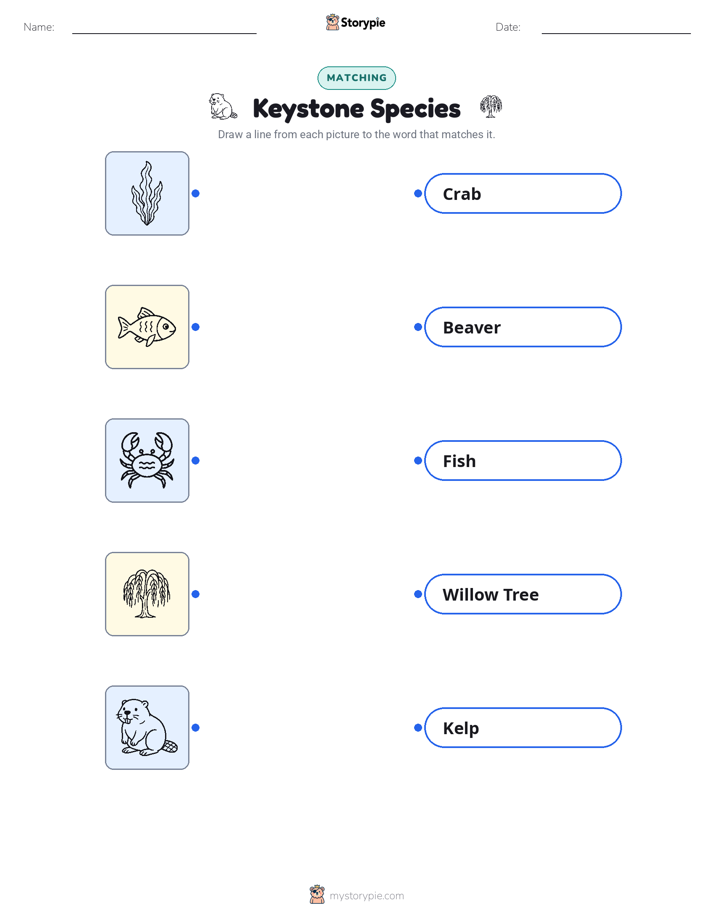
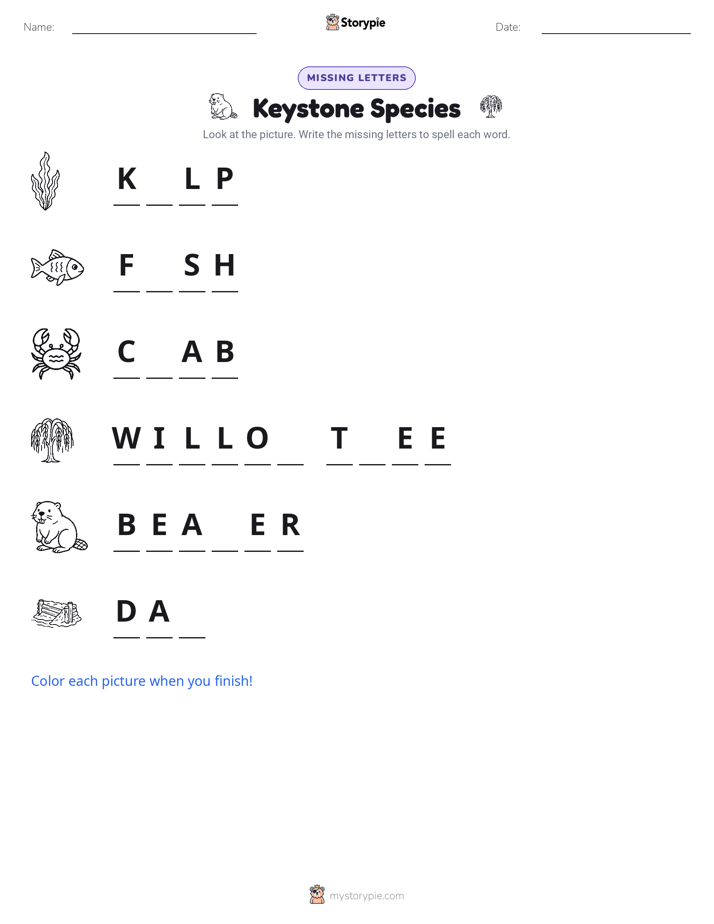
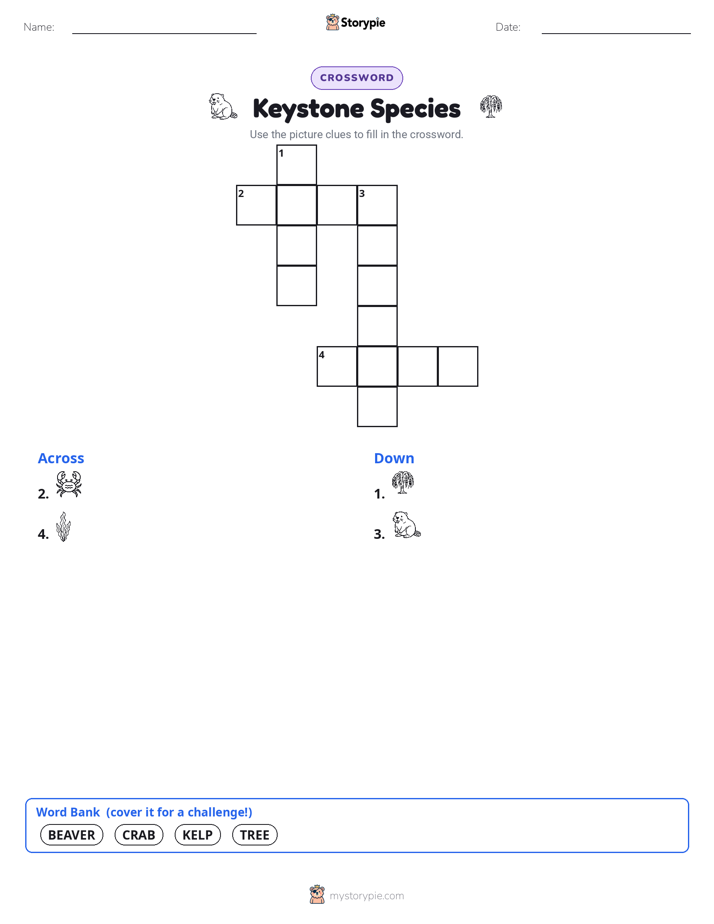
28 worksheets · answer keys · full story · quiz · Ages 8-10 · CEFR B1
Plus adds 164,000+ more stories in 27 languages, audio for every one, and printables for all of them.
Just want Keystone Species?
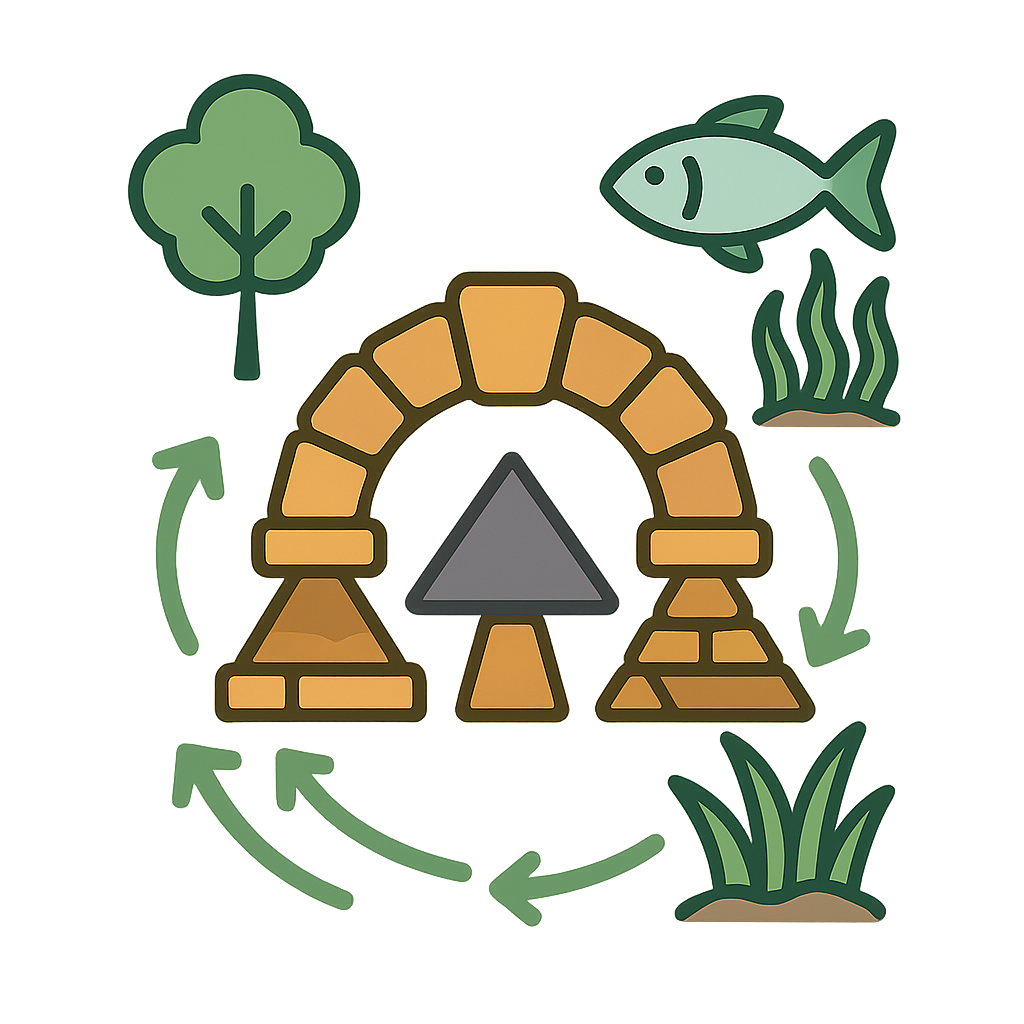
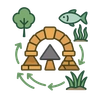
Have you ever walked through a forest so full of life that you could almost hear it humming? Sunlight peeks through a thick canopy of leaves, birds chirp a hundred different songs, and busy insects buzz from flower to flower. Or maybe you’ve imagined a world beneath the ocean waves, where colorful fish dart through waving kelp forests and crabs scuttle across the seafloor. Everything seems to work together perfectly, like a busy, happy neighborhood where everyone has a special job to do. But what if I told you that in many of these places, one special resident is the secret reason everything stays in balance? Think of a tall tower of Jenga blocks. You can pull out a block from the middle, and then another, and the tower might wobble but it still stands. But if you pull out just the right block, the whole thing comes tumbling down. The same is true for a stone archway; the single stone at the very top holds all the others in place. If you remove it, the arch collapses. I am the idea that explains how one living thing can be that important. My name is Keystone Species.
For a very long time, people saw that nature was connected, but they didn’t have a special name for me. They didn't realize that one animal or plant could be the secret superhero holding an entire community together. That all changed because of a curious scientist named Robert T. Paine. In the 1960s, Dr. Paine was a zoologist, which is a scientist who studies animals. He spent his time on the rocky, wave-crashed coast of Washington state, exploring tide pools teeming with life. He had a big question: does every species matter the same amount? To find out, he decided to do an experiment. He found a spot on the coast and carefully removed one type of animal: the purple and orange ochre sea star. Sea stars love to eat mussels, those dark-shelled creatures that cling to the rocks. With the sea stars gone, what do you think happened? The mussels had a party. With no predators to eat them, their population exploded. They multiplied and spread over the rocks, covering everything in a thick blanket of shells. They took up so much space that they crowded out all the other species, like the barnacles, algae, and limpets. The once-diverse tide pool became a boring place with almost nothing but mussels. Dr. Paine's experiment showed that the sea star was the Jenga block holding the whole tide pool tower together. In a scientific paper he wrote in 1969, he gave me my name, Keystone Species, to describe this super-important role.
The Planet's Secret Superhero
Have you ever walked through a forest so full of life that you could almost hear it humming? Sunlight peeks through a thick canopy of leaves, birds chirp a hundred different songs, and busy insects buzz from flower to flower. Or maybe you’ve imagined a world beneath the ocean waves, where colorful fish dart through waving kelp forests and crabs scuttle across the seafloor. Everything seems to work together perfectly, like a busy, happy neighborhood where everyone has a special job to do. But what if I told you that in many of these places, one special resident is the secret reason everything stays in balance? Think of a tall tower of Jenga blocks. You can pull out a block from the middle, and then another, and the tower might wobble but it still stands. But if you pull out just the right block, the whole thing comes tumbling down. The same is true for a stone archway; the single stone at the very top holds all the others in place. If you remove it, the arch collapses. I am the idea that explains how one living thing can be that important. My name is Keystone Species.
For a very long time, people saw that nature was connected, but they didn’t have a special name for me. They didn't realize that one animal or plant could be the secret superhero holding an entire community together. That all changed because of a curious scientist named Robert T. Paine. In the 1960s, Dr. Paine was a zoologist, which is a scientist who studies animals. He spent his time on the rocky, wave-crashed coast of Washington state, exploring tide pools teeming with life. He had a big question: does every species matter the same amount? To find out, he decided to do an experiment. He found a spot on the coast and carefully removed one type of animal: the purple and orange ochre sea star. Sea stars love to eat mussels, those dark-shelled creatures that cling to the rocks. With the sea stars gone, what do you think happened? The mussels had a party. With no predators to eat them, their population exploded. They multiplied and spread over the rocks, covering everything in a thick blanket of shells. They took up so much space that they crowded out all the other species, like the barnacles, algae, and limpets. The once-diverse tide pool became a boring place with almost nothing but mussels. Dr. Paine's experiment showed that the sea star was the Jenga block holding the whole tide pool tower together. In a scientific paper he wrote in 1969, he gave me my name, Keystone Species, to describe this super-important role.
My story doesn't stop with starfish. I appear in all sorts of amazing places. One of my most famous stories happened in Yellowstone National Park. For many years, gray wolves had been missing from the park, and without them, things got out of balance. The elk population grew and grew, and they ate almost all the young willow and aspen trees along the rivers. But then, on January 12th, 1995, scientists brought the wolves back. The wolves began to hunt the elk, which meant the elk didn't spend as much time eating trees by the water. The young trees started to grow tall and strong again. This brought back beavers, who used the wood to build dams. The dams created ponds that became homes for fish, ducks, and muskrats. The tree roots made the riverbanks stronger, so they didn't wash away as much. The wolves, my keystone species, changed the course of rivers. I work in the ocean, too. Sea otters are a keystone species that protect beautiful kelp forests. They love to eat spiky sea urchins, which is a good thing, because sea urchins love to munch on kelp. Without otters, the urchins would mow down the entire kelp forest, leaving a barren wasteland. By keeping the urchins in check, otters make sure the kelp forests can be a safe home for countless other fish and sea creatures.
So, why do I matter so much today? Because understanding me helps people protect our planet. When scientists want to help a struggling ecosystem, they look for me. They try to identify the keystone species in that environment. They know that if they can protect that one special species—the sea otter, the gray wolf, the busy bee pollinating flowers, or even the prairie dog digging tunnels—they can help save the entire community that depends on it. It’s a powerful way to make a big difference. I am a reminder that in the great, beautiful web of life, everything is connected. Every time you see a spider spinning a web or a bird building a nest, remember me. I am the proof that even one small part, one single species, can have the strength to hold its whole world together, making it a healthier and more wonderful place for everyone.
Wow facts
About
A concept in ecology for a species that has a disproportionately large effect on its natural environment relative to its abundance, playing a critical role in maintaining the structure of an ecological community.
Take a Quiz
Question 1 of 5
In the story, the mussels 'crowded out' other species. What does 'crowded out' mean in this sentence?
Explore next



Want to do even more?
Go beyond exploring. Unlock tools that turn every story into real learning.

Storypie Plus for families
Full stories, quizzes, and printables. Nights and car rides, sorted.
- Unlimited audio stories
- Create Mode: your child stars in the story
- Offline downloads
- Printable worksheets & coloring pages

Why Storypie for Schools
Students engaged. Prep in seconds. Evenings back to you.
- Worksheets & Quizzes
- Classroom Management
- Formative Assessment
- Custom Curriculum & Lesson Plans
- 27 Languages

Why Storypie for Homeschool
Curriculum done. They'll ask for more. Hours back in your day.
- Worksheet Generator
- First-Person Audio Stories
- Built-in Comprehension Quizzes
- Custom Curriculum & Lesson Plans
- Print & Go Activities