English

Keystone Species
A concept in ecology for a species that has a disproportionately large effect on its natural environment…
Reads at Grades 6–8 Listens at Grades 4–8
Print & create
Answer keys·No prep·Free with an account
28 worksheets · answer keys · full story · quiz · Ages 10-12 · CEFR B2
Plus adds 164,000+ more stories in 27 languages, audio for every one, and printables for all of them.
Just want Keystone Species?
Imagine a forest beneath the waves, with tall, swaying towers of kelp reaching for the sunlight that filters through the blue water. Schools of shimmering fish dart through the leafy fronds, and crabs scuttle across the seafloor. This world is a bustling city of life, full of color and sound. Now picture a wide river valley, where willow trees line the banks and beavers work diligently on their dams, creating calm pools where fish and frogs can thrive. Birds nest in the trees, and deer graze cautiously at the water's edge. Both of these places are vibrant and healthy, balanced in a delicate dance of life. But what if I told you that the secret to their success, the very thing holding them together, was a single member of their community, one you might not even notice at first. If that one member were to disappear, these beautiful worlds could unravel and crumble into something far less lively. I am the invisible force, the secret keeper, the critical piece in the puzzle of life.
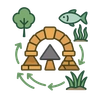
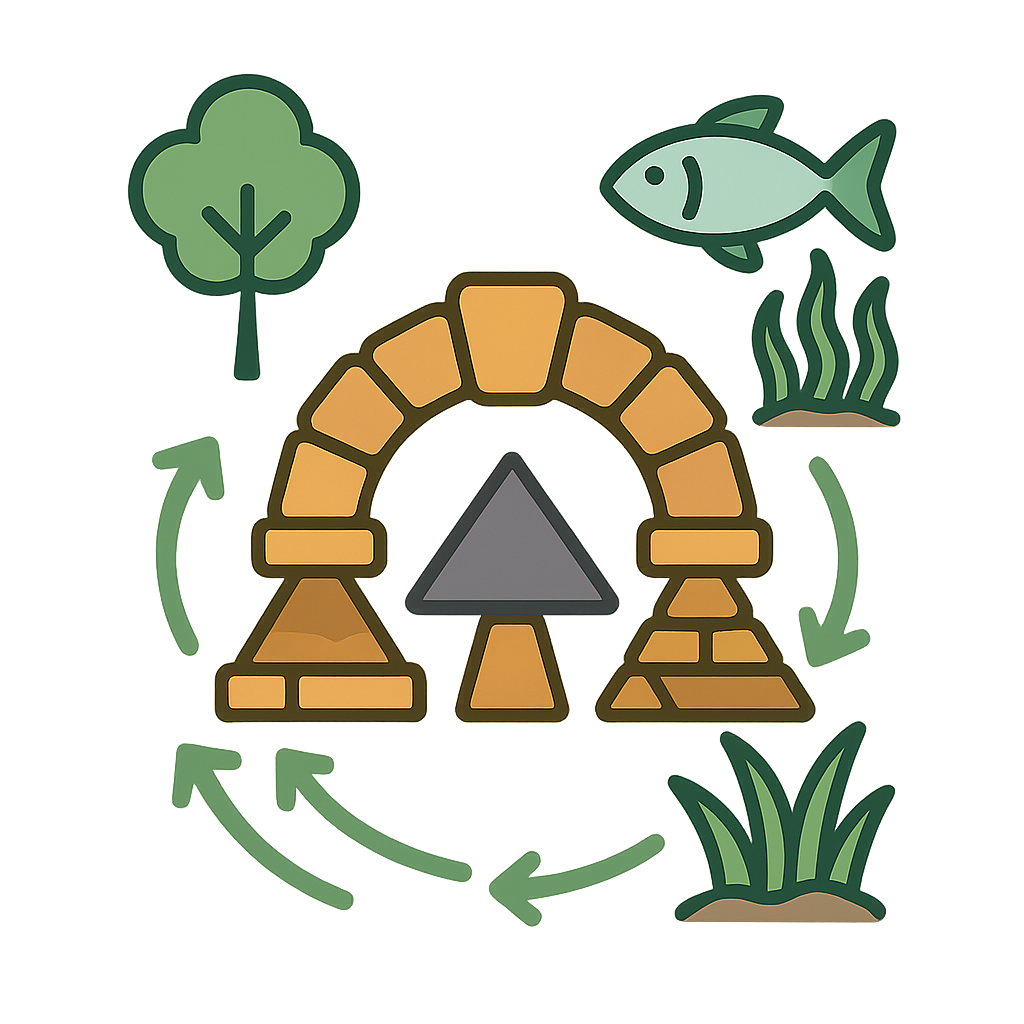
For a long time, people saw nature as a collection of individual parts, but they didn't always see how deeply all those parts were connected. It took a curious and patient scientist to help them understand me. I am the concept of the Keystone Species, and my story began on a rocky, wave-battered shore. In the 1960s, a zoologist named Robert T. Paine spent his days exploring the tide pools on the coast of Washington state. These small pockets of seawater left behind by the tide were like miniature worlds, teeming with starfish, mussels, barnacles, and algae. Dr. Paine noticed that one predator, the ochre sea star, seemed to be at the top of this small food web. He wondered what would happen if it wasn't there. So, he designed an experiment. He chose a section of the shore and, for two years, carefully removed every single ochre sea star he could find. The results were more dramatic than he ever imagined. Without the sea stars to prey on them, the population of mussels exploded. They multiplied and spread, covering every surface and crowding out all the other species. The colorful algae, the sturdy limpets, and the scuttling barnacles all vanished, unable to compete for space. The once diverse tide pool became a monotonous blanket of mussels. Dr. Paine realized the sea star was essential. In his scientific paper published on May 5th, 1969, he gave me my name. He compared the sea star's role to the keystone in a stone arch—the wedge-shaped stone at the very top. If you remove that single stone, the entire arch collapses. I am that keystone, a species that holds my whole ecosystem together.
The Keystone
Imagine a forest beneath the waves, with tall, swaying towers of kelp reaching for the sunlight that filters through the blue water. Schools of shimmering fish dart through the leafy fronds, and crabs scuttle across the seafloor. This world is a bustling city of life, full of color and sound. Now picture a wide river valley, where willow trees line the banks and beavers work diligently on their dams, creating calm pools where fish and frogs can thrive. Birds nest in the trees, and deer graze cautiously at the water's edge. Both of these places are vibrant and healthy, balanced in a delicate dance of life. But what if I told you that the secret to their success, the very thing holding them together, was a single member of their community, one you might not even notice at first. If that one member were to disappear, these beautiful worlds could unravel and crumble into something far less lively. I am the invisible force, the secret keeper, the critical piece in the puzzle of life.
For a long time, people saw nature as a collection of individual parts, but they didn't always see how deeply all those parts were connected. It took a curious and patient scientist to help them understand me. I am the concept of the Keystone Species, and my story began on a rocky, wave-battered shore. In the 1960s, a zoologist named Robert T. Paine spent his days exploring the tide pools on the coast of Washington state. These small pockets of seawater left behind by the tide were like miniature worlds, teeming with starfish, mussels, barnacles, and algae. Dr. Paine noticed that one predator, the ochre sea star, seemed to be at the top of this small food web. He wondered what would happen if it wasn't there. So, he designed an experiment. He chose a section of the shore and, for two years, carefully removed every single ochre sea star he could find. The results were more dramatic than he ever imagined. Without the sea stars to prey on them, the population of mussels exploded. They multiplied and spread, covering every surface and crowding out all the other species. The colorful algae, the sturdy limpets, and the scuttling barnacles all vanished, unable to compete for space. The once diverse tide pool became a monotonous blanket of mussels. Dr. Paine realized the sea star was essential. In his scientific paper published on May 5th, 1969, he gave me my name. He compared the sea star's role to the keystone in a stone arch—the wedge-shaped stone at the very top. If you remove that single stone, the entire arch collapses. I am that keystone, a species that holds my whole ecosystem together.
Once Dr. Paine gave me a name, scientists started seeing me everywhere. They found my superstars in oceans, rivers, and on land. Consider the sea otters of the Pacific coast. For years, they were hunted for their thick fur until they nearly vanished. In their absence, their favorite food, the sea urchin, thrived. Armies of spiny urchins crawled across the seafloor, devouring the giant kelp forests at their base. These underwater forests disappeared, turning into barren, empty plains. The fish, snails, and crabs that depended on the kelp for food and shelter disappeared too. But when conservationists worked to bring the otters back, the otters began eating the sea urchins again. With the urchins under control, the kelp forests grew back, and the entire ecosystem was reborn. An even more famous example began on January 12th, 1995, when gray wolves were brought back to Yellowstone National Park after being gone for almost seventy years. Without wolves, the elk population had grown enormous. The elk ate and ate, nibbling away all the young willow and aspen trees along the rivers. This left the riverbanks bare and weak. But when the wolves returned, they didn't just hunt the elk; they changed their behavior. The elk became more cautious and avoided open areas like river valleys. This allowed the willows and aspens to grow tall again. The trees brought back songbirds. The growing trees also provided food and materials for beavers, who returned and built dams. These dams created ponds and wetlands, making new homes for fish, amphibians, and muskrats. The new tree roots stabilized the riverbanks, stopping erosion and even changing the path of the rivers themselves. This chain reaction, called a trophic cascade, showed my power. From African elephants who knock down trees to maintain grassy savannas for other grazers, my examples prove that one species can shape the world for everyone else.
My existence is a powerful and humbling reminder that every form of life is connected in a complex web. I show that some connections are far more critical than others. Understanding me has changed how humans think about protecting nature. Instead of trying to save every single species one by one, which can be an overwhelming task, conservationists can focus their efforts on protecting the keystones. By helping a sea otter, a wolf, or a beaver, they are also helping the kelp, the willows, the fish, and hundreds of other organisms that depend on them. It is a smarter, more efficient way to care for our planet's precious biodiversity. I am more than just a scientific idea; I am a lesson in how the world works. I show you that everyone and everything has a role to play, and that the loss of even one small piece can have consequences no one expects. By learning about the connections in nature, you can help protect the special 'keystones' that keep our planet's amazing ecosystems strong and full of life for generations to come.
Wow facts
About
A concept in ecology for a species that has a disproportionately large effect on its natural environment relative to its abundance, playing a critical role in maintaining the structure of an ecological community.
Take a Quiz
Question 1 of 5
What is the main idea of this story?
Explore next




Want to do even more?
Go beyond exploring. Unlock tools that turn every story into real learning.

Storypie Plus for families
Full stories, quizzes, and printables. Nights and car rides, sorted.
- Unlimited audio stories
- Create Mode: your child stars in the story
- Offline downloads
- Printable worksheets & coloring pages

Why Storypie for Schools
Students engaged. Prep in seconds. Evenings back to you.
- Worksheets & Quizzes
- Classroom Management
- Formative Assessment
- Custom Curriculum & Lesson Plans
- 27 Languages

Why Storypie for Homeschool
Curriculum done. They'll ask for more. Hours back in your day.
- Worksheet Generator
- First-Person Audio Stories
- Built-in Comprehension Quizzes
- Custom Curriculum & Lesson Plans
- Print & Go Activities