English

Keystone Species
A concept in ecology for a species that has a disproportionately large effect on its natural environment…
Reads at Grades K-2 Listens at K–3
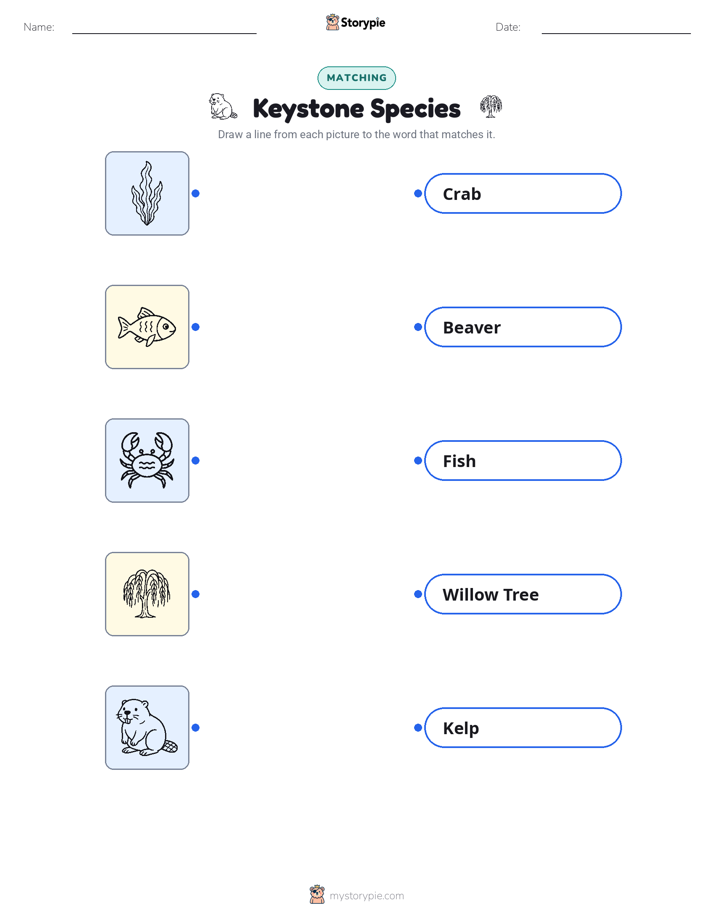
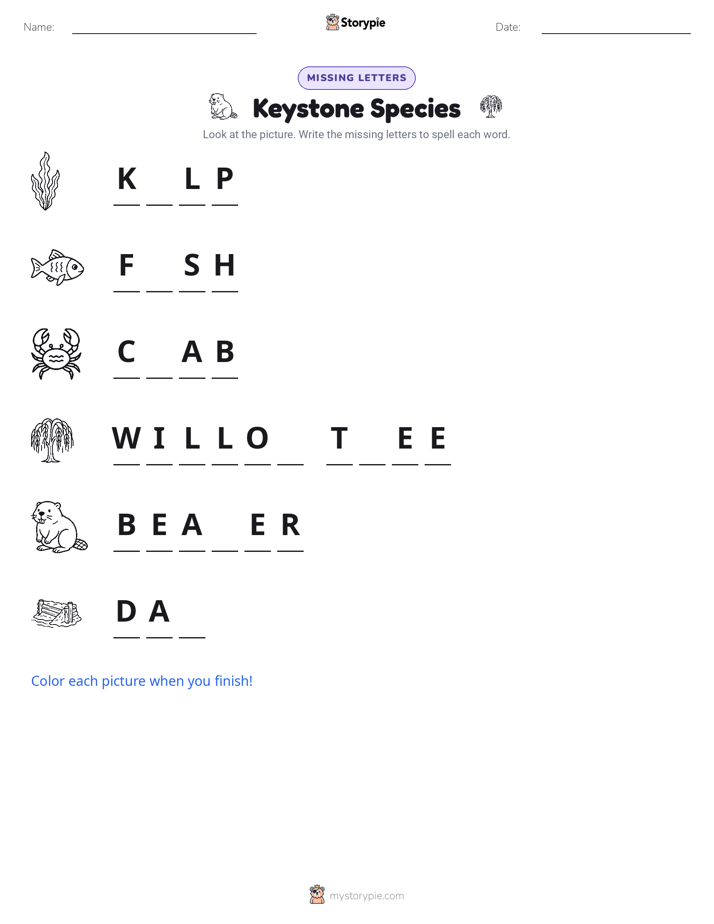
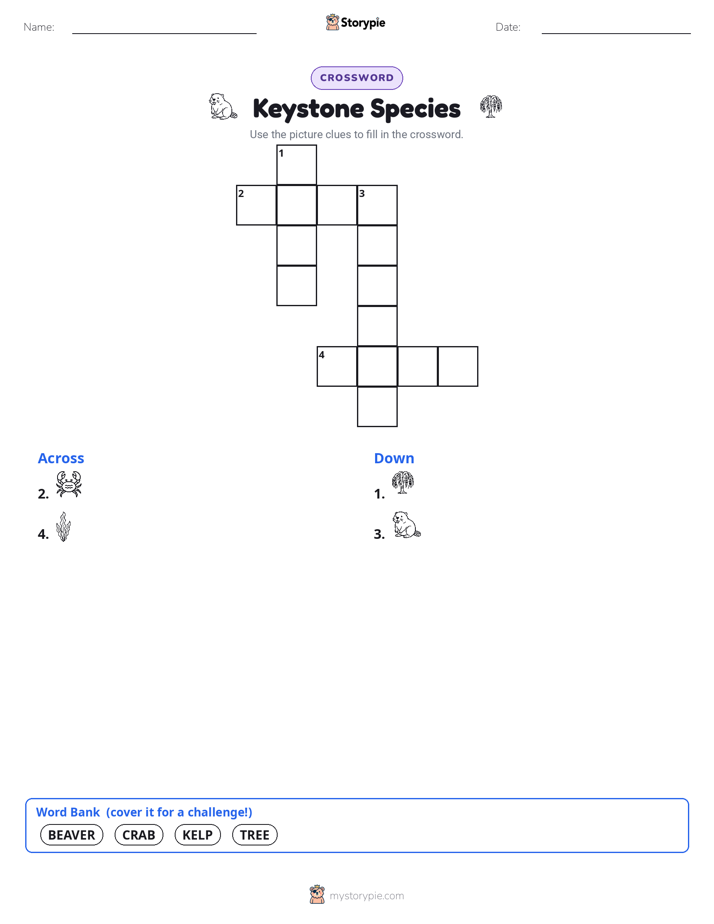
Print & create
Answer keys·No prep·Free with an account
28 worksheets · answer keys · full story · quiz · Ages 6-8 · CEFR A2
Plus adds 164,000+ more stories in 27 languages, audio for every one, and printables for all of them.
Just want Keystone Species?
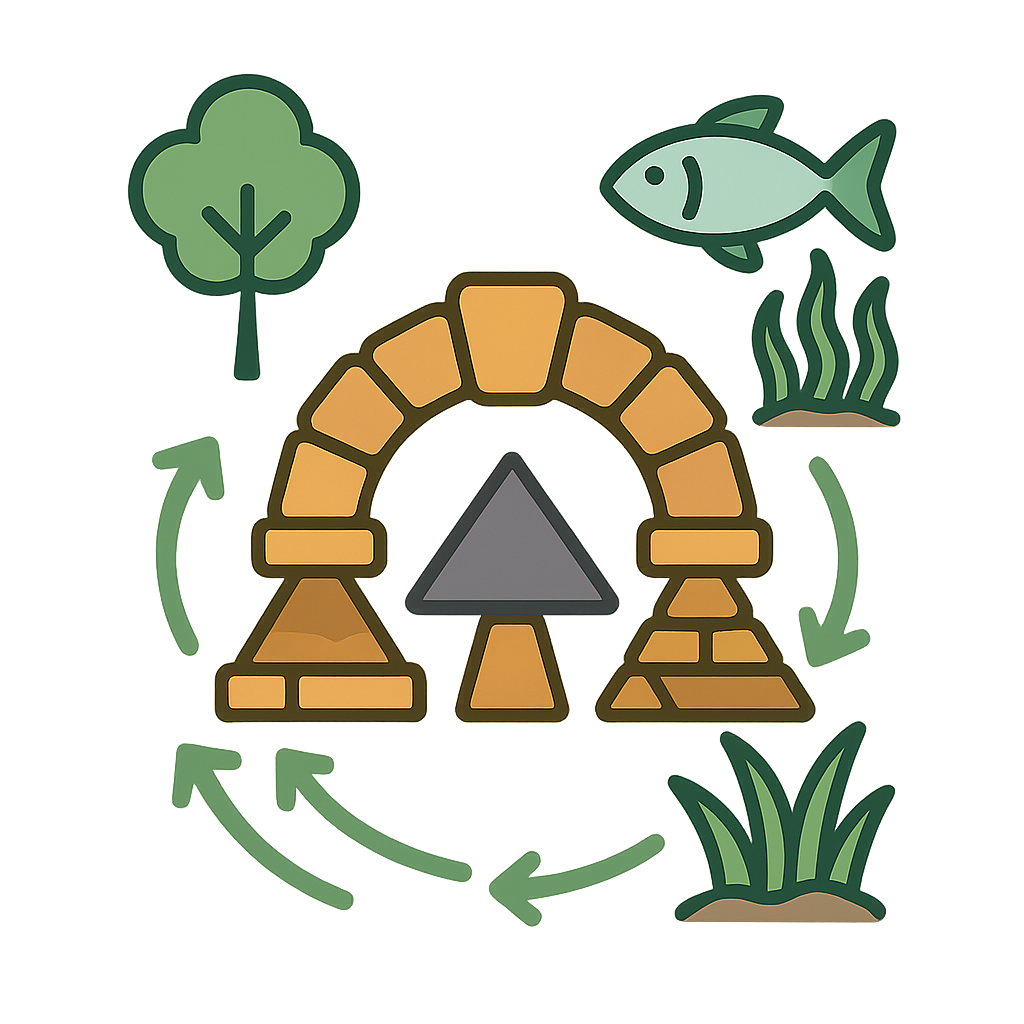
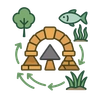
Have you ever built a tall tower with blocks. What if I told you that in nature, there are secret keepers that act like the most important block of all. Imagine a beautiful arch made of stones. If you pull out the special stone at the very top—the keystone—the whole arch tumbles down. Well, that’s me. I am the idea that some living things are like that special stone. I might be a fuzzy sea otter floating in the ocean, a busy beaver building a dam in a river, or even a spiky sea star clinging to a rock. My job is to hold the whole neighborhood, or ecosystem, together. Without me, things can get wobbly and fall apart, but nobody knew about my secret job for a very long time.
Hello. I am the idea of a Keystone Species. For a long, long time, people saw animals and plants but didn’t know about my special secret. That all changed in the 1960s, thanks to a curious scientist named Robert T. Paine. He loved exploring the rocky seashores in Washington state, where waves crashed and little pools of water were full of life. Starting around 1963, he began his important work. He noticed that a certain purple and orange sea star was a top predator in its little neighborhood. He wondered what would happen if it was not there. So, he did a brave experiment. In one small area of the shore, he carefully removed all of those sea stars. At first, nothing seemed different. But over time, he saw a huge change. The mussels, which the sea stars loved to eat, began to multiply like crazy. They covered every inch of the rocks, pushing out all the other creatures like barnacles and algae. The once-diverse ecosystem became a boring place with mostly just mussels. Robert T. Paine realized the sea star was like that special stone in an arch. In 1969, he wrote down his discovery and gave me my official name, Keystone Species.
The Secret Keeper of the Ecosystem
Have you ever built a tall tower with blocks. What if I told you that in nature, there are secret keepers that act like the most important block of all. Imagine a beautiful arch made of stones. If you pull out the special stone at the very top—the keystone—the whole arch tumbles down. Well, that’s me. I am the idea that some living things are like that special stone. I might be a fuzzy sea otter floating in the ocean, a busy beaver building a dam in a river, or even a spiky sea star clinging to a rock. My job is to hold the whole neighborhood, or ecosystem, together. Without me, things can get wobbly and fall apart, but nobody knew about my secret job for a very long time.
Hello. I am the idea of a Keystone Species. For a long, long time, people saw animals and plants but didn’t know about my special secret. That all changed in the 1960s, thanks to a curious scientist named Robert T. Paine. He loved exploring the rocky seashores in Washington state, where waves crashed and little pools of water were full of life. Starting around 1963, he began his important work. He noticed that a certain purple and orange sea star was a top predator in its little neighborhood. He wondered what would happen if it was not there. So, he did a brave experiment. In one small area of the shore, he carefully removed all of those sea stars. At first, nothing seemed different. But over time, he saw a huge change. The mussels, which the sea stars loved to eat, began to multiply like crazy. They covered every inch of the rocks, pushing out all the other creatures like barnacles and algae. The once-diverse ecosystem became a boring place with mostly just mussels. Robert T. Paine realized the sea star was like that special stone in an arch. In 1969, he wrote down his discovery and gave me my official name, Keystone Species.
Ever since that day on the seashore, I have helped people see nature in a new way. I show them that sometimes the most important animal isn't the biggest or the strongest. When scientists brought wolves back to Yellowstone National Park in 1995, they saw my power in action. The wolves helped keep the elk herds in balance, which let trees and plants grow tall again, and that even changed the way rivers flowed. I remind everyone that every plant and animal has a special part to play, and some have extra-important jobs. My purpose is to help you see these amazing connections so we can all be better helpers for our planet, keeping it healthy and full of life for years to come.
Wow facts
About
A concept in ecology for a species that has a disproportionately large effect on its natural environment relative to its abundance, playing a critical role in maintaining the structure of an ecological community.
Take a Quiz
Question 1 of 4
Why did the rocky seashore become plain and crowded in the story?
Explore next




Want to do even more?
Go beyond exploring. Unlock tools that turn every story into real learning.

Storypie Plus for families
Full stories, quizzes, and printables. Nights and car rides, sorted.
- Unlimited audio stories
- Create Mode: your child stars in the story
- Offline downloads
- Printable worksheets & coloring pages

Why Storypie for Schools
Students engaged. Prep in seconds. Evenings back to you.
- Worksheets & Quizzes
- Classroom Management
- Formative Assessment
- Custom Curriculum & Lesson Plans
- 27 Languages

Why Storypie for Homeschool
Curriculum done. They'll ask for more. Hours back in your day.
- Worksheet Generator
- First-Person Audio Stories
- Built-in Comprehension Quizzes
- Custom Curriculum & Lesson Plans
- Print & Go Activities