
 English
 For Schools
 For Homeschool

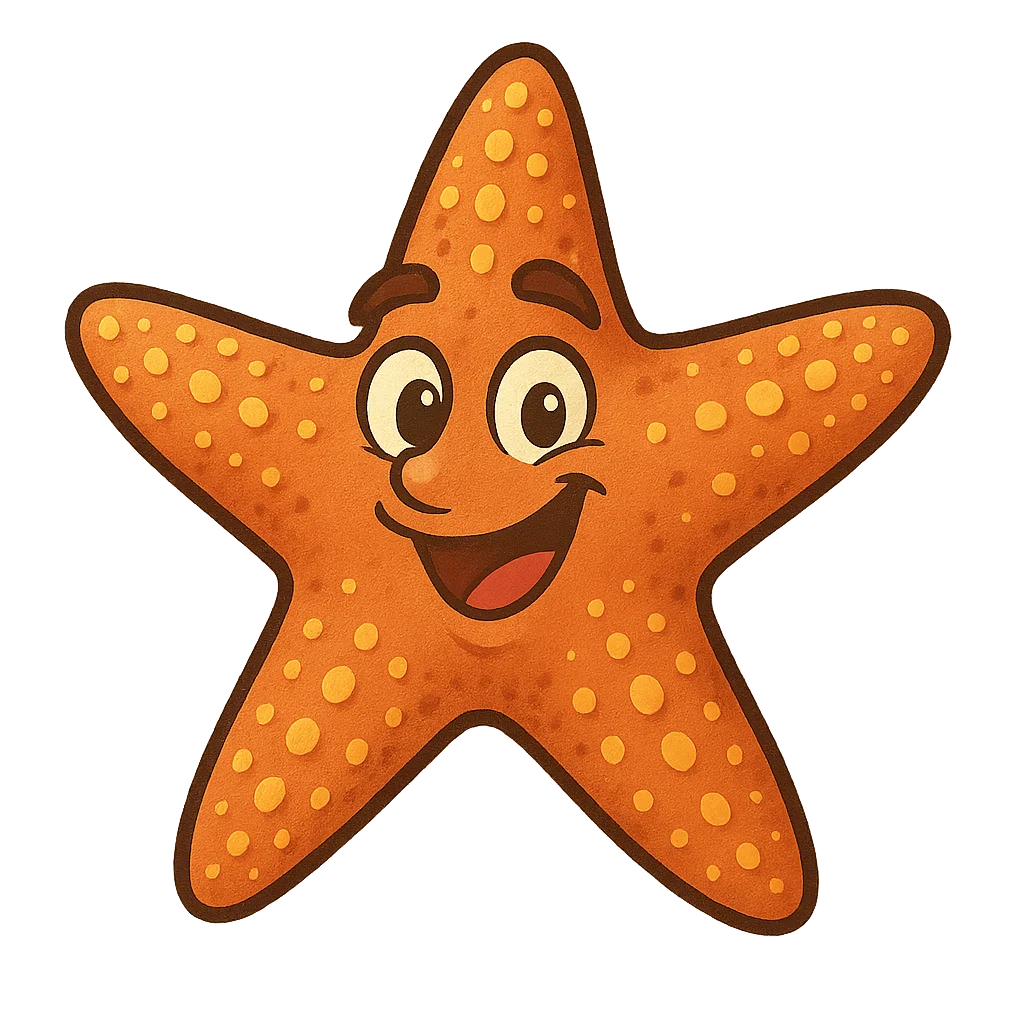
A Star in the Tide Pool
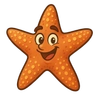
Hello! I am an Ochre Sea Star, and I want to tell you my story. You can find me in the rocky tide pools of the Pacific Ocean. If you look closely, you might see my five arms, though some individuals may have between four and seven arms, and my bumpy skin. Some of us are a beautiful purple color, while others are bright orange. My home is a busy place, with waves splashing all day long. To keep from being washed away, I cling tightly to the rocks. It’s the perfect place for a star like me to live, right where the land meets the big, wide sea. I love feeling the cool water rush over me as I hold on, waiting for my next adventure or my next meal.
Have you ever wondered how a sea star moves? It’s not with my arms! If you could peek underneath me, you would see hundreds of tiny tube feet. They function by secreting adhesive chemicals to attach to surfaces, not by suction, helping me grip the rocks and crawl very slowly across the ocean floor. When I get hungry, I use these feet to find my favorite food: tasty mussels. Eating is one of the most amazing things I do. I can do a special trick where I push my own stomach out of my mouth and right into a mussel's shell. It sounds a little weird, but this allows me to digest my meal right there. It’s a very clever way to eat when your food is hiding inside a hard shell.
My job in the tide pool is very important. In fact, a scientist named Robert T. Paine gave us a special name for our role in 1966. He called us a 'keystone species.' That sounds like a big title, doesn't it? It means that I help keep my whole neighborhood healthy and balanced, just like a keystone holds an arch together. By eating mussels, I make sure they don't take over all the space on the rocks. This leaves room for other animals, like barnacles and anemones, to have a place to live, too. Without me, the tide pool would be a very different and much less diverse place.
Life in the ocean isn't always easy. There was a difficult time for me and my fellow sea stars. Around the year 2013, many of us started to get sick with something called Sea Star Wasting Syndrome. It was a scary time for sea stars along the coast. It made our bodies weak and caused us to fall apart. But we are resilient creatures. I want you to know that while certain populations, especially in Oregon, are recovering, others remain diminished, indicating an uneven recovery across regions. Scientists are working very hard to understand the sickness and to help us recover. We are fighters, and we are slowly coming back to our homes on the rocks.
So, my story continues. I am still here in the tide pool, doing my important job every single day. The next time you visit the ocean, I hope you will look for me clinging to the rocks. You might see my bright purple or orange arms waving gently in the water. Remember that even a small star can be a big hero in the ocean ecosystem, helping to keep everything in balance. My work helps maintain healthy intertidal ecosystems by regulating mussel populations, which supports biodiversity.
Activities
Take a Quiz
Test what you learned with a fun quiz!
Get creative with colors!
Print a coloring book page of this topic.