English
 For Schools
 For Homeschool

A Honey Bee's Story
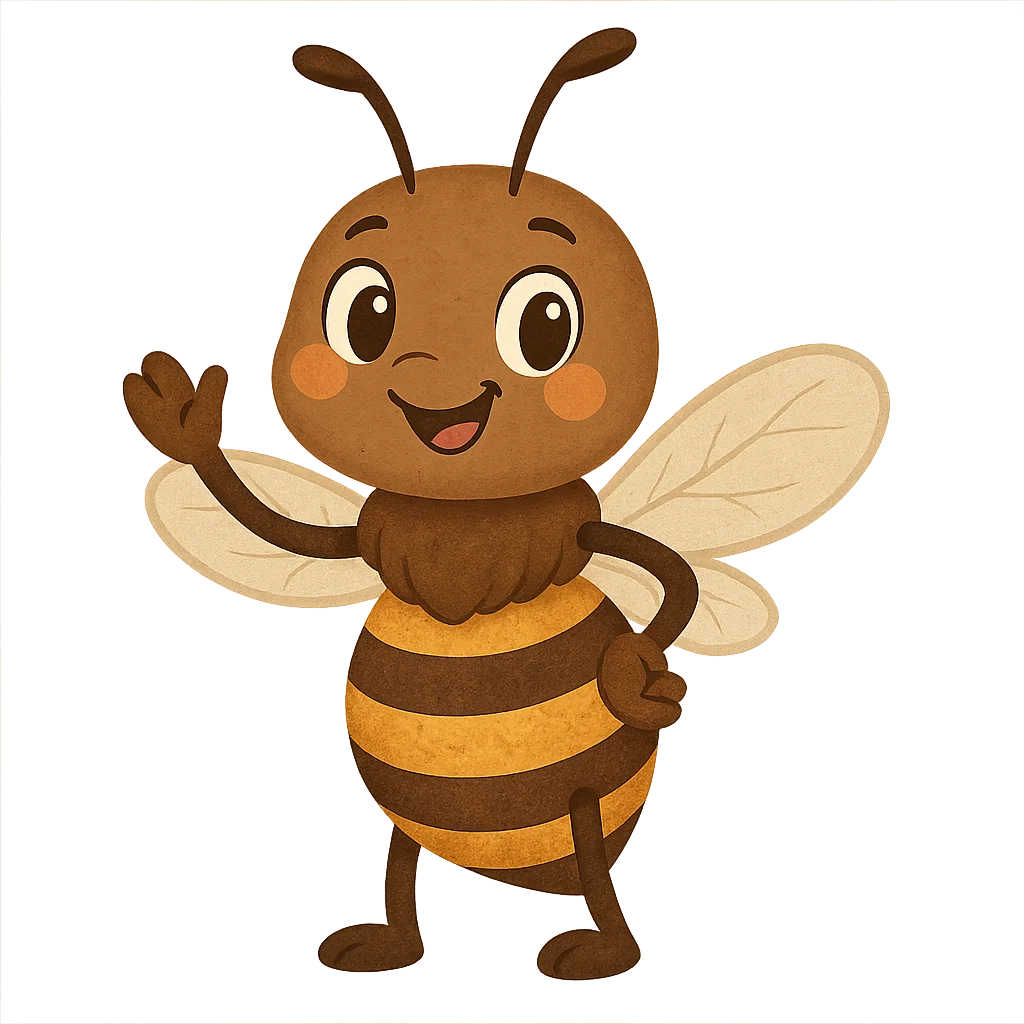
Hello! I am a Western Honey Bee worker, and my life began inside a tiny, six-sided room made of wax. It was dark and warm, and the whole world hummed with the sound of my family. I was born into a huge hive, a bustling city full of thousands of my sisters. The moment I wiggled out of my waxy cell, I had work to do. My very first job was being a housekeeper bee. I scurried around, cleaning out the waxy nursery cells to make them sparkling clean for the next baby bees. Soon after, I became a nurse bee. It was my duty to feed the tiny, squirming larvae—my newest baby sisters. Nurse bees feed all larvae royal jelly for the first three days. After that, only queen larvae continue to receive royal jelly, while worker and drone larvae are fed a mixture of pollen and honey. It was a very important job, and I was proud to help care for the future of our colony.
After a few weeks of working inside the hive, my body changed. Tiny, see-through flakes of wax began to grow from my abdomen. This meant I was ready for my next job: being an architect. Along with my sisters, I would take these little wax flakes and chew them until they were soft and easy to shape. Carefully, we worked together, building perfect, six-sided honeycomb walls. These rooms were amazing for two things: storing the sweet, golden honey we make and giving our queen a safe place to lay her eggs. Once my wax-making days were done, I took on one of the bravest jobs in the hive. I became a guard bee. I stood right at the entrance, my antennae twitching, watching for any danger. If a wasp or another intruder tried to sneak in, it was my job to protect my family and our home.
The most exciting day of my life was when I finally took my first flight. I stood at the edge of the hive, took a deep breath, and leaped into the air. The world was bigger and brighter than I ever could have imagined. Below me was a soft green carpet of grass, and everywhere I looked, there were flowers in brilliant shades of red, yellow, and purple under a giant, warm sun. I had a new job now: I was a forager. But how would I find the best flowers? I learned by watching my older sisters. They would return to the hive and perform a special 'waggle dance.' It looked like a little wiggle and a turn, but it was actually a secret map. This dance told us exactly where to find the best patches of nectar-filled flowers. For a long time, humans didn't understand our dance. It wasn't until 1973 that a kind scientist named Karl von Frisch was celebrated for finally figuring out our amazing language.
I have a little secret to share with you. Even though you see bees like me buzzing all over America, my family didn't always live here. We are immigrants. Many, many years ago, my ancestors lived in Asia. It was humans who brought my great-great-great-grandmothers across the giant ocean on ships. Honey bees were introduced to North America in 1622. The people who were starting new farms in America needed help. Their crops needed bees to pollinate them so they would grow fruit and seeds. So, they brought us along to be their tiny farming partners.
Of all the jobs I've had, being a pollinator is the most important. As I fly from flower to flower sipping nectar, tiny grains of yellow pollen stick to my fuzzy body. When I visit the next flower, some of that pollen rubs off. This is called pollination, and it’s like a magic trick that helps plants grow the fruits, nuts, and vegetables that people and other animals love to eat. Sometimes, it can be hard for my sisters and me to find enough flowers or to stay healthy in a changing world. But humans can help us by planting bee-friendly gardens full of colorful flowers. So, the next time you bite into a juicy apple or a sweet strawberry, I hope you’ll remember the hard work of a busy little bee like me. We helped make that delicious treat possible.
Activities
Take a Quiz
Test what you learned with a fun quiz!
Get creative with colors!
Print a coloring book page of this topic.