English

A. A. Milne
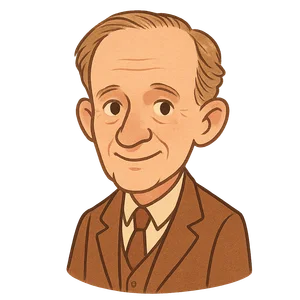
Alan Alexander Milne was an English author…
Reads at Grades 6–8 Listens at Grades 4–8
Print & create
Answer keys·No prep·Free with an account
28 worksheets · answer keys · full story · quiz · Ages 10-12 · CEFR B2
Plus adds 244,000+ more stories in 27 languages, audio for every one, and printables for all of them.
Just want A. A. Milne?
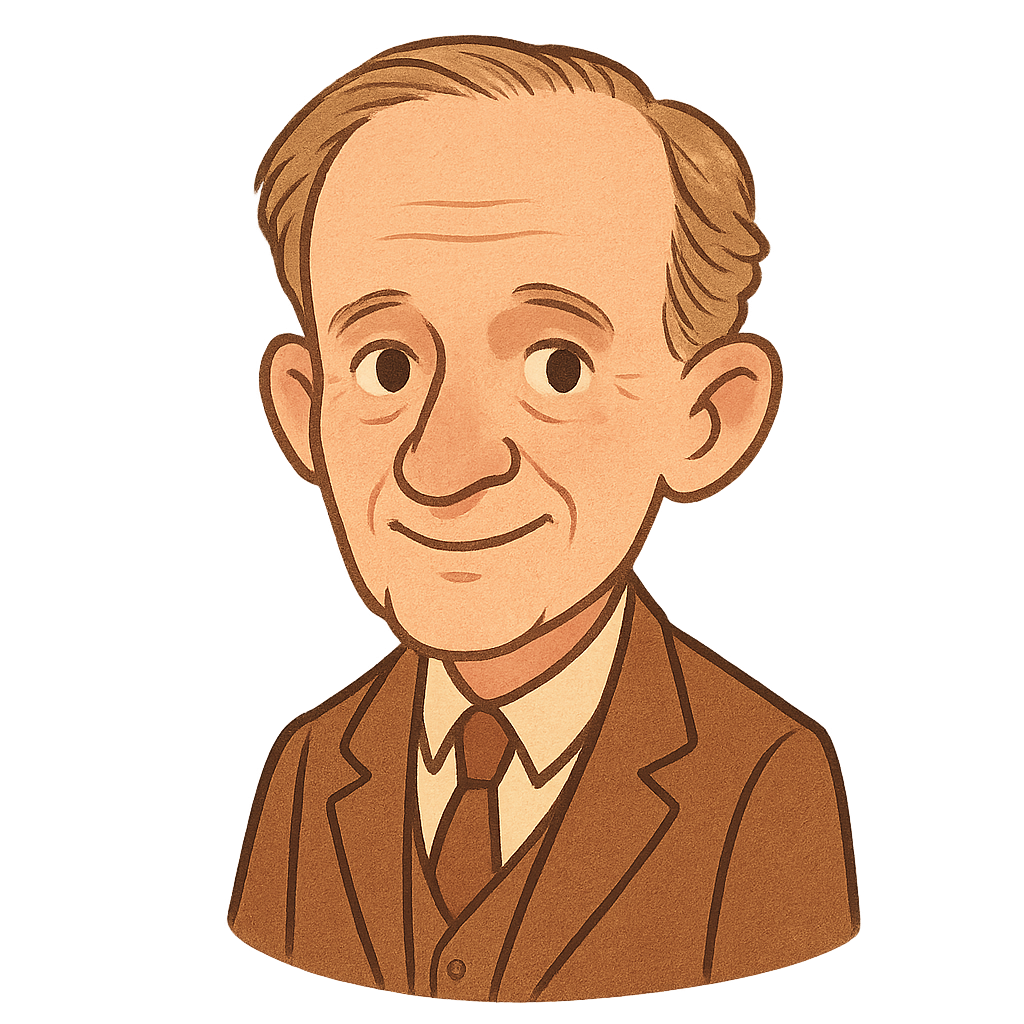
Hello! My name is Alan Alexander Milne, but you probably know me better as A. A. Milne, the creator of Winnie-the-Pooh. My story begins in London, England, where I was born on January 18th, 1882. My father was a schoolmaster, which meant our home was always brimming with books and a love for learning. I was lucky enough to have some amazing teachers, including the famous author H. G. Wells, who wrote incredible stories about time travel and visitors from other planets! He inspired me to believe in the power of imagination. When I was old enough, around the year 1900, I went to the great Cambridge University to study mathematics. But I quickly discovered that my true passion wasn't numbers, but words. I spent most of my time writing funny poems and stories for the student magazine, and I knew I had found what I was meant to do.
After leaving university in 1903, I moved back to London and began my career as a writer. By 1906, I was working as an assistant editor for a very popular humor magazine called *Punch*. It was a dream come true to make people laugh with my words. I also began writing plays, and it was a thrill to see them performed on the big stages in London. In 1913, I married my wonderful wife, Dorothy de Sélincourt. But our happy life was interrupted when World War I began in 1914. Like many young men, I joined the British Army in 1915 to serve my country. I was a signals officer in France, and what I saw during the war changed me forever. It was a terrible and sad time, and it made me long for a more peaceful, gentle world. When the war was over, I knew I wanted to write things that brought comfort and happiness.
A. A. Milne: The Man Who Created Winnie-the-Pooh
Hello! My name is Alan Alexander Milne, but you probably know me better as A. A. Milne, the creator of Winnie-the-Pooh. My story begins in London, England, where I was born on January 18th, 1882. My father was a schoolmaster, which meant our home was always brimming with books and a love for learning. I was lucky enough to have some amazing teachers, including the famous author H. G. Wells, who wrote incredible stories about time travel and visitors from other planets! He inspired me to believe in the power of imagination. When I was old enough, around the year 1900, I went to the great Cambridge University to study mathematics. But I quickly discovered that my true passion wasn't numbers, but words. I spent most of my time writing funny poems and stories for the student magazine, and I knew I had found what I was meant to do.
After leaving university in 1903, I moved back to London and began my career as a writer. By 1906, I was working as an assistant editor for a very popular humor magazine called Punch. It was a dream come true to make people laugh with my words. I also began writing plays, and it was a thrill to see them performed on the big stages in London. In 1913, I married my wonderful wife, Dorothy de Sélincourt. But our happy life was interrupted when World War I began in 1914. Like many young men, I joined the British Army in 1915 to serve my country. I was a signals officer in France, and what I saw during the war changed me forever. It was a terrible and sad time, and it made me long for a more peaceful, gentle world. When the war was over, I knew I wanted to write things that brought comfort and happiness.
The greatest joy of my life arrived on August 21st, 1920, when my son, Christopher Robin, was born. He had a collection of beloved stuffed animals that he took everywhere: a donkey, a piglet, a kangaroo, a tiger, and of course, a teddy bear. His bear, a gift for his first birthday, was originally named Edward. But Christopher Robin later renamed him Winnie, after a real Canadian black bear he loved to visit at the London Zoo. Watching my son create a whole world for these toys sparked an idea. I started writing poems about his adventures, which became my first children's book, When We Were Very Young, published in 1924. It was a surprise success! Two years later, in 1926, I wrote the story that would define my life: Winnie-the-Pooh. The setting, the Hundred Acre Wood, was based on Ashdown Forest, a beautiful woodland near our country home where Christopher Robin and I would explore. I couldn't have done it without the brilliant artist E. H. Shepard, whose drawings brought Pooh and his friends to life perfectly. We followed it with Now We Are Six in 1927 and The House at Pooh Corner in 1928.
The Winnie-the-Pooh books became more famous than I could have ever imagined. While I was happy they brought so much joy, the fame was complicated. Before Pooh, I was a respected playwright and novelist for adults. But after 1926, it felt like the world only saw me as the creator of a children's character. People forgot about my other work, which was frustrating for me as a writer who loved exploring different kinds of stories. The fame was also difficult for my son. Being the real-life Christopher Robin meant he was famous, too, which wasn't always easy for a young boy who just wanted to be himself. It cast a long shadow over our lives, and for a time, I felt trapped by the success of my own creation. It's a strange feeling to be known for just one part of your life's work.
I continued writing for many years, but nothing ever captured the world's heart quite like that silly old bear. I lived to be 74 years old, and my life came to a peaceful close in 1956 at my home in Sussex, not far from the real Hundred Acre Wood. Though I sometimes wished my other books were more remembered, I came to understand the special gift I had given the world. My stories about friendship, kindness, and finding happiness in simple things have lasted for generations. I am so glad that even today, children and their families continue to explore the Hundred Acre Wood, proving that a little bear with a big heart can make a world of difference.
Wow facts
About
Alan Alexander Milne was an English author, best known for his books about the teddy bear Winnie-the-Pooh and for various poems for children.
Take a Quiz
Question 1 of 5
What is the main idea of the section titled 'The Shadow of the Bear'?
Explore next



Want to do even more?
Go beyond exploring. Unlock tools that turn every story into real learning.

Storypie Plus for families
Full stories, quizzes, and printables. Nights and car rides, sorted.
- Unlimited audio stories
- Create Mode: your child stars in the story
- Offline downloads
- Printable worksheets & coloring pages

Why Storypie for Schools
Students engaged. Prep in seconds. Evenings back to you.
- Worksheets & Quizzes
- Classroom Management
- Formative Assessment
- Custom Curriculum & Lesson Plans
- 27 Languages

Why Storypie for Homeschool
Curriculum done. They'll ask for more. Hours back in your day.
- Worksheet Generator
- First-Person Audio Stories
- Built-in Comprehension Quizzes
- Custom Curriculum & Lesson Plans
- Print & Go Activities