English

Alice Ball
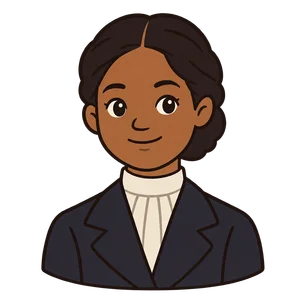
Alice Augusta Ball was an American chemist who developed the most effective treatment for leprosy during the…
Reads at Grades 6–8 Listens at Grades 4–8
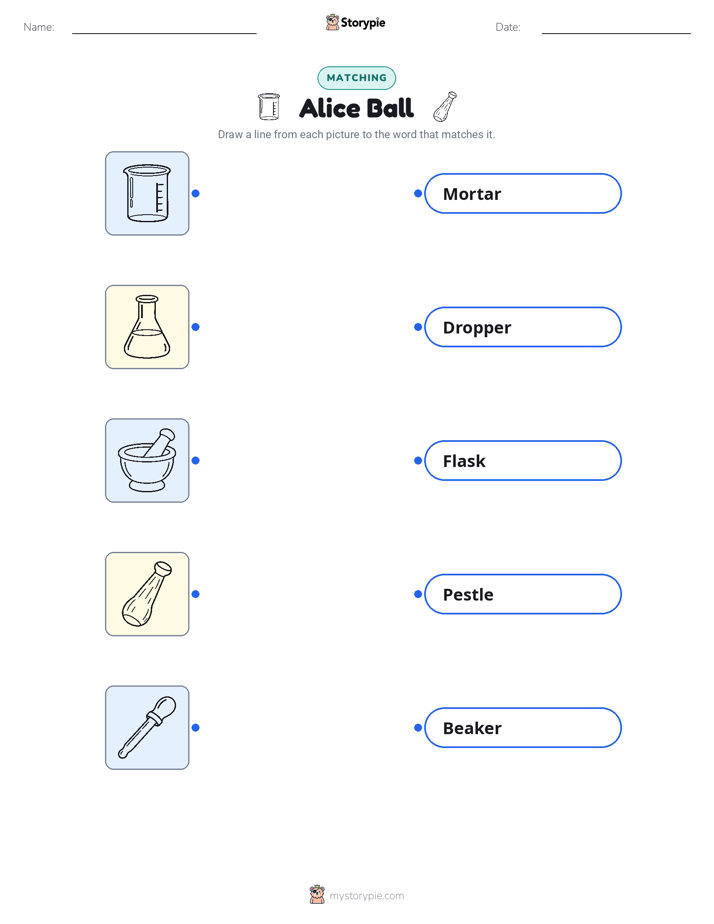
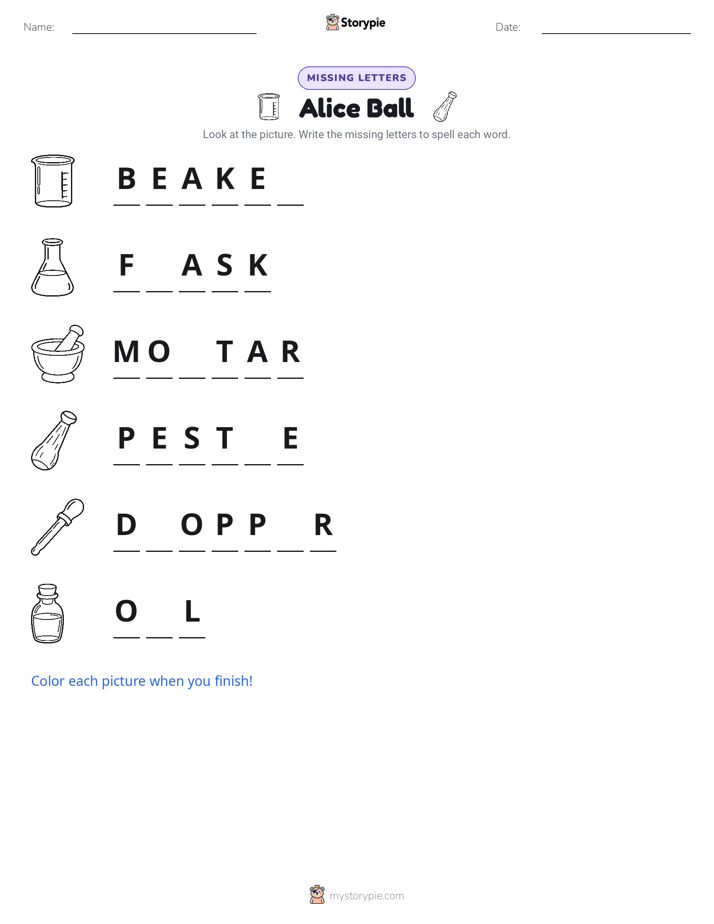
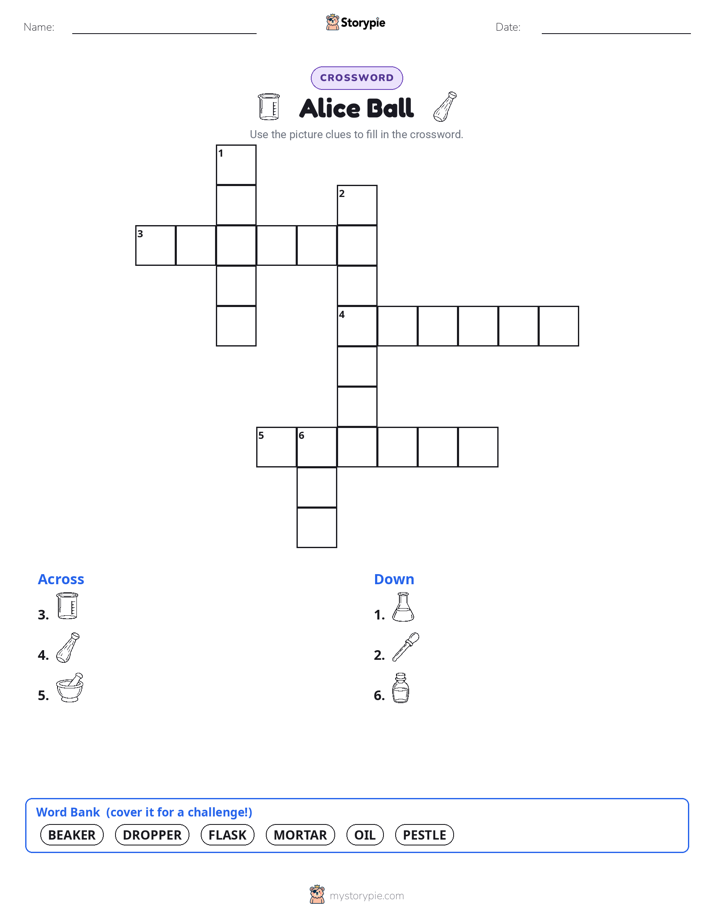
Print & create
Answer keys·No prep·Free with an account
28 worksheets · answer keys · full story · quiz · Ages 10-12 · CEFR B2
Plus adds 290,000+ more stories in 27 languages, audio for every one, and printables for all of them.
Just want Alice Ball?
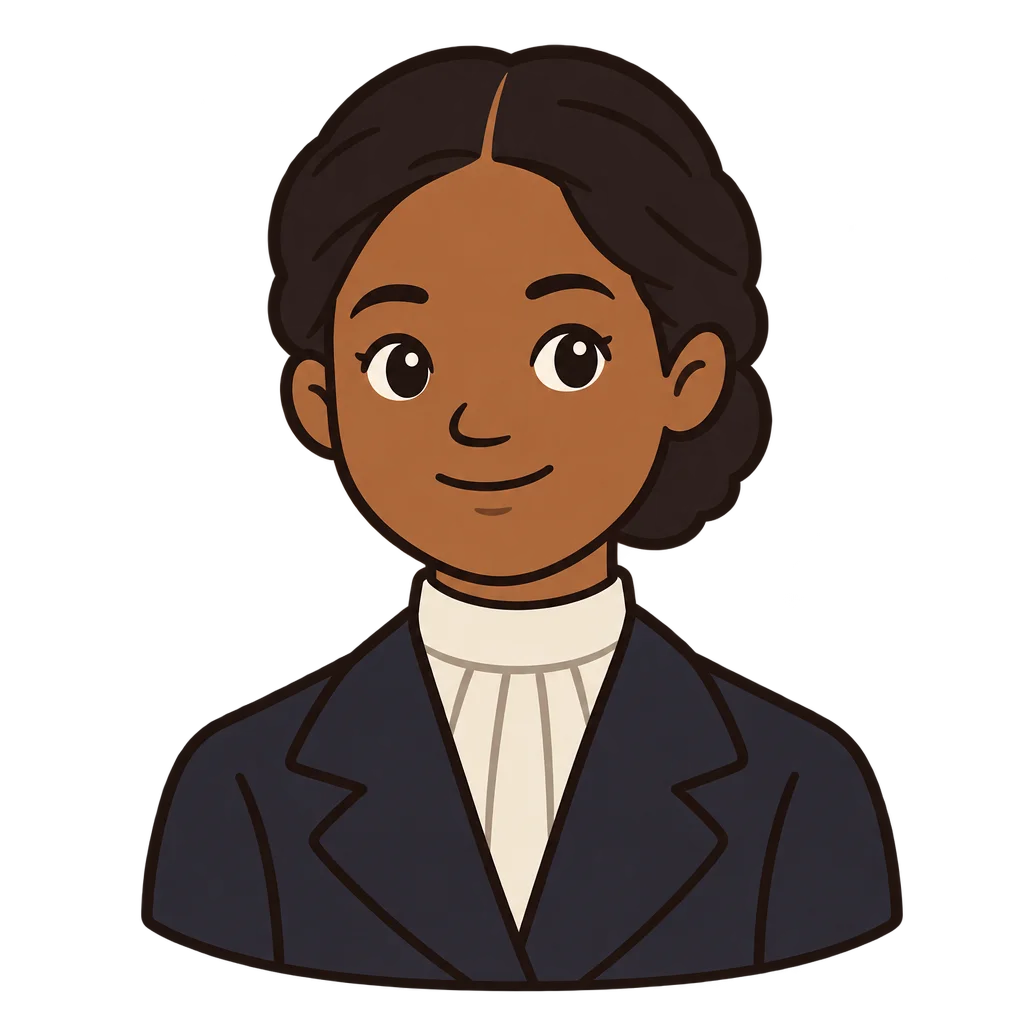
Hello, my name is Alice Ball, and I was a chemist with a very important puzzle to solve. I was born in Seattle, Washington, on July 24th, 1892, to a family that loved learning and creating. My grandfather was a famous photographer, and that spirit of looking closely at the world was always part of our family. This taught me to be curious and observant. When I was a child, my family moved to the beautiful islands of Hawaii in 1903 for my grandfather's health. Though we returned to Seattle in 1905 after he passed away, the memory of Hawaii's unique plants and nature stayed with me. I excelled in school, especially in science, and after graduating from Seattle High School in 1910, I knew I wanted to spend my life understanding how the world works through chemistry.
I went to the University of Washington, where my love for science grew even stronger. I worked so hard that I earned not one, but two degrees: one in pharmaceutical chemistry in 1912 and another in pharmacy in 1914. While I was still a student, I even co-authored a scientific article that was published in a major chemistry journal. This was very rare for a woman, and especially an African American woman, at that time, and it showed me that my ideas were valuable to the scientific community. When it was time to get my master's degree, I had offers from several colleges, but my heart pulled me back to Hawaii. In 1914, I enrolled at the College of Hawaii. The next year, in 1915, I became the first African American and the first woman to graduate with a master's degree in chemistry from the college. I was then hired as its first female chemistry instructor, ready to teach others and continue my own research.
Alice Ball: A Scientific Story
Hello, my name is Alice Ball, and I was a chemist with a very important puzzle to solve. I was born in Seattle, Washington, on July 24th, 1892, to a family that loved learning and creating. My grandfather was a famous photographer, and that spirit of looking closely at the world was always part of our family. This taught me to be curious and observant. When I was a child, my family moved to the beautiful islands of Hawaii in 1903 for my grandfather's health. Though we returned to Seattle in 1905 after he passed away, the memory of Hawaii's unique plants and nature stayed with me. I excelled in school, especially in science, and after graduating from Seattle High School in 1910, I knew I wanted to spend my life understanding how the world works through chemistry.
I went to the University of Washington, where my love for science grew even stronger. I worked so hard that I earned not one, but two degrees: one in pharmaceutical chemistry in 1912 and another in pharmacy in 1914. While I was still a student, I even co-authored a scientific article that was published in a major chemistry journal. This was very rare for a woman, and especially an African American woman, at that time, and it showed me that my ideas were valuable to the scientific community. When it was time to get my master's degree, I had offers from several colleges, but my heart pulled me back to Hawaii. In 1914, I enrolled at the College of Hawaii. The next year, in 1915, I became the first African American and the first woman to graduate with a master's degree in chemistry from the college. I was then hired as its first female chemistry instructor, ready to teach others and continue my own research.
In Hawaii, there was a serious illness called Hansen's disease, which was also known as leprosy. It was a terrible sickness that forced people to live away from their families in isolation on the island of Molokai. At the time, there was a medicine called chaulmoogra oil that came from the seeds of a tree, but it didn't work very well. It was a thick, sticky oil that was very painful to inject and made people sick if they tried to swallow it. Most patients couldn't tolerate the treatment. A doctor at a nearby hospital, Dr. Harry T. Hollmann, knew I was a talented chemist and asked for my help. He gave me a challenge: could I find a way to make the active ingredients in the oil easy for the body to absorb without all the painful side effects? I got to work right away in my laboratory. I had to figure out how to separate the healing parts of the oil and make them mix with water so they could be injected safely. It was a complex chemical puzzle, but I loved it.
In less than a year, when I was just 23 years old, I did it. In 1916, I developed a simple technique to isolate the active compounds in the oil and modify them into a smooth, injectable liquid that was incredibly effective. My method, which later became known as the 'Ball Method,' was a huge breakthrough. For the first time, people with Hansen's disease had a real treatment that could help them get better and go home. But just as I made this incredible discovery, I became very ill. I had to leave my laboratory in Hawaii and return to Seattle for treatment. Sadly, I never recovered. I passed away on December 31st, 1916, before I had the chance to publish my research and tell the world about my method. Because I was gone, the president of the college, Arthur Dean, continued my work, but he published it under his own name, calling it the 'Dean Method.' For many years, my name and my contribution were forgotten.
Even though my name was forgotten for a long time, my discovery was not. For the next twenty years, the 'Ball Method' was used to treat thousands of patients, allowing them to leave isolation and reunite with their families. Many years later, in the 1970s, historians and researchers at the University of Hawaii uncovered the truth of my work. They found Dr. Hollmann's notes from 1922, where he had tried to give me credit and had named my discovery the 'Ball Method.' Finally, my story was brought into the light. In the year 2000, the university honored me with a plaque placed by a chaulmoogra tree on campus, and the state of Hawaii declared February 29th to be 'Alice Ball Day.' I lived to be 24 years old. Though my life was short, I am so proud that my work gave hope and healing to so many. My story shows that science is for everyone, and that even if a contribution is overlooked, its impact can change the world forever.
Wow facts
About
Alice Augusta Ball was an American chemist who developed the most effective treatment for leprosy during the early 20th century, which means the time from 1901 to 1930.
Take a Quiz
Question 1 of 5
What was the main problem with using chaulmoogra oil as a medicine before Alice Ball's work?
Explore next






Want to do even more?
Go beyond exploring. Unlock tools that turn every story into real learning.

Storypie Plus for families
Full stories, quizzes, and printables. Nights and car rides, sorted.
- Unlimited audio stories
- Create Mode: your child stars in the story
- Offline downloads
- Printable worksheets & coloring pages

Why Storypie for Schools
Students engaged. Prep in seconds. Evenings back to you.
- Worksheets & Quizzes
- Classroom Management
- Formative Assessment
- Custom Curriculum & Lesson Plans
- 27 Languages

Why Storypie for Homeschool
Curriculum done. They'll ask for more. Hours back in your day.
- Worksheet Generator
- First-Person Audio Stories
- Built-in Comprehension Quizzes
- Custom Curriculum & Lesson Plans
- Print & Go Activities