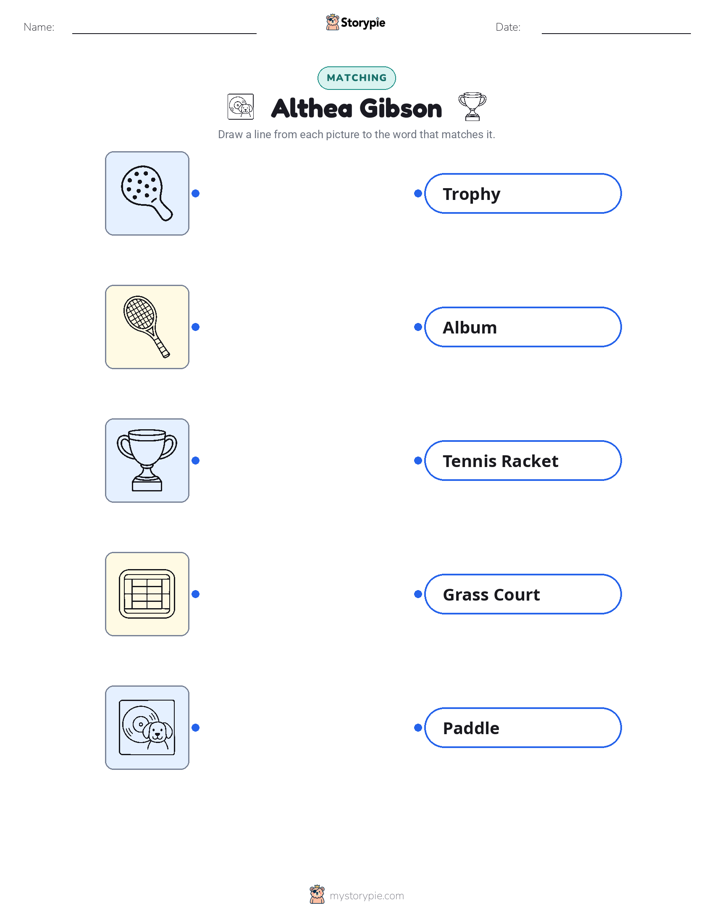
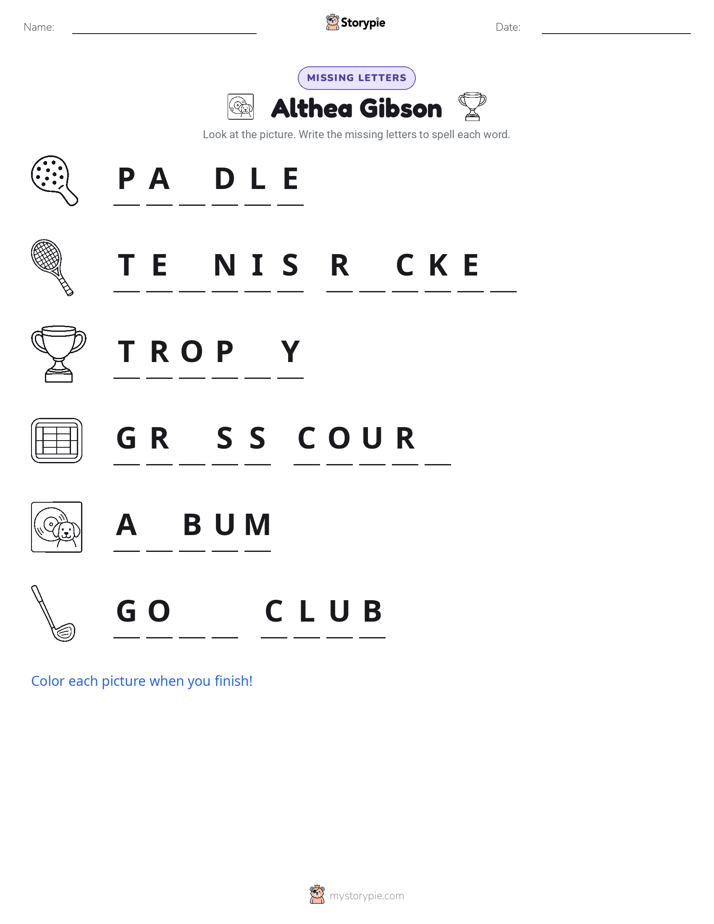
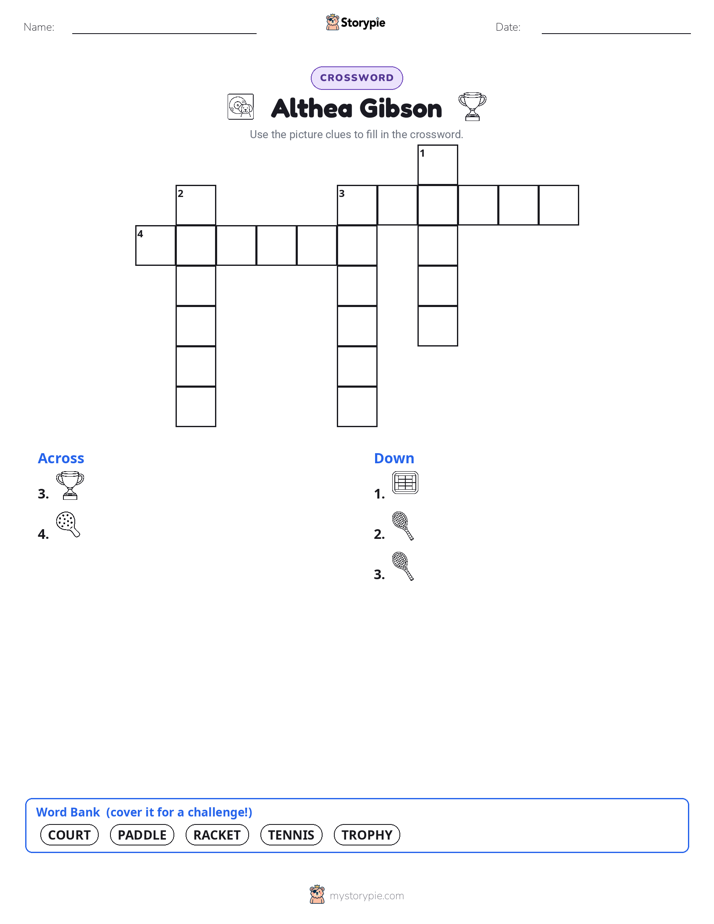
English

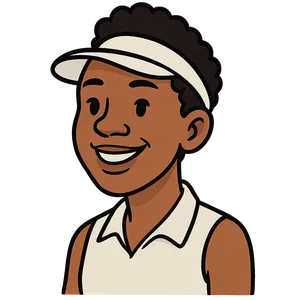
Althea Gibson
Althea Gibson was an American tennis player and professional golfer who broke the color barrier in both…
Reads at Grades 6–8 Listens at Grades 4–8
Print & create
Answer keys·No prep·Free with an account
28 worksheets · answer keys · full story · quiz · Ages 10-12 · CEFR B2
Plus adds 280,000+ more stories in 27 languages, audio for every one, and printables for all of them.
Just want Althea Gibson?
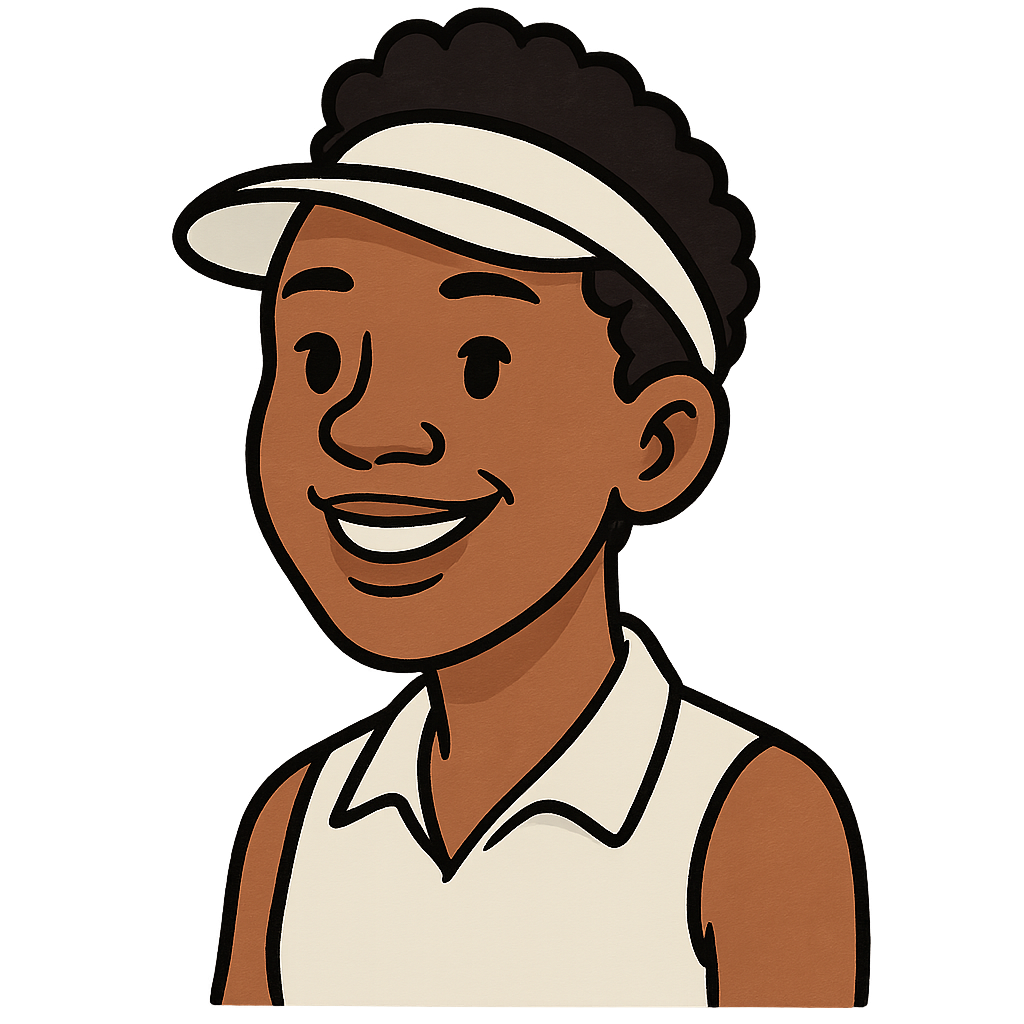
Hello! My name is Althea Gibson, and I became a champion. But my story started far from the fancy grass courts of Wimbledon. I was born on August 25th, 1927, in a small town called Silver, South Carolina. When I was a little girl, around 1930, my family moved north to Harlem in New York City as part of the Great Migration. Life was tough, and I was a restless kid. I wasn't a fan of sitting still in a classroom; I preferred being outside, playing stickball in the streets with the boys. I was tall, strong, and quick, which helped me discover a sport that felt just right for me: paddle tennis. I practiced endlessly and became so good that by 1939, when I was just 12 years old, I was the New York City women's paddle tennis champion.
My skill at paddle tennis got me noticed. A musician named Buddy Walker saw me play and believed I had the potential to be great at real tennis. In 1941, he introduced me to the members of the Cosmopolitan Tennis Club, a club for Black players in Harlem. They saw my talent and decided to help me learn the game. It wasn't an easy transition. I had to learn new rules, new techniques, and a whole new way of behaving on the court. Two people, Dr. Walter Johnson and Dr. Hubert Eaton, took me under their wing and became my mentors. They gave me a place to live and train during the summers, away from the distractions of the city. They also pushed me to focus on my education, and I finished high school in 1949. They taught me the discipline I needed to become a true competitor in the world of the American Tennis Association (ATA), which was the tennis league for African American players.
Althea Gibson: A Champion's Story
Hello! My name is Althea Gibson, and I became a champion. But my story started far from the fancy grass courts of Wimbledon. I was born on August 25th, 1927, in a small town called Silver, South Carolina. When I was a little girl, around 1930, my family moved north to Harlem in New York City as part of the Great Migration. Life was tough, and I was a restless kid. I wasn't a fan of sitting still in a classroom; I preferred being outside, playing stickball in the streets with the boys. I was tall, strong, and quick, which helped me discover a sport that felt just right for me: paddle tennis. I practiced endlessly and became so good that by 1939, when I was just 12 years old, I was the New York City women's paddle tennis champion.
My skill at paddle tennis got me noticed. A musician named Buddy Walker saw me play and believed I had the potential to be great at real tennis. In 1941, he introduced me to the members of the Cosmopolitan Tennis Club, a club for Black players in Harlem. They saw my talent and decided to help me learn the game. It wasn't an easy transition. I had to learn new rules, new techniques, and a whole new way of behaving on the court. Two people, Dr. Walter Johnson and Dr. Hubert Eaton, took me under their wing and became my mentors. They gave me a place to live and train during the summers, away from the distractions of the city. They also pushed me to focus on my education, and I finished high school in 1949. They taught me the discipline I needed to become a true competitor in the world of the American Tennis Association (ATA), which was the tennis league for African American players.
I started winning, a lot. I won my first ATA national women's singles championship in 1947 and kept winning it for ten consecutive years. But I had a bigger goal in mind. I wanted to compete in the most important tournaments in the world, like the United States National Championships, now known as the U.S. Open. In those days, tennis was segregated by race, and Black players weren't allowed to compete in those major events. It was incredibly frustrating to know I was one of the best players but was denied the chance to prove it. But then, in 1950, a famous white tennis player named Alice Marble wrote an article in a magazine demanding that I be given a chance. Her powerful voice made a huge difference. That year, on my 23rd birthday, August 25th, 1950, I walked onto the court at the U.S. Nationals. I had finally broken the color barrier in world tennis.
Breaking the barrier was one thing, but winning on that stage was another. It took several years of intense work and perseverance, but I was determined to prove I belonged at the top. In 1956, I traveled to France and won the French Championships, becoming the first-ever Black person to win a major world tennis title, also known as a Grand Slam. That was just the beginning of my historic run. The next year, 1957, was my year. I won Wimbledon, the most famous tournament in the world, and had the honor of receiving the trophy from Queen Elizabeth II herself. Later that summer, I returned home and won the U.S. Nationals. I had proven I was the best in the world. To make it official, I did it all again in 1958, winning both Wimbledon and the U.S. Nationals for a second time.
After my incredible wins in 1958, I decided it was time to become a professional athlete. At that time, there wasn't a professional women's tennis tour like there is today, so I had to find other ways to make a living with my athletic skills. For a while, I toured with the famous Harlem Globetrotters basketball team, playing exhibition tennis matches before their games to entertain the crowds. I also had a passion for music and had a wonderful singing voice, so I recorded an album called 'Althea Gibson Sings' in 1959. But I wasn't done breaking barriers in sports. I took up golf and fell in love with it. In 1964, I became the first African American woman to join the Ladies Professional Golf Association, or LPGA Tour. I proved that a determined person could succeed in more than one arena.
My journey had its ups and downs, but I always fought for my place in the world. In recognition of my achievements, I was inducted into the International Tennis Hall of Fame in 1971. I lived to be 76 years old. Today, people remember me not just for the trophies I won, but for opening doors for others who came after me. Every time you see a powerful player like Venus or Serena Williams on the court, you see a part of my legacy. I hope my story shows you that it doesn't matter where you start—if you have talent, determination, and a little help along the way, you can become a champion, too.
Wow facts
About
Althea Gibson was an American tennis player and professional golfer who broke the color barrier in both sports. She was the first African American to win a Grand Slam title (the French Championships in 1956) and the first to win Wimbledon in 1957.
Take a Quiz
Question 1 of 5
What is the main lesson or theme of Althea Gibson's story?
Explore next





Want to do even more?
Go beyond exploring. Unlock tools that turn every story into real learning.

Storypie Plus for families
Full stories, quizzes, and printables. Nights and car rides, sorted.
- Unlimited audio stories
- Create Mode: your child stars in the story
- Offline downloads
- Printable worksheets & coloring pages

Why Storypie for Schools
Students engaged. Prep in seconds. Evenings back to you.
- Worksheets & Quizzes
- Classroom Management
- Formative Assessment
- Custom Curriculum & Lesson Plans
- 27 Languages

Why Storypie for Homeschool
Curriculum done. They'll ask for more. Hours back in your day.
- Worksheet Generator
- First-Person Audio Stories
- Built-in Comprehension Quizzes
- Custom Curriculum & Lesson Plans
- Print & Go Activities