English

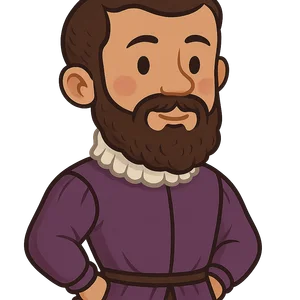
Andreas Vesalius
A Flemish anatomist and physician whose groundbreaking 1543 book, 'De humani corporis fabrica'…
Reads at Grades 6–8 Listens at Grades 4–8
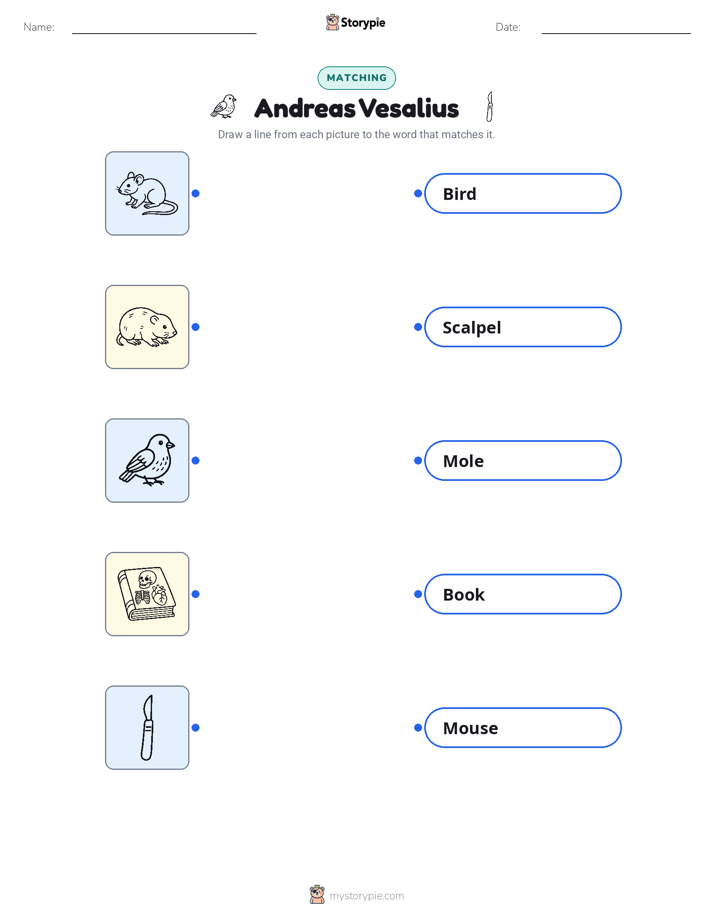
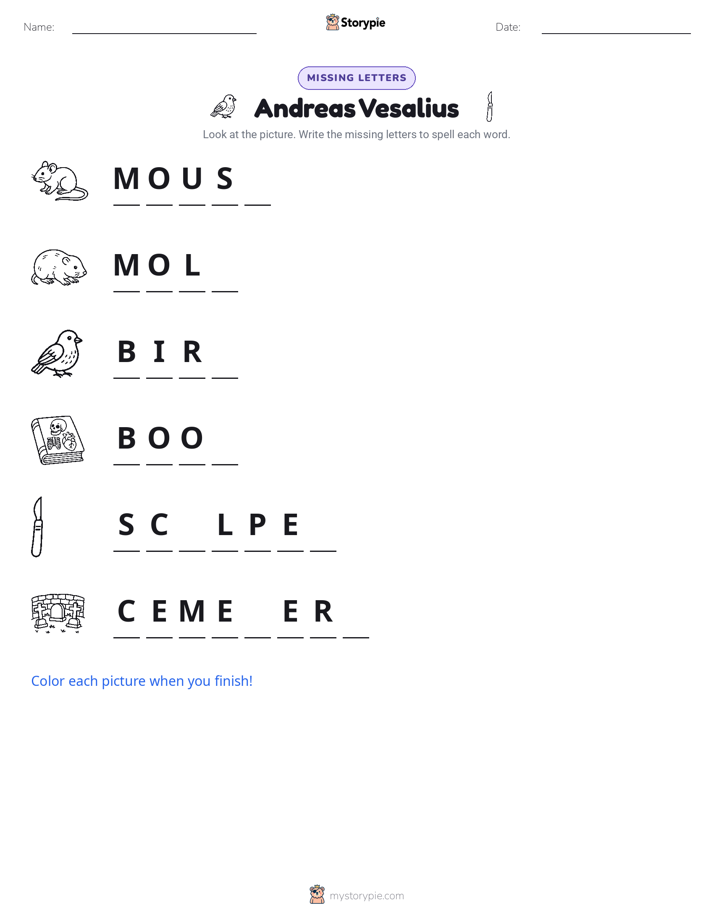
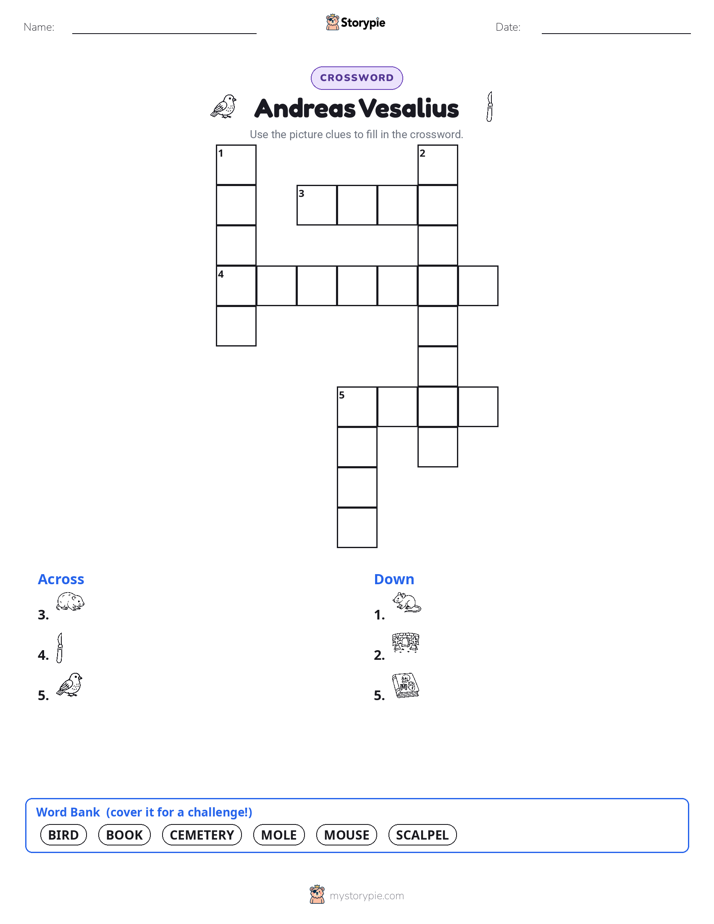
Print & create
Answer keys·No prep·Free with an account
28 worksheets · answer keys · full story · quiz · Ages 10-12 · CEFR B2
Plus adds 244,000+ more stories in 27 languages, audio for every one, and printables for all of them.
Just want Andreas Vesalius?
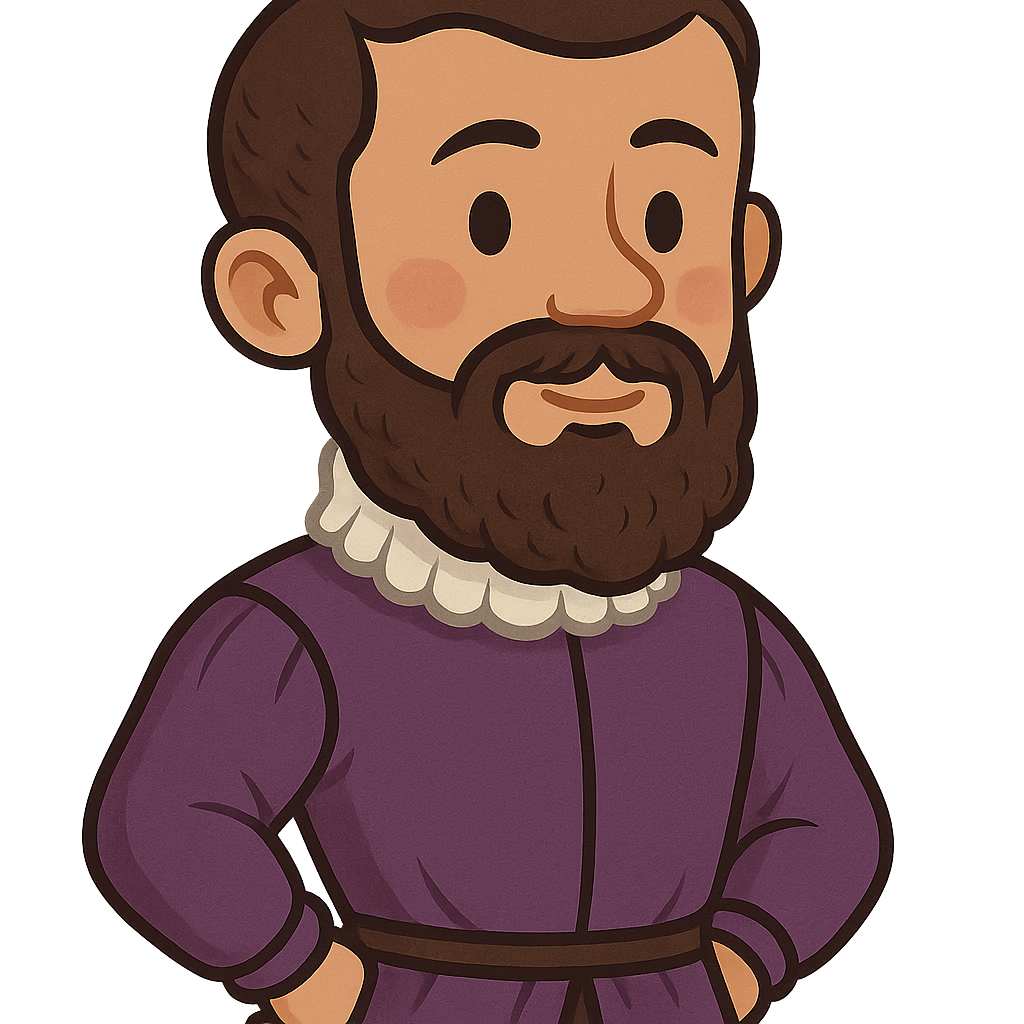
Hello, my name is Andreas Vesalius, and I want to tell you the story of how my curiosity changed the world of medicine forever. I was born on the very last day of the year, December 31st, 1514, in the city of Brussels. My family was full of doctors—my father and grandfather were both respected physicians who cared for emperors! From a young age, I was fascinated by how living things worked. While other children played games, I would find mice, moles, and birds and carefully study their bodies to understand how their bones and muscles fit together. This curiosity wasn't just a hobby; it was a deep passion that would guide my entire life. I knew, even then, that I wanted to unlock the secrets hidden inside the human body.
When I was old enough, around the year 1533, I traveled to the famous University of Paris to study medicine. In those days, learning about the human body was very different. My professors would stand far away from us, reading from the books of an ancient Greek doctor named Galen, who had lived over a thousand years before me. A surgeon would perform the dissection, but we students were too far away to see anything clearly. I grew frustrated. How could we learn if we couldn't see for ourselves? I believed that to truly understand anatomy, you had to get your hands dirty. I began performing my own dissections, sometimes even visiting cemeteries at night to find bodies to study. It was risky, but my desire to learn the truth was stronger than my fear. In 1537, after having to leave Paris because of a war, I finished my studies and was ready to share what I was beginning to discover.
Andreas Vesalius: The Father of Modern Anatomy
Hello, my name is Andreas Vesalius, and I want to tell you the story of how my curiosity changed the world of medicine forever. I was born on the very last day of the year, December 31st, 1514, in the city of Brussels. My family was full of doctors—my father and grandfather were both respected physicians who cared for emperors! From a young age, I was fascinated by how living things worked. While other children played games, I would find mice, moles, and birds and carefully study their bodies to understand how their bones and muscles fit together. This curiosity wasn't just a hobby; it was a deep passion that would guide my entire life. I knew, even then, that I wanted to unlock the secrets hidden inside the human body.
When I was old enough, around the year 1533, I traveled to the famous University of Paris to study medicine. In those days, learning about the human body was very different. My professors would stand far away from us, reading from the books of an ancient Greek doctor named Galen, who had lived over a thousand years before me. A surgeon would perform the dissection, but we students were too far away to see anything clearly. I grew frustrated. How could we learn if we couldn't see for ourselves? I believed that to truly understand anatomy, you had to get your hands dirty. I began performing my own dissections, sometimes even visiting cemeteries at night to find bodies to study. It was risky, but my desire to learn the truth was stronger than my fear. In 1537, after having to leave Paris because of a war, I finished my studies and was ready to share what I was beginning to discover.
My journey led me to Italy, to the University of Padua, one of the best medical schools in the world. On December 5th, 1537, I earned my medical degree, and the very next day, they made me the professor of anatomy and surgery! I decided to teach in a completely new way. I didn't stand back and read from old books. I stood right beside the dissection table with my students, showing them the muscles, bones, and organs with my own hands. As I did this, I started noticing something startling. Many of the things Galen had written were wrong! For example, he wrote that the human jawbone was made of two separate bones, but I could clearly see and feel it was only one. He said the breastbone had seven parts, but I counted only three. I realized Galen must have based his writings on dissecting animals, like apes and dogs, not humans. It was a shocking discovery that would change everything.
I knew I couldn't keep these discoveries to myself. I had to write a new book—one based on what I had actually seen inside the human body. For years, I worked tirelessly. I teamed up with some of the best artists of the time to create hundreds of beautiful, detailed drawings of the human skeleton, muscles, and organs. We showed the body not just as a collection of parts, but as a work of art, full of strength and movement. In 1543, my book was finally published. I called it De humani corporis fabrica, which means 'On the Fabric of the Human Body.' It was a huge book, filled with my discoveries and corrections to Galen's work. Not everyone was happy. Some doctors were angry that I, a young man, would dare to question the great Galen. But I knew that science could only move forward by seeking the truth, even if it meant challenging ideas that had been accepted for centuries. My book provided the first truly accurate map of the human body.
After publishing my book, I spent many years as the personal physician to the Holy Roman Emperor, Charles V, and later to his son. My work as a doctor took me all over Europe. In 1564, I set out on a pilgrimage to the Holy Land. Sadly, on my journey home, I fell ill and died on the Greek island of Zakynthos. I lived to be 49 years old. Though my life ended far from home, my work had just begun its journey. Today, people call me the 'father of modern anatomy.' My book, De humani corporis fabrica, changed medicine by proving that doctors must learn from direct observation and scientific evidence. I showed the world the importance of looking for yourself and asking questions, a lesson that is the foundation of all science. My work helped create the world of modern medicine and surgery, helping doctors understand our amazing bodies so they can help us live healthier lives.
Wow facts
About
A Flemish anatomist and physician whose groundbreaking 1543 book, 'De humani corporis fabrica', was based on his own human dissections, which corrected centuries of errors and established modern anatomy.
Take a Quiz
Question 1 of 5
What was the main problem Vesalius identified with medical education in his time, and how did his book resolve it?
Explore next





Want to do even more?
Go beyond exploring. Unlock tools that turn every story into real learning.

Storypie Plus for families
Full stories, quizzes, and printables. Nights and car rides, sorted.
- Unlimited audio stories
- Create Mode: your child stars in the story
- Offline downloads
- Printable worksheets & coloring pages

Why Storypie for Schools
Students engaged. Prep in seconds. Evenings back to you.
- Worksheets & Quizzes
- Classroom Management
- Formative Assessment
- Custom Curriculum & Lesson Plans
- 27 Languages

Why Storypie for Homeschool
Curriculum done. They'll ask for more. Hours back in your day.
- Worksheet Generator
- First-Person Audio Stories
- Built-in Comprehension Quizzes
- Custom Curriculum & Lesson Plans
- Print & Go Activities