English

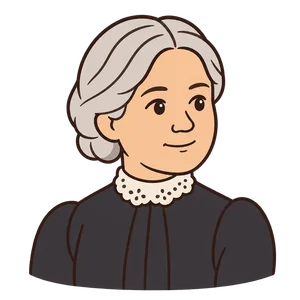
Annie Jump Cannon
Annie Jump Cannon was a pioneering American astronomer whose work in developing the Harvard Classification…
Reads at Grades 3–5 Listens at Grades 1–5
Print & create
Answer keys·No prep·Free with an account
28 worksheets · answer keys · full story · quiz · Ages 8-10 · CEFR B1
Plus adds 290,000+ more stories in 27 languages, audio for every one, and printables for all of them.
Just want Annie Jump Cannon?
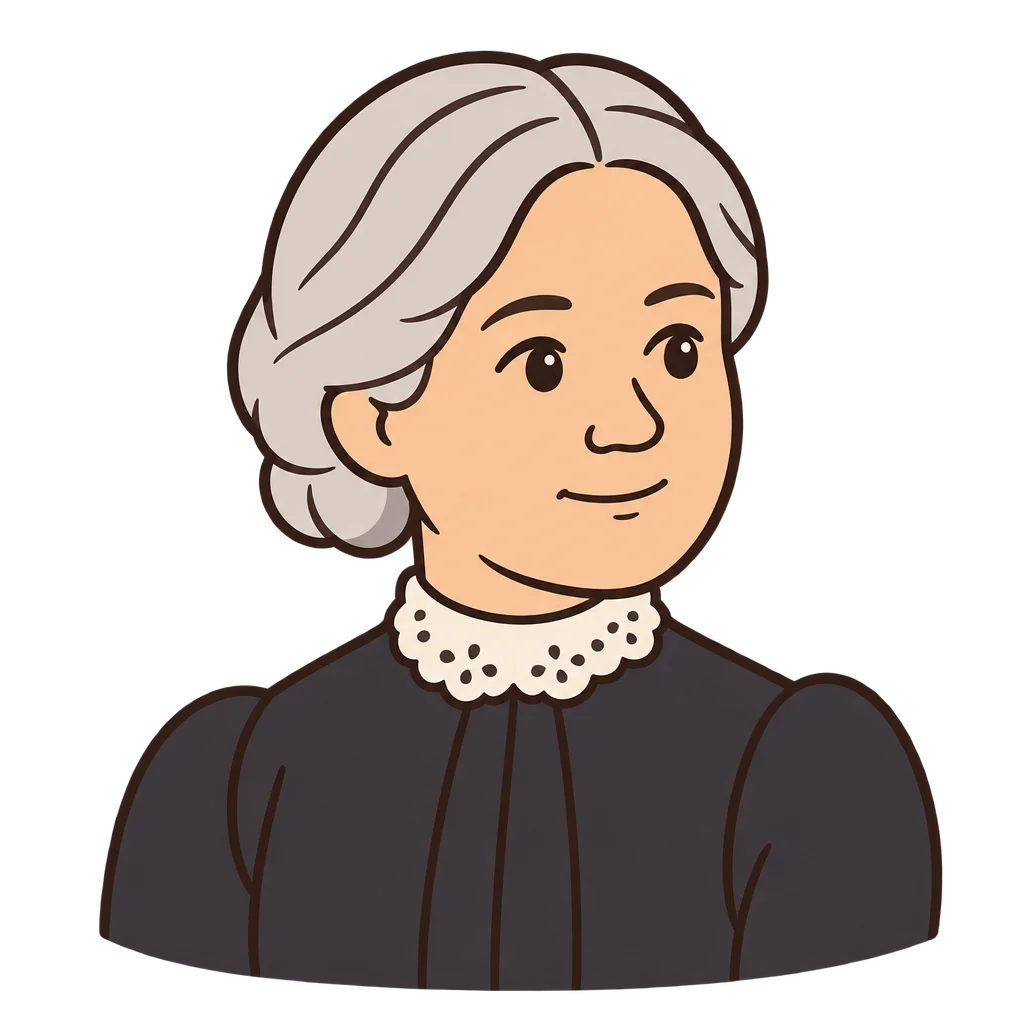
Hello! My name is Annie Jump Cannon. My story begins a long time ago, on December 11th, 1863, when I was born in a town called Dover, in Delaware. When I was a little girl, my favorite time was nighttime. My mother, Mary, would take me up to a special little room at the top of our house with a view of the whole sky. She taught me the names of the constellations, and together we would trace the shapes of lions, bears, and heroes in the glittering stars. It was like a secret, sparkling world just for us, and I knew, even then, that I wanted to learn all of its secrets.
I loved learning so much that I went off to college, which was not something many women did back then. I studied science at Wellesley College and graduated in 1884. But not long after, I got very sick with something called scarlet fever. I got better, but the illness left me almost completely deaf. For a while, I felt a little lost. It was hard to communicate with people. But I didn't let it stop me from chasing my starry dreams. I decided to go back to school to study the subject I loved most: astronomy.
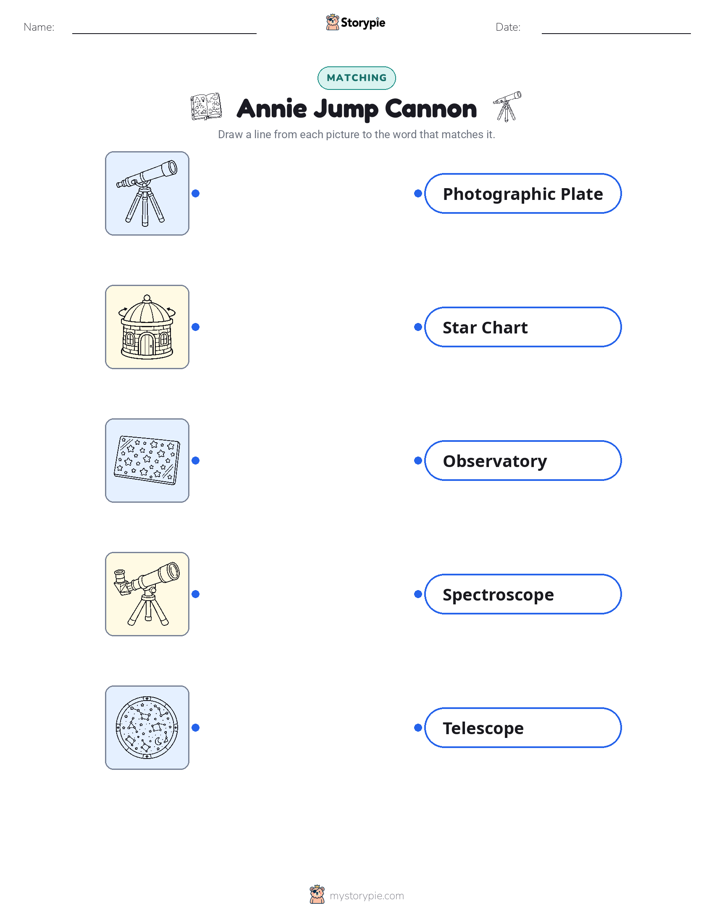
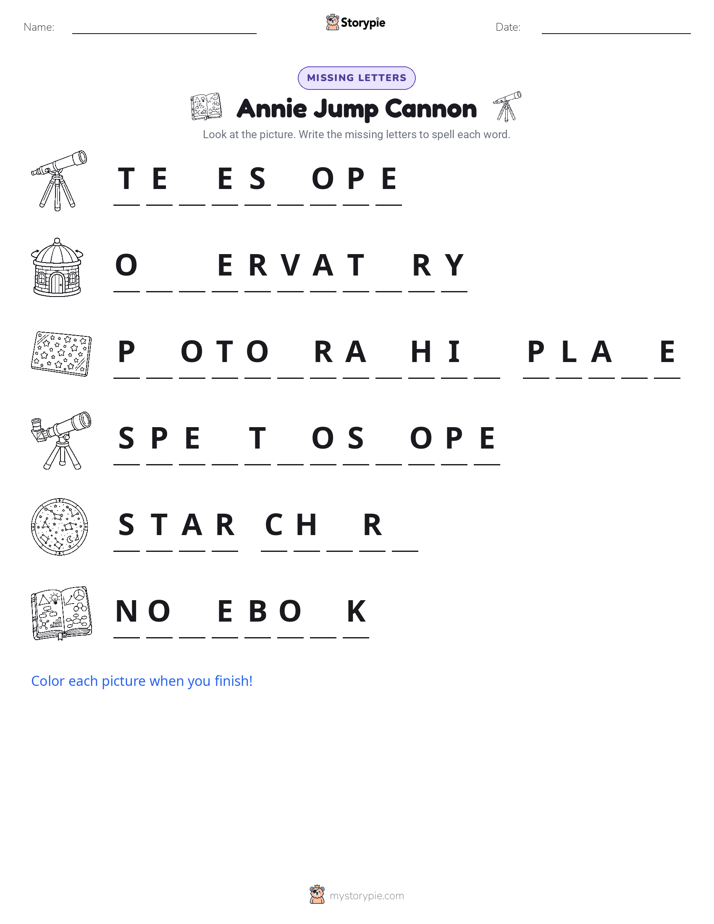
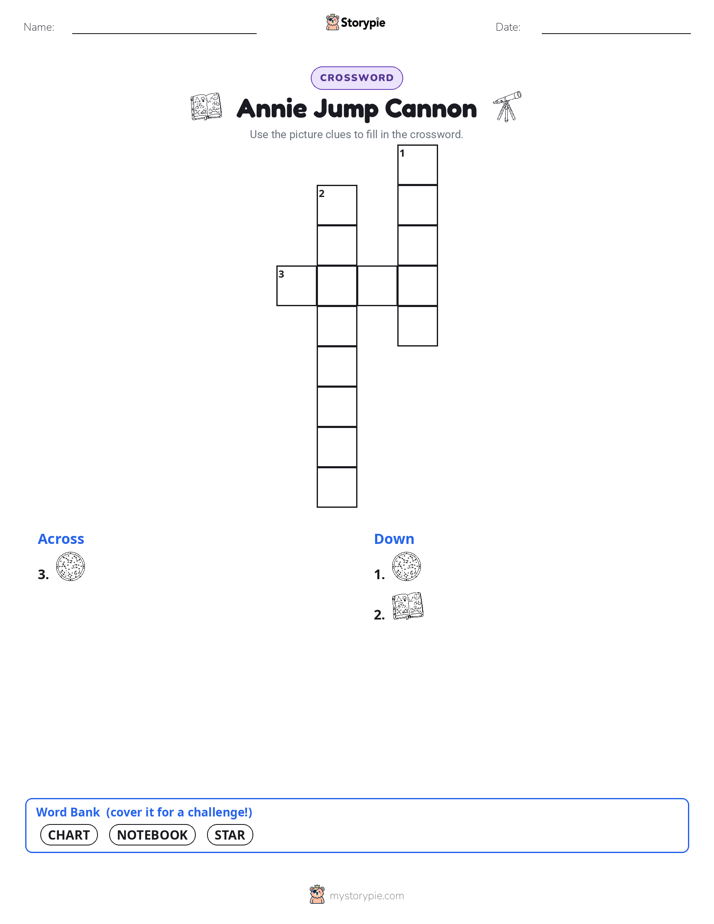
In 1896, I got a very special job at the Harvard College Observatory. A man named Edward C. Pickering was the director, and he hired a team of women to help him with a giant project. We were called 'computers'—not like the machines you have today, but people who computed, or calculated, things! Our job was to look at photographs of the night sky taken through a telescope and study the light from thousands and thousands of stars. Each star's light, when spread out like a rainbow, looked like a tiny barcode with dark lines in it. My job was to look at these barcodes, called spectra, and sort them. It was like the biggest, most complicated puzzle in the universe!
Annie Jump Cannon: The Star Sorter
Hello! My name is Annie Jump Cannon. My story begins a long time ago, on December 11th, 1863, when I was born in a town called Dover, in Delaware. When I was a little girl, my favorite time was nighttime. My mother, Mary, would take me up to a special little room at the top of our house with a view of the whole sky. She taught me the names of the constellations, and together we would trace the shapes of lions, bears, and heroes in the glittering stars. It was like a secret, sparkling world just for us, and I knew, even then, that I wanted to learn all of its secrets.
I loved learning so much that I went off to college, which was not something many women did back then. I studied science at Wellesley College and graduated in 1884. But not long after, I got very sick with something called scarlet fever. I got better, but the illness left me almost completely deaf. For a while, I felt a little lost. It was hard to communicate with people. But I didn't let it stop me from chasing my starry dreams. I decided to go back to school to study the subject I loved most: astronomy.
In 1896, I got a very special job at the Harvard College Observatory. A man named Edward C. Pickering was the director, and he hired a team of women to help him with a giant project. We were called 'computers'—not like the machines you have today, but people who computed, or calculated, things! Our job was to look at photographs of the night sky taken through a telescope and study the light from thousands and thousands of stars. Each star's light, when spread out like a rainbow, looked like a tiny barcode with dark lines in it. My job was to look at these barcodes, called spectra, and sort them. It was like the biggest, most complicated puzzle in the universe!
When I started, the system for sorting stars was very confusing. I thought, 'There must be a better way!' I spent hours and hours looking at the star barcodes. I realized that if you sorted them by their temperature—from the hottest, bluish-white stars to the coolest, reddish stars—it all made perfect sense. I created a simple system with just a few letters: O, B, A, F, G, K, M. To help everyone remember the order, I came up with a little phrase: 'Oh, Be A Fine Girl, Kiss Me!' My system worked so well that it became the way astronomers all over the world classify stars. My work was published in a giant book called the Henry Draper Catalogue, starting in 1918.
I worked at Harvard for the rest of my life. I was so fast at my job that they said I could classify three stars a minute! In my lifetime, I looked at and classified more than 350,000 stars. That's more than any other single person has ever done. I received many awards for my work. In 1925, I became the first woman ever to be given a special honor, an honorary degree, from the famous Oxford University in England. And in 1938, Harvard gave me a special title, the William C. Bond Astronomer.
I kept working with my beloved stars for my entire career. I lived to be 77 years old. Today, when astronomers look up at the sky and talk about a 'G-type star' like our sun, they are using the system I created. I am so proud that I could help create a map of the stars and show that women have an important place in the world of science.
Wow facts
About
Annie Jump Cannon was a pioneering American astronomer whose work in developing the Harvard Classification Scheme was fundamental to modern stellar classification.
Take a Quiz
Question 1 of 5
In the story, Annie's job was to look at a star's 'barcode.' What is another word for this barcode of light?
Explore next






Want to do even more?
Go beyond exploring. Unlock tools that turn every story into real learning.

Storypie Plus for families
Full stories, quizzes, and printables. Nights and car rides, sorted.
- Unlimited audio stories
- Create Mode: your child stars in the story
- Offline downloads
- Printable worksheets & coloring pages

Why Storypie for Schools
Students engaged. Prep in seconds. Evenings back to you.
- Worksheets & Quizzes
- Classroom Management
- Formative Assessment
- Custom Curriculum & Lesson Plans
- 27 Languages

Why Storypie for Homeschool
Curriculum done. They'll ask for more. Hours back in your day.
- Worksheet Generator
- First-Person Audio Stories
- Built-in Comprehension Quizzes
- Custom Curriculum & Lesson Plans
- Print & Go Activities