English

Auguste Rodin
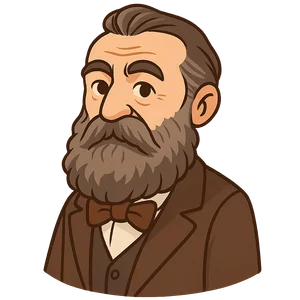
Auguste Rodin was a French sculptor, widely regarded as the founder of modern sculpture.
Reads at Grades 6–8 Listens at Grades 4–8
Print & create
Answer keys·No prep·Free with an account
28 worksheets · answer keys · full story · quiz · Ages 10-12 · CEFR B2
Plus adds 164,000+ more stories in 27 languages, audio for every one, and printables for all of them.
Just want Auguste Rodin?
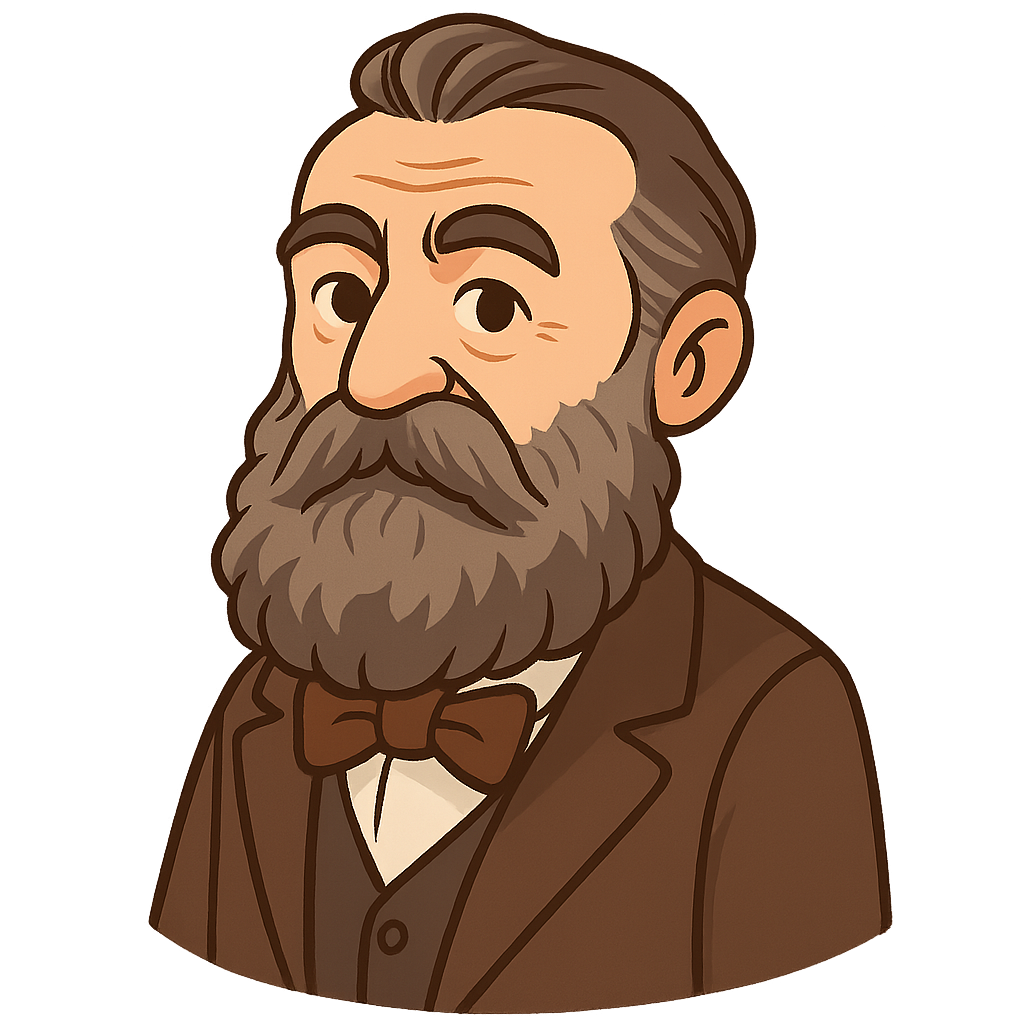
Hello, my name is Auguste Rodin, and I am a sculptor. I want to share my story with you, which began in Paris, France, on November 12th, 1840. From a very young age, I loved to draw. My eyesight was not very good, which meant I often saw the world as a collection of shapes and forms rather than fine details. This unique way of seeing fueled my passion for art. When I was a teenager, my greatest dream was to study at the most famous art school in Paris, the École des Beaux-Arts. Starting in 1857, I applied three separate times, and each time, they rejected me. It was a deep disappointment, but I knew in my heart that I was an artist. I was determined to find a way to create, and I promised myself I would never give up on that dream.
To support myself, I spent many years working as a decorative craftsman. It wasn't the fine art I dreamed of, but this work taught me valuable skills in modeling and carving that I would use for the rest of my life. Around 1864, I met a young woman named Rose Beuret, who became my lifelong partner. A truly life-changing moment for me came in 1875 when I traveled to Italy. There, I saw the powerful sculptures of the great artist Michelangelo. His work was filled with such intense feeling, and it inspired me to capture real, raw human emotion in my own art. When I returned, I created my first major sculpture, which I completed in 1877 and called 'The Age of Bronze.' It was so realistic that some critics accused me of making a cast from a live model instead of sculpting it myself. This controversy, though stressful, unexpectedly made me famous throughout Paris.
Auguste Rodin: A Life in Sculpture
Hello, my name is Auguste Rodin, and I am a sculptor. I want to share my story with you, which began in Paris, France, on November 12th, 1840. From a very young age, I loved to draw. My eyesight was not very good, which meant I often saw the world as a collection of shapes and forms rather than fine details. This unique way of seeing fueled my passion for art. When I was a teenager, my greatest dream was to study at the most famous art school in Paris, the École des Beaux-Arts. Starting in 1857, I applied three separate times, and each time, they rejected me. It was a deep disappointment, but I knew in my heart that I was an artist. I was determined to find a way to create, and I promised myself I would never give up on that dream.
To support myself, I spent many years working as a decorative craftsman. It wasn't the fine art I dreamed of, but this work taught me valuable skills in modeling and carving that I would use for the rest of my life. Around 1864, I met a young woman named Rose Beuret, who became my lifelong partner. A truly life-changing moment for me came in 1875 when I traveled to Italy. There, I saw the powerful sculptures of the great artist Michelangelo. His work was filled with such intense feeling, and it inspired me to capture real, raw human emotion in my own art. When I returned, I created my first major sculpture, which I completed in 1877 and called 'The Age of Bronze.' It was so realistic that some critics accused me of making a cast from a live model instead of sculpting it myself. This controversy, though stressful, unexpectedly made me famous throughout Paris.
My newfound fame led to the most important commission of my career. In 1880, the French government asked me to create a monumental set of bronze doors for a new museum of decorative arts. I called this enormous project 'The Gates of Hell,' and it became the central focus of my creative life for over thirty years. The doors were never fully completed as originally planned, but they became a vast canvas where I could explore countless ideas about life, struggle, and humanity. Many of my most famous sculptures were first imagined as small figures for these doors. Perhaps the most well-known of all is 'The Thinker.' I originally designed this figure to represent a poet, lost in creative thought, looking down upon the scenes below. Over time, he became a universal symbol of philosophy and intellectual power, recognized all over the world. During this incredibly productive period, around 1884, a talented young sculptor named Camille Claudel joined my workshop as an assistant. She was a brilliant artist in her own right and became an important collaborator in my work.
What made my art so different from what people were used to seeing? At the time, most sculptures were idealized and perfect, showing gods or heroes without flaws. I wasn't interested in perfection; I wanted to show truth. I focused on capturing powerful emotions—joy, sorrow, love, and pain—in the bodies of ordinary people. My style was also unique. Sometimes, I would leave parts of the marble or stone rough and unfinished around the figure. This was to show the process of creation, the struggle of the form emerging from the block. I was dedicated to portraying the human body with all its energy and honesty. This new approach often challenged people's expectations. In 1898, I unveiled my 'Monument to Balzac,' a sculpture of a famous writer. It was not a traditional, heroic statue, and it caused a huge scandal. But for me, it was a victory for artistic freedom and my belief that sculpture should express an inner truth, not just an outer likeness.
As the years passed, the world began to understand and celebrate my vision. By the 1900s, my work was famous internationally, and I was considered one of the most important artists of my time. I wanted to ensure that my art could be shared with everyone long after I was gone. In 1916, I made a very important decision: I donated my entire collection of sculptures and drawings to the French nation. My only request was that my studio and home, a beautiful building called the Hôtel Biron, be turned into a museum dedicated to my work. Today, it is known as the Musée Rodin. In January of 1917, I finally married my longtime partner, Rose. I lived to be 77 years old and passed away later that year on November 17th, 1917. My sculptures continue to stand in museums around the world, remembered for changing art forever by capturing the deep and complex truth of the human experience.
Wow facts
About
Auguste Rodin was a French sculptor, widely regarded as the founder of modern sculpture. He is known for iconic works like 'The Thinker' and 'The Kiss,' which emphasized emotion and realism.
Take a Quiz
Question 1 of 5
What was the main reason Auguste Rodin's sculpture 'The Age of Bronze' caused a controversy in 1877?
Explore next






Want to do even more?
Go beyond exploring. Unlock tools that turn every story into real learning.

Storypie Plus for families
Full stories, quizzes, and printables. Nights and car rides, sorted.
- Unlimited audio stories
- Create Mode: your child stars in the story
- Offline downloads
- Printable worksheets & coloring pages

Why Storypie for Schools
Students engaged. Prep in seconds. Evenings back to you.
- Worksheets & Quizzes
- Classroom Management
- Formative Assessment
- Custom Curriculum & Lesson Plans
- 27 Languages

Why Storypie for Homeschool
Curriculum done. They'll ask for more. Hours back in your day.
- Worksheet Generator
- First-Person Audio Stories
- Built-in Comprehension Quizzes
- Custom Curriculum & Lesson Plans
- Print & Go Activities