

 English

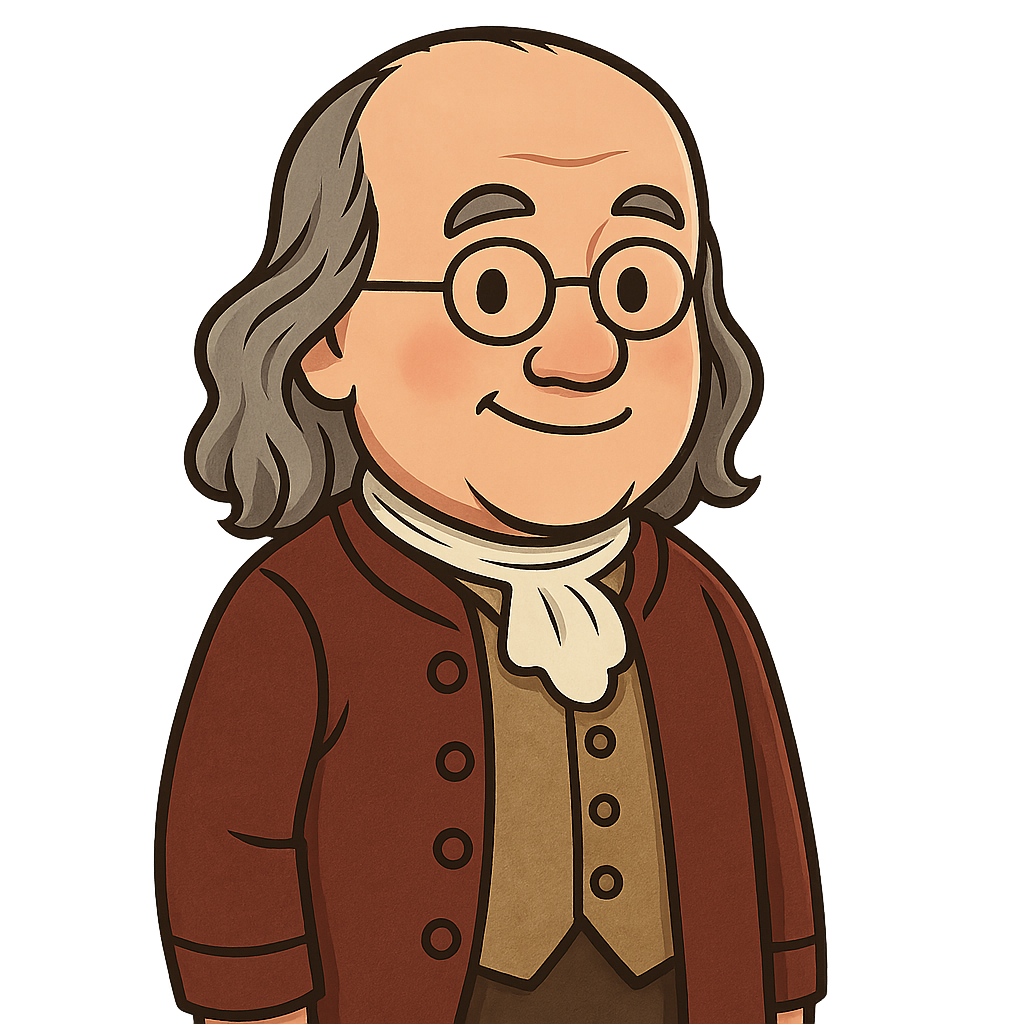
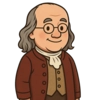
Benjamin Franklin: The Curious Inventor
Hello there. My name is Benjamin Franklin, and I have a story to tell you about a life filled with curiosity, big ideas, and a little bit of lightning. It all began in a bustling city called Boston, where I was born on a chilly day, January 17th, 1706. I was the fifteenth of seventeen children, so our house was always noisy and full of activity. More than anything in the world, I loved to read. I would read every book, pamphlet, or newspaper I could get my hands on. School was wonderful, but my family needed my help, so I had to leave when I was only ten years old to work for my father.
A few years later, I went to work as an apprentice in my older brother James’s printing shop. The smell of ink and the clatter of the printing press was like music to my ears. I loved learning how to set type and print pages, but I also had ideas of my own. I wanted to be a writer, but I knew James would never print articles written by his little brother. So, I came up with a secret plan. I began writing letters under a made-up name, a clever widow named ‘Silence Dogood,’ and slipped them under the print shop door at night. Everyone in Boston loved reading Mrs. Dogood’s funny and wise opinions, and James printed every single one. You can imagine his surprise when I finally told him the secret. He was fuming.
I knew I needed to make my own way in the world, so as a teenager, I ran away to a city called Philadelphia. It was there that I truly started my journey. I opened my own printing shop and worked very hard. I met and married my dear Deborah Read, and together we built a life. To share useful tips about farming, weather, and life, I started publishing a little book each year called 'Poor Richard's Almanack.' People loved it. But my mind was always buzzing with questions. I wondered about everything. Why does fire burn upwards? How can we make our homes warmer? What is lightning? That last question led to my most famous experiment. One stormy day in June of 1752, I flew a kite with a metal key tied to the string. When lightning flashed, a spark jumped from the key to my knuckle. It didn't hurt much, but it proved my theory: lightning was a form of electricity. This discovery wasn't just for fun; it helped me invent the lightning rod, a simple metal pole that has saved countless buildings from fires.
My curiosity didn't stop there. When I got older and my eyes had trouble seeing both near and far, I grew tired of switching glasses. So, I cut the lenses from two pairs of glasses and put them together in a single frame. I had just invented bifocals. Seeing how cold Philadelphia winters were, I also designed a special metal stove, the Franklin stove, that heated rooms much better than a regular fireplace. But my ideas weren't just about inventions. I believed that people should work together to make their communities better. I started the very first lending library in America so everyone could share books. I also organized Philadelphia’s first volunteer fire department, called the Union Fire Company, to keep our city safe. I believed that helping your neighbors was one of the most important things a person could do.
As I grew older, my country needed my help in a new way. The American colonies were being ruled by a king far across the ocean in England, and many of us felt it was unfair. We believed we should be free to govern ourselves. In the hot summer of 1776, I worked alongside brilliant men like Thomas Jefferson and John Adams. We gathered in a room in Philadelphia and carefully wrote a powerful letter to the king. It was called the Declaration of Independence, and it announced to the world that we were creating a new, free nation: the United States of America. But declaring our freedom was one thing; winning it was another. We had to fight a long war, the American Revolution. I sailed across the ocean to France to ask for their help, and thankfully, they agreed. After the war was won, we had to decide what kind of country we wanted to be. In 1787, I was the oldest delegate at the meeting to write the United States Constitution, the set of rules that our government still follows today. It was an honor to help build the foundations of my country.
My life was a long and busy one, and it came to a peaceful end on April 17th, 1790. Looking back, I realize I wore many different hats. I was a writer, an inventor, a scientist, and a statesman who helped create a new nation. But if there is one thing I hope you remember from my story, it is this: always be curious. Ask questions. Look for problems to solve and ways to help others. You never know where a simple question might lead you. It might lead to a new invention, a helpful community project, or even an idea that can change the world. Your mind is a powerful tool, so use it to learn, to create, and to make the world a better place for everyone.
Activities
Take a Quiz
Test what you learned with a fun quiz!
Get creative with colors!
Print a coloring book page of this topic.



 Free for Educators