English


Bernard Palissy
Bernard Palissy was a French Huguenot potter, hydraulics engineer, and craftsman during the Renaissance…
Reads at Grades 6–8 Listens at Grades 4–8
Print & create
Answer keys·No prep·Free with an account
28 worksheets · answer keys · full story · quiz · Ages 10-12 · CEFR B2
Plus adds 244,000+ more stories in 27 languages, audio for every one, and printables for all of them.
Just want Bernard Palissy?
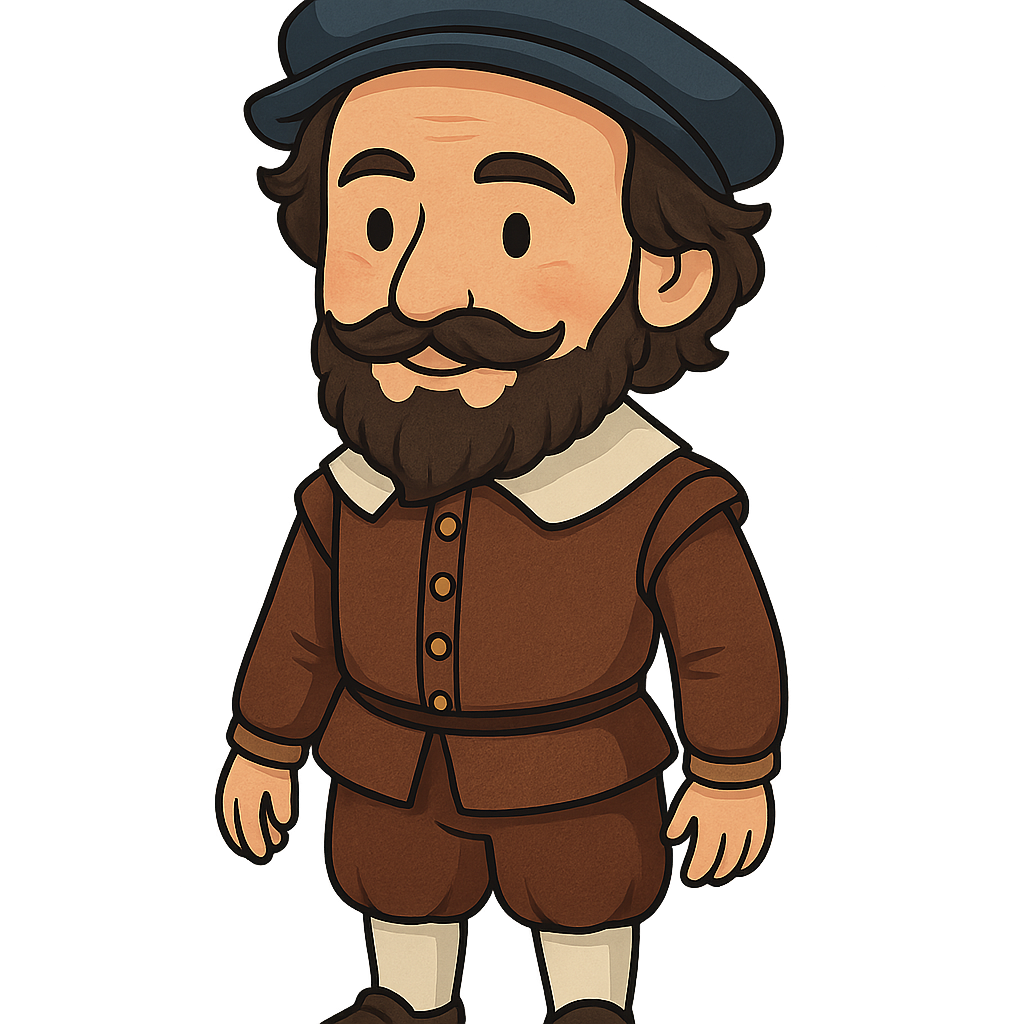
Hello, my name is Bernard Palissy, and I was a potter and a scientist in a time when those two things were rarely seen together. My story is one of stubborn passion and a deep love for the natural world. I was born around the year 1510 in southwestern France into a poor family, which meant I did not have the chance to attend a grand school like the sons of wealthy men. Instead of sitting in a classroom, I learned by walking through forests and fields. My first jobs were as a glass-painter and a land surveyor. Painting glass taught me about color and light, while surveying the land required me to understand its slopes, streams, and secrets. These early experiences trained my eyes to see the world with great detail and taught me practical skills about the earth's materials. I did not know it then, but this hands-on education was preparing me for the greatest challenge of my life.
One day, around the year 1540, my life changed completely. I was shown an object of incredible beauty: a white enamelled cup. It was smooth, glossy, and perfect in a way I had never seen before. In France at that time, we did not know how to make such things. I was told it came from a faraway land called China. I held it in my hands and was completely captivated. A fire was lit inside me, and I became obsessed with a single, powerful thought: I must discover the secret of how to make white enamel. I made a promise to myself that I would not rest until I could create something just as beautiful. That simple cup set me on a quest that would consume nearly two decades of my life.
Bernard Palissy: The Potter Who Loved the Earth
Hello, my name is Bernard Palissy, and I was a potter and a scientist in a time when those two things were rarely seen together. My story is one of stubborn passion and a deep love for the natural world. I was born around the year 1510 in southwestern France into a poor family, which meant I did not have the chance to attend a grand school like the sons of wealthy men. Instead of sitting in a classroom, I learned by walking through forests and fields. My first jobs were as a glass-painter and a land surveyor. Painting glass taught me about color and light, while surveying the land required me to understand its slopes, streams, and secrets. These early experiences trained my eyes to see the world with great detail and taught me practical skills about the earth's materials. I did not know it then, but this hands-on education was preparing me for the greatest challenge of my life.
One day, around the year 1540, my life changed completely. I was shown an object of incredible beauty: a white enamelled cup. It was smooth, glossy, and perfect in a way I had never seen before. In France at that time, we did not know how to make such things. I was told it came from a faraway land called China. I held it in my hands and was completely captivated. A fire was lit inside me, and I became obsessed with a single, powerful thought: I must discover the secret of how to make white enamel. I made a promise to myself that I would not rest until I could create something just as beautiful. That simple cup set me on a quest that would consume nearly two decades of my life.
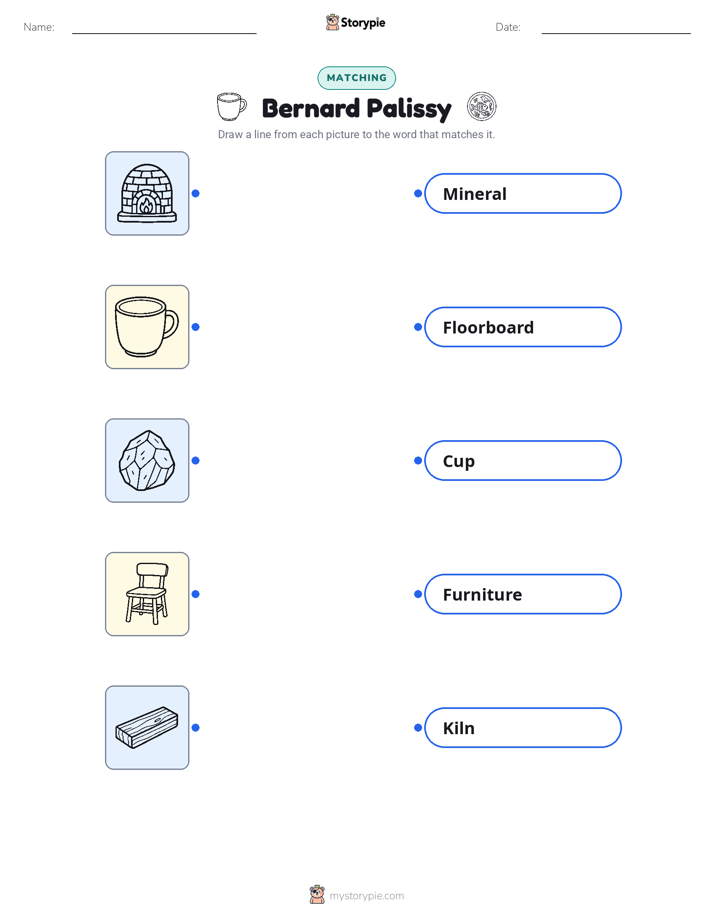
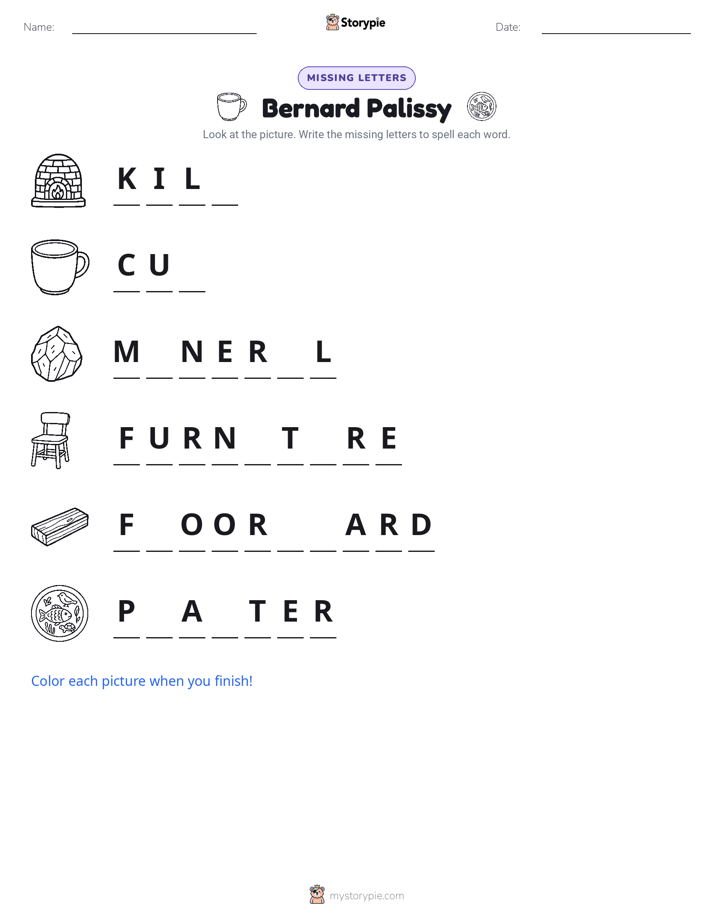
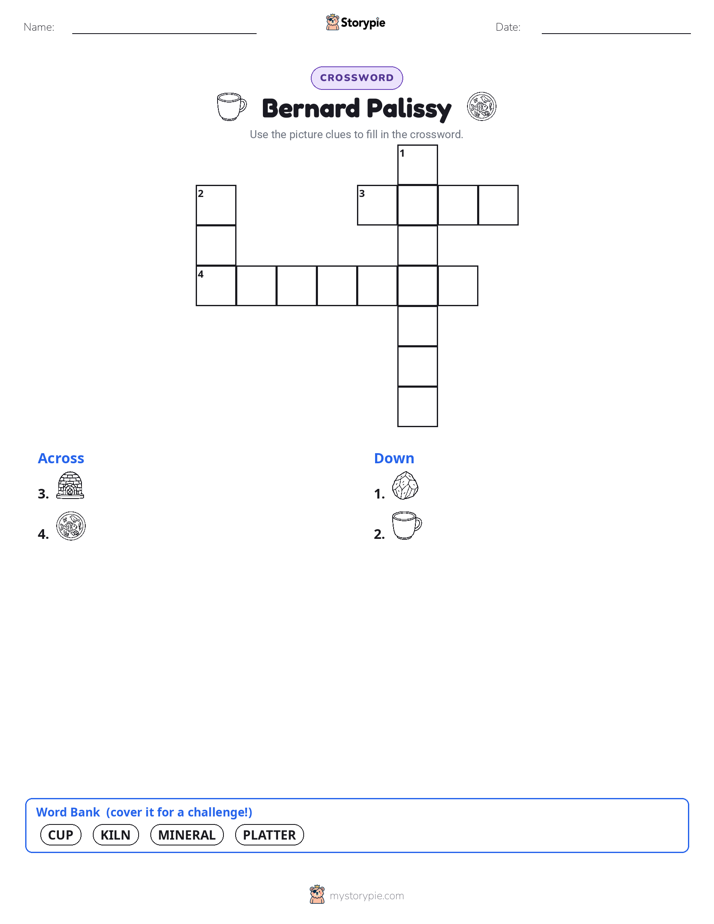
My journey to create the perfect enamel was much harder than I ever imagined. For about sixteen long years, I devoted myself to endless experiments. I built kilns, ground up different minerals, and tried countless combinations, but failure was my constant companion. My glazes would not melt correctly, or they came out of the fire dull and cracked. During this time, my family fell into terrible poverty because I spent every bit of money we had on my experiments. My neighbors mocked me, calling me a fool for chasing an impossible dream. There was one moment of pure desperation I will never forget. I had run out of wood to fuel my kiln for a crucial experiment. Without hesitation, I began breaking up the furniture in my house and feeding it to the flames. When that wasn't enough, I tore up the wooden floorboards and threw them in as well. My wife and children watched in despair, but I was driven by an obsession I could not control.
After all those years of hardship, I finally had a breakthrough. While I never managed to replicate the Chinese porcelain that first inspired me, I invented something completely new and uniquely my own. I called my creations 'rustic figulines,' which you might know today as Palissy ware. Instead of smooth white surfaces, my pottery celebrated the wild beauty of nature. I developed a technique for making life-casts of real creatures I found near my home—snakes, lizards, frogs, fish, insects, and snails. I would arrange these casts on large platters and plates, surrounded by casts of leaves, ferns, and shells, creating a scene that looked as if it had been lifted directly from a riverbank. I also perfected a series of brilliant, colorful glazes that made my ceramic animals and plants look incredibly lifelike. My work became famous, and around 1563, the queen mother, Catherine de' Medici, honored me with the title 'Inventor of Rustic Figulines to the King and Queen Mother.'
My deep curiosity, however, was not satisfied by pottery alone. All those years I spent working with clay, stone, and fire had turned me into a student of the earth itself. I became fascinated by how springs formed, why some soils were better for farming, and the meaning of the strange stone shells—fossils—that I found embedded in rocks. I realized I had learned things that were not taught in books. Starting in 1575, I began to give public lectures in Paris. People from all walks of life came to hear me speak about natural history. I explained my ideas on everything from agriculture and geology to hydrology. In 1580, to ensure my observations would not be lost, I published them in a book titled 'Admirable Discourses.' It was my way of sharing the knowledge I had gained not from a university, but from a lifetime of paying close attention to the world around me.
My life, filled with so much creation, had a difficult end. I was a Protestant Huguenot, and this was a dangerous time of religious conflict in France. Because of my faith, I was arrested in 1588. I lived to be about 80 years old, spending my final years in the Bastille prison. But I hope you remember me not for how my life concluded, but for what I left behind. My art captured the wonder of the natural world in clay, and my scientific lectures helped people see the Earth with new understanding. My story shows that even if you face failure and ridicule, passion and perseverance can help you create things of lasting beauty and importance.
Wow facts
About
Bernard Palissy was a French Huguenot potter, hydraulics engineer, and craftsman during the Renaissance, celebrated for his unique 'rustic ware' ceramics which featured lifelike animals and plants.
Take a Quiz
Question 1 of 5
Why did Bernard Palissy burn his furniture and floorboards?
Explore next






Want to do even more?
Go beyond exploring. Unlock tools that turn every story into real learning.

Storypie Plus for families
Full stories, quizzes, and printables. Nights and car rides, sorted.
- Unlimited audio stories
- Create Mode: your child stars in the story
- Offline downloads
- Printable worksheets & coloring pages

Why Storypie for Schools
Students engaged. Prep in seconds. Evenings back to you.
- Worksheets & Quizzes
- Classroom Management
- Formative Assessment
- Custom Curriculum & Lesson Plans
- 27 Languages

Why Storypie for Homeschool
Curriculum done. They'll ask for more. Hours back in your day.
- Worksheet Generator
- First-Person Audio Stories
- Built-in Comprehension Quizzes
- Custom Curriculum & Lesson Plans
- Print & Go Activities