English

Billie Jean King
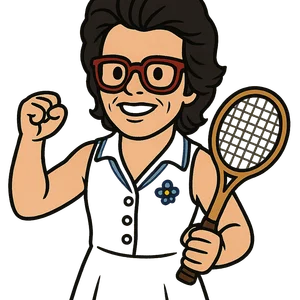
Billie Jean King is a world-renowned American tennis champion and a lifelong advocate for gender equality and…
Reads at Grades 6–8 Listens at Grades 4–8
Print & create
Answer keys·No prep·Free with an account
28 worksheets · answer keys · full story · quiz · Ages 10-12 · CEFR B2
Plus adds 244,000+ more stories in 27 languages, audio for every one, and printables for all of them.
Just want Billie Jean King?
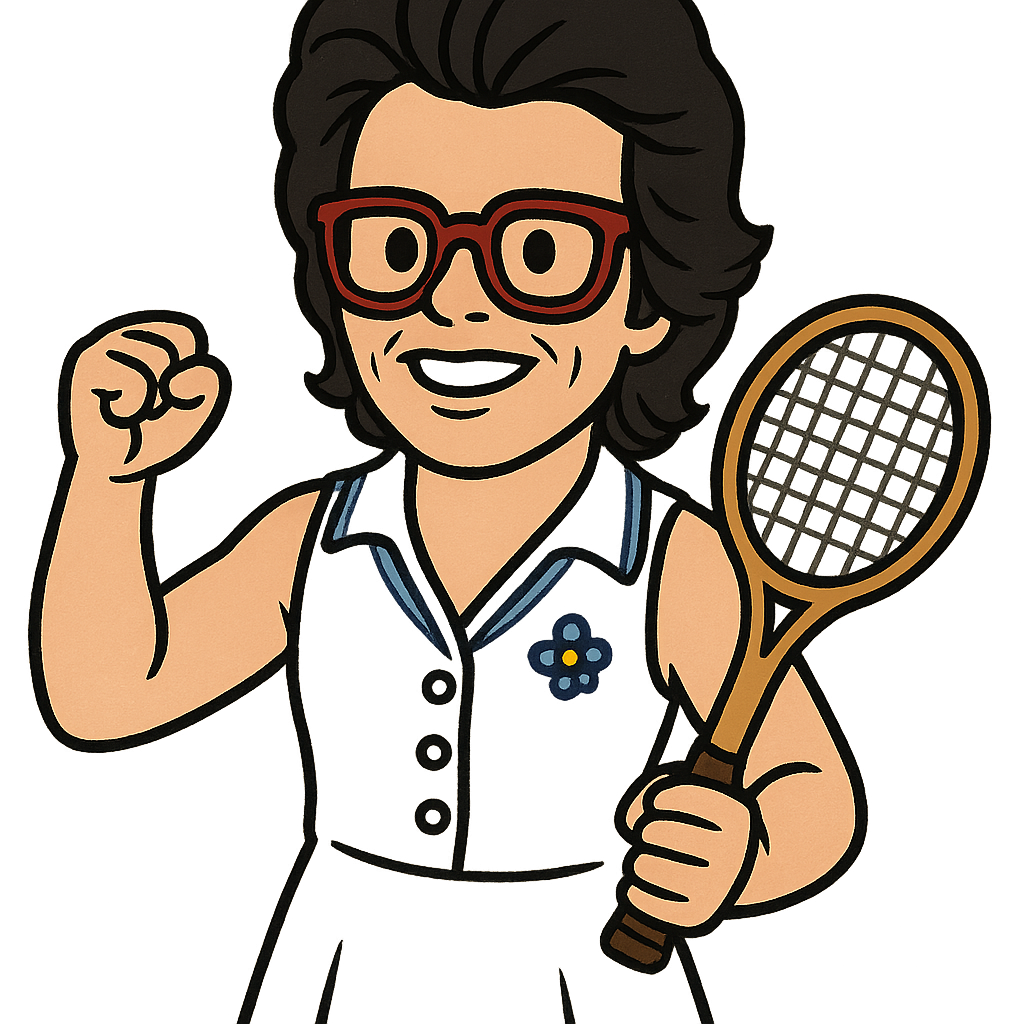
Hi, I'm Billie Jean King. I want to tell you my story, which is about a lot more than just tennis. It all started when I was born on November 22nd, 1943, in Long Beach, California. My family loved sports. My dad was a firefighter, and my mom was a stay-at-home mom, and they both encouraged my younger brother, Randy, and me to be active. Randy went on to become a professional baseball pitcher. I played softball first, but one day in 1954, a friend took me to my first tennis lesson. The moment I held the racket, I knew it was for me. I told my mom that very day, 'I'm going to be the number one tennis player in the world.' It was a big dream for an 11-year-old girl, but I was determined to make it happen.
Being the best meant practicing for hours and hours every day. I worked hard, and soon I started playing in tournaments. In 1961, when I was just 17 years old, my partner Karen Hantze and I won the women's doubles title at a huge tournament called Wimbledon in England. We were the youngest team ever to win. It was a dream come true, but I knew I had more work to do. I kept practicing, and in 1966, I finally won the Wimbledon singles championship, which meant I was considered the best woman player all by myself. I went on to win that title six times. During this period, in 1965, I also married a man named Larry King. He supported my career, but as I traveled the world, I was starting to notice something very unfair in the world of tennis.
As I won more championships, I saw that the male players were paid much, much more money than the female players, even when we won the exact same titles at the same tournaments. I knew this wasn't right. We played just as hard, our matches were just as exciting, and we dedicated our lives to the sport just like they did. I believed that what you accomplished should matter more than whether you were a boy or a girl. So, in 1970, I joined with eight other brave women players—we called ourselves the 'Original 9'—to start our own professional tour, the Virginia Slims Circuit. It was a huge risk because it challenged the established tennis world, but we wanted to create a place where women athletes would be valued and paid fairly. Our hard work paid off, and in 1973, I helped create the Women's Tennis Association, or WTA, to unite all of women's professional tennis and continue the fight for equality.
Billie Jean King
Hi, I'm Billie Jean King. I want to tell you my story, which is about a lot more than just tennis. It all started when I was born on November 22nd, 1943, in Long Beach, California. My family loved sports. My dad was a firefighter, and my mom was a stay-at-home mom, and they both encouraged my younger brother, Randy, and me to be active. Randy went on to become a professional baseball pitcher. I played softball first, but one day in 1954, a friend took me to my first tennis lesson. The moment I held the racket, I knew it was for me. I told my mom that very day, 'I'm going to be the number one tennis player in the world.' It was a big dream for an 11-year-old girl, but I was determined to make it happen.
Being the best meant practicing for hours and hours every day. I worked hard, and soon I started playing in tournaments. In 1961, when I was just 17 years old, my partner Karen Hantze and I won the women's doubles title at a huge tournament called Wimbledon in England. We were the youngest team ever to win. It was a dream come true, but I knew I had more work to do. I kept practicing, and in 1966, I finally won the Wimbledon singles championship, which meant I was considered the best woman player all by myself. I went on to win that title six times. During this period, in 1965, I also married a man named Larry King. He supported my career, but as I traveled the world, I was starting to notice something very unfair in the world of tennis.
As I won more championships, I saw that the male players were paid much, much more money than the female players, even when we won the exact same titles at the same tournaments. I knew this wasn't right. We played just as hard, our matches were just as exciting, and we dedicated our lives to the sport just like they did. I believed that what you accomplished should matter more than whether you were a boy or a girl. So, in 1970, I joined with eight other brave women players—we called ourselves the 'Original 9'—to start our own professional tour, the Virginia Slims Circuit. It was a huge risk because it challenged the established tennis world, but we wanted to create a place where women athletes would be valued and paid fairly. Our hard work paid off, and in 1973, I helped create the Women's Tennis Association, or WTA, to unite all of women's professional tennis and continue the fight for equality.
My fight for equality led to the biggest and most famous match of my life. A former men's champion named Bobby Riggs said that women's tennis was not as good as men's and that even at his age, he could beat any top female player. He challenged me to a match. At first, I said no, but I realized this was about more than just a game of tennis. It was a chance to show millions of people that women deserved respect and were just as capable as men. So, on September 20th, 1973, we played in a huge stadium in Houston, Texas, in an event the media called the 'Battle of the Sexes.' The excitement was incredible; over 90 million people around the world watched on TV. I was nervous because so much was at stake, but I knew I had to win for all the women and girls who were told they couldn't do something just because of their gender. I beat him in three straight sets. That victory showed everyone that women could compete under pressure and deserved to be taken seriously, in sports and in all parts of life.
After the 'Battle of the Sexes,' I continued to play and win, eventually earning 39 major titles in my career across singles, doubles, and mixed doubles. But my work wasn't just on the court. I wanted to make sure future generations of girls had opportunities. In 1974, I helped start the Women's Sports Foundation, an organization dedicated to helping girls and women get involved in sports and live active lives. Life also brought personal challenges. In 1981, I became one of the first openly gay professional athletes. It was a difficult and public experience, but being true to myself was important, and I hoped it would help others feel more comfortable being who they are. I retired from playing singles tennis in 1983, but I never retired from fighting for what I believe in.
Even though my professional playing days are over, my mission continues. I have been fortunate to see the world change in many positive ways. In 2006, the place where the U.S. Open is played in New York was renamed the USTA Billie Jean King National Tennis Center in my honor. It was an incredible moment to see my name on a place that represents so much history and opportunity. In 2009, President Barack Obama awarded me the Presidential Medal of Freedom, which is the highest honor a civilian can receive in the United States. Today, I continue to work for equality and inclusion for everyone, no matter their gender, race, or who they love. My message to you is simple: dream big, work hard, and never be afraid to use your voice to make the world a fairer place for everyone. Every single one of us can be a champion for change.
Wow facts
About
Billie Jean King is a world-renowned American tennis champion and a lifelong advocate for gender equality and social justice.
Take a Quiz
Question 1 of 5
What is the main theme of Billie Jean King's story?
Explore next






Want to do even more?
Go beyond exploring. Unlock tools that turn every story into real learning.

Storypie Plus for families
Full stories, quizzes, and printables. Nights and car rides, sorted.
- Unlimited audio stories
- Create Mode: your child stars in the story
- Offline downloads
- Printable worksheets & coloring pages

Why Storypie for Schools
Students engaged. Prep in seconds. Evenings back to you.
- Worksheets & Quizzes
- Classroom Management
- Formative Assessment
- Custom Curriculum & Lesson Plans
- 27 Languages

Why Storypie for Homeschool
Curriculum done. They'll ask for more. Hours back in your day.
- Worksheet Generator
- First-Person Audio Stories
- Built-in Comprehension Quizzes
- Custom Curriculum & Lesson Plans
- Print & Go Activities