English

C. S. Lewis
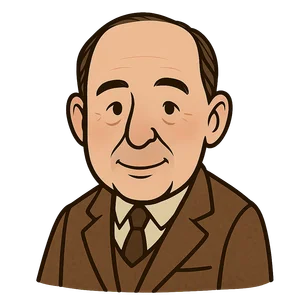
Clive Staples Lewis was a British writer, scholar, and Christian apologist…
Reads at Grades 6–8 Listens at Grades 4–8
Print & create
Answer keys·No prep·Free with an account
28 worksheets · answer keys · full story · quiz · Ages 10-12 · CEFR B2
Plus adds 280,000+ more stories in 27 languages, audio for every one, and printables for all of them.
Just want C. S. Lewis?
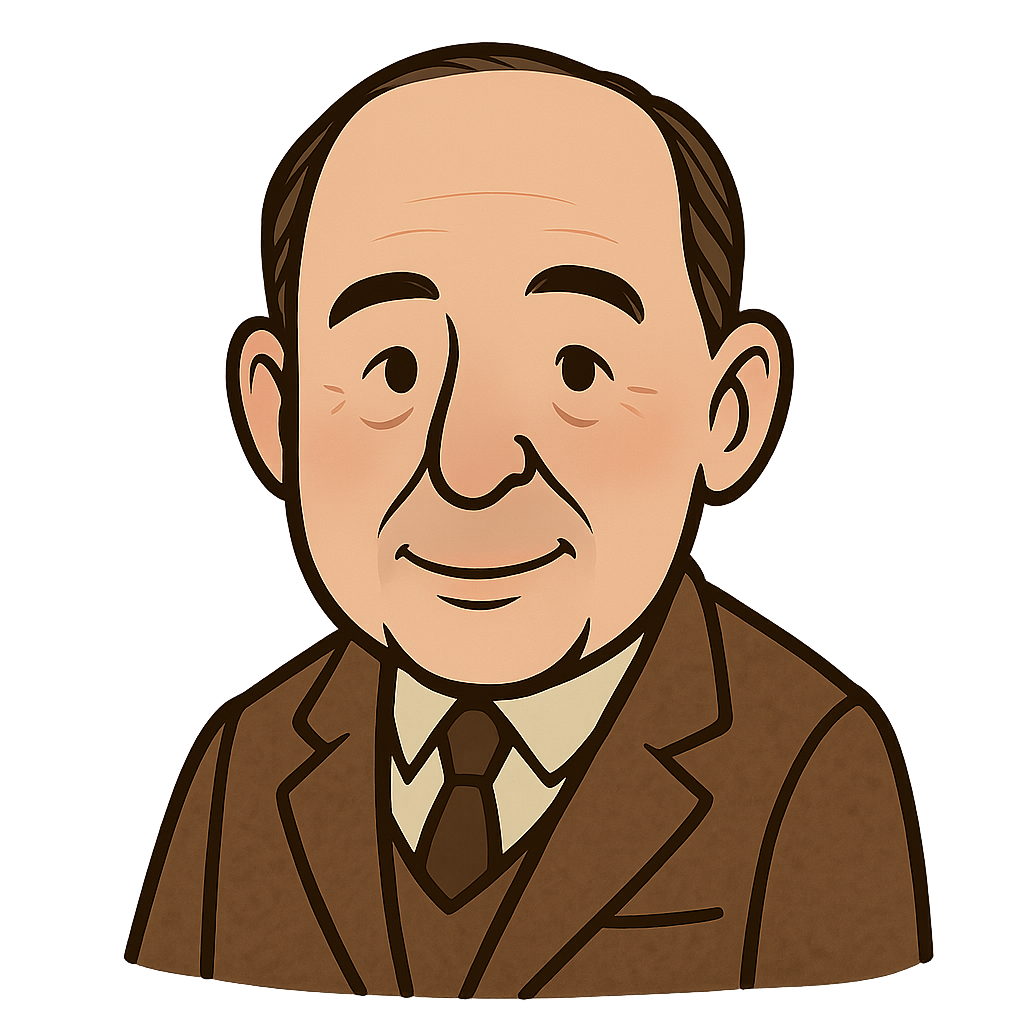
Hello! My name is Clive Staples Lewis, but everyone who knew me called me Jack. I was born on November 29th, 1898, in Belfast, Ireland, into a world that felt full of possibilities. My older brother, Warnie, was my best friend. Our house was a grand place for two young boys, with long hallways and plenty of empty rooms that we turned into our own private kingdoms. Together, we invented a magical world called 'Boxen,' which was populated by talking animals and brave knights. We wrote stories and drew maps for this land, and it felt as real to us as anything. I loved books more than anything else; they were my windows to other worlds. But when I was nine years old, in 1908, a deep sadness fell over our home. My mother became very ill and passed away. It felt as though all the color had drained from my world. Shortly after, my father sent me away to a strict boarding school in England. I was terribly lonely, but I found comfort in the one thing that had never let me down: stories. I buried myself in books, especially the ancient myths and epic legends of heroes and gods.
As I grew older, my love for learning never faded. I worked hard and, in 1916, I was thrilled to earn a scholarship to the prestigious University of Oxford. I was ready to spend my days studying literature and philosophy, but the world had other plans. My studies were interrupted by the First World War, a massive conflict that was raging across Europe. In 1917, I joined the British Army and was sent to the trenches in France. The experience was frightening, and the realities of war were harsh and terrible. I was injured in battle in 1918 and sent home to England to recover. When the war finally ended, I returned to Oxford with a profound new appreciation for life. I dedicated myself completely to my studies. In 1925, I achieved my lifelong dream: I became a professor at Magdalen College, one of Oxford’s most beautiful and historic schools. For nearly thirty years, I had the privilege of teaching and sharing my passion for literature with generations of students.
The Story of C.S. Lewis: A Journey to Narnia
Hello! My name is Clive Staples Lewis, but everyone who knew me called me Jack. I was born on November 29th, 1898, in Belfast, Ireland, into a world that felt full of possibilities. My older brother, Warnie, was my best friend. Our house was a grand place for two young boys, with long hallways and plenty of empty rooms that we turned into our own private kingdoms. Together, we invented a magical world called 'Boxen,' which was populated by talking animals and brave knights. We wrote stories and drew maps for this land, and it felt as real to us as anything. I loved books more than anything else; they were my windows to other worlds. But when I was nine years old, in 1908, a deep sadness fell over our home. My mother became very ill and passed away. It felt as though all the color had drained from my world. Shortly after, my father sent me away to a strict boarding school in England. I was terribly lonely, but I found comfort in the one thing that had never let me down: stories. I buried myself in books, especially the ancient myths and epic legends of heroes and gods.
As I grew older, my love for learning never faded. I worked hard and, in 1916, I was thrilled to earn a scholarship to the prestigious University of Oxford. I was ready to spend my days studying literature and philosophy, but the world had other plans. My studies were interrupted by the First World War, a massive conflict that was raging across Europe. In 1917, I joined the British Army and was sent to the trenches in France. The experience was frightening, and the realities of war were harsh and terrible. I was injured in battle in 1918 and sent home to England to recover. When the war finally ended, I returned to Oxford with a profound new appreciation for life. I dedicated myself completely to my studies. In 1925, I achieved my lifelong dream: I became a professor at Magdalen College, one of Oxford’s most beautiful and historic schools. For nearly thirty years, I had the privilege of teaching and sharing my passion for literature with generations of students.
During my time at Oxford, I was lucky to find a group of friends who shared my love for storytelling. We were all writers, and we formed a small club we called 'The Inklings.' We would meet regularly, often in my college rooms, to read our latest work aloud and give each other feedback and encouragement. My closest friend in this group was a brilliant man named J.R.R. Tolkien, who was in the process of writing an incredible story about small, furry-footed creatures called hobbits. These friends became incredibly important to me, not just for their literary advice but for their companionship. After my mother’s death, I had struggled with my faith and had stopped believing in God for many years. However, through many long conversations with my friends, especially Tolkien, I began to see things differently. Around 1931, I found my way back to my faith. This spiritual journey was one of the most significant events of my life and would deeply influence everything I wrote from that point forward.
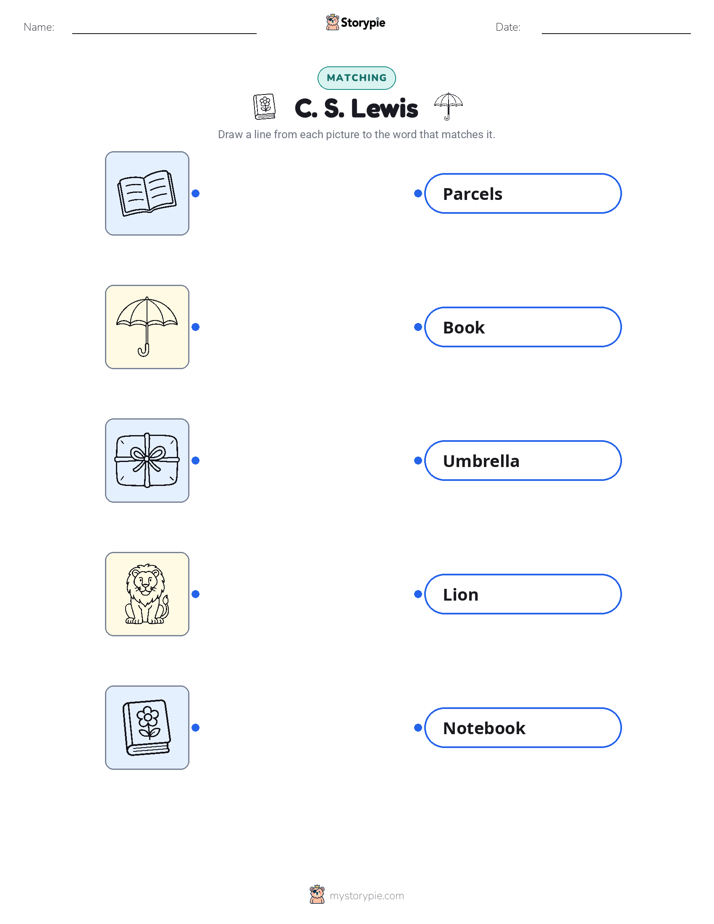
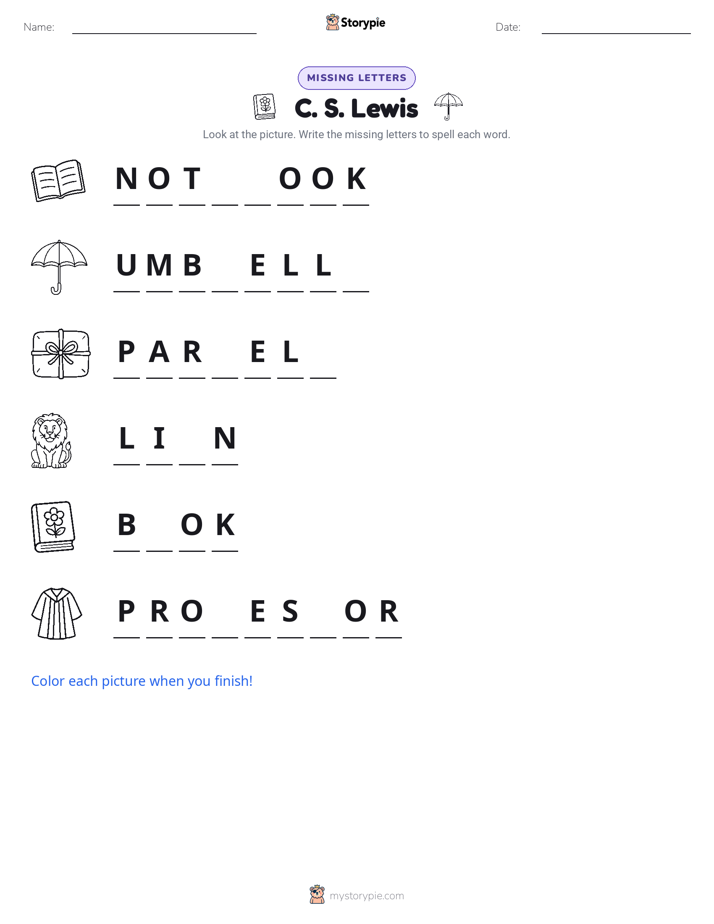
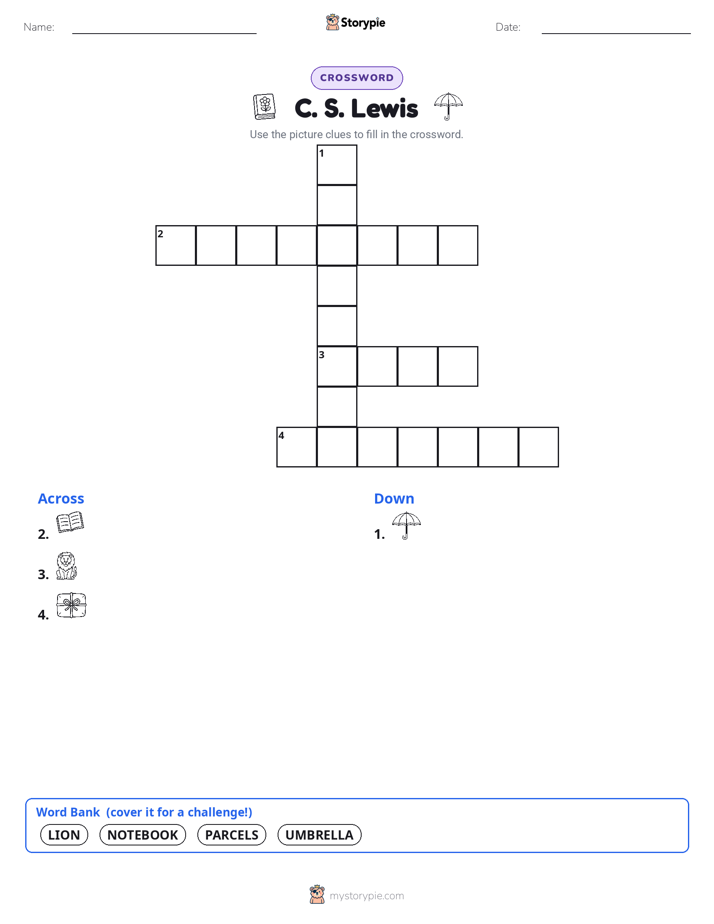
One day, a peculiar image just popped into my head. I saw a faun, a creature from myth with the legs of a goat, carrying an umbrella and several parcels as he walked through a snowy wood. I couldn't get the picture out of my mind, and I knew it was the beginning of a story. That single image grew and blossomed into my most famous work. In 1950, I published a book called The Lion, the Witch and the Wardrobe. It told the story of four siblings who discover a magical land called Narnia hidden inside an old wardrobe. This became the first of seven books in the series that people now know as The Chronicles of Narnia. I filled this world with brave children, talking animals, and a magnificent, wise lion named Aslan who represents goodness and sacrifice. Through these adventures, I wanted to explore big ideas like courage, forgiveness, and hope in a way that would be exciting and meaningful for young readers. During this creative period, my academic life also shifted, and in 1954, I accepted a new position as a professor at Cambridge University.
For much of my life, I was a quiet, bachelor professor, content with my books, my teaching, and my friends. But life had a wonderful surprise in store for me. I began exchanging letters with an intelligent and witty American poet named Joy Davidman. Our letters turned into a deep friendship, and eventually, we fell in love. We were married in 1956, and Joy and her two young sons moved into my home, filling it with a level of laughter and happiness I had never known. She was my intellectual equal and my dearest companion. Sadly, our time together was tragically short. Joy was battling a serious illness, and in 1960, she passed away. The grief was immense, but the years I had with her were some of the most joyful and precious of my entire life.
I continued to write and teach for the rest of my days, sharing stories and ideas with the world. I lived to be 64 years old. Today, my books, especially The Chronicles of Narnia, are read by people all over the world. It was always my deepest hope that my stories, both the magical ones and those about faith, would act as signposts, pointing people toward truth and joy. I am remembered as a storyteller who believed that myths and fairy tales are not just for entertainment, but can help us understand the real world and its deepest truths in the most profound way.
Wow facts
About
Clive Staples Lewis was a British writer, scholar, and Christian apologist, best known for his beloved fantasy series 'The Chronicles of Narnia'.
Take a Quiz
Question 1 of 5
What major event interrupted C.S. Lewis's studies at the University of Oxford in 1916?
Explore next



Want to do even more?
Go beyond exploring. Unlock tools that turn every story into real learning.

Storypie Plus for families
Full stories, quizzes, and printables. Nights and car rides, sorted.
- Unlimited audio stories
- Create Mode: your child stars in the story
- Offline downloads
- Printable worksheets & coloring pages

Why Storypie for Schools
Students engaged. Prep in seconds. Evenings back to you.
- Worksheets & Quizzes
- Classroom Management
- Formative Assessment
- Custom Curriculum & Lesson Plans
- 27 Languages

Why Storypie for Homeschool
Curriculum done. They'll ask for more. Hours back in your day.
- Worksheet Generator
- First-Person Audio Stories
- Built-in Comprehension Quizzes
- Custom Curriculum & Lesson Plans
- Print & Go Activities