English

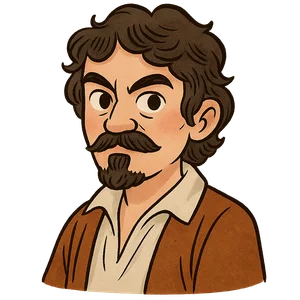
Caravaggio
Michelangelo Merisi da Caravaggio was a groundbreaking Italian painter of the late 16th and early 17th…
Reads at Grades 3–5 Listens at Grades 1–5
Print & create
Answer keys·No prep·Free with an account
28 worksheets · answer keys · full story · quiz · Ages 8-10 · CEFR B1
Plus adds 280,000+ more stories in 27 languages, audio for every one, and printables for all of them.
Just want Caravaggio?
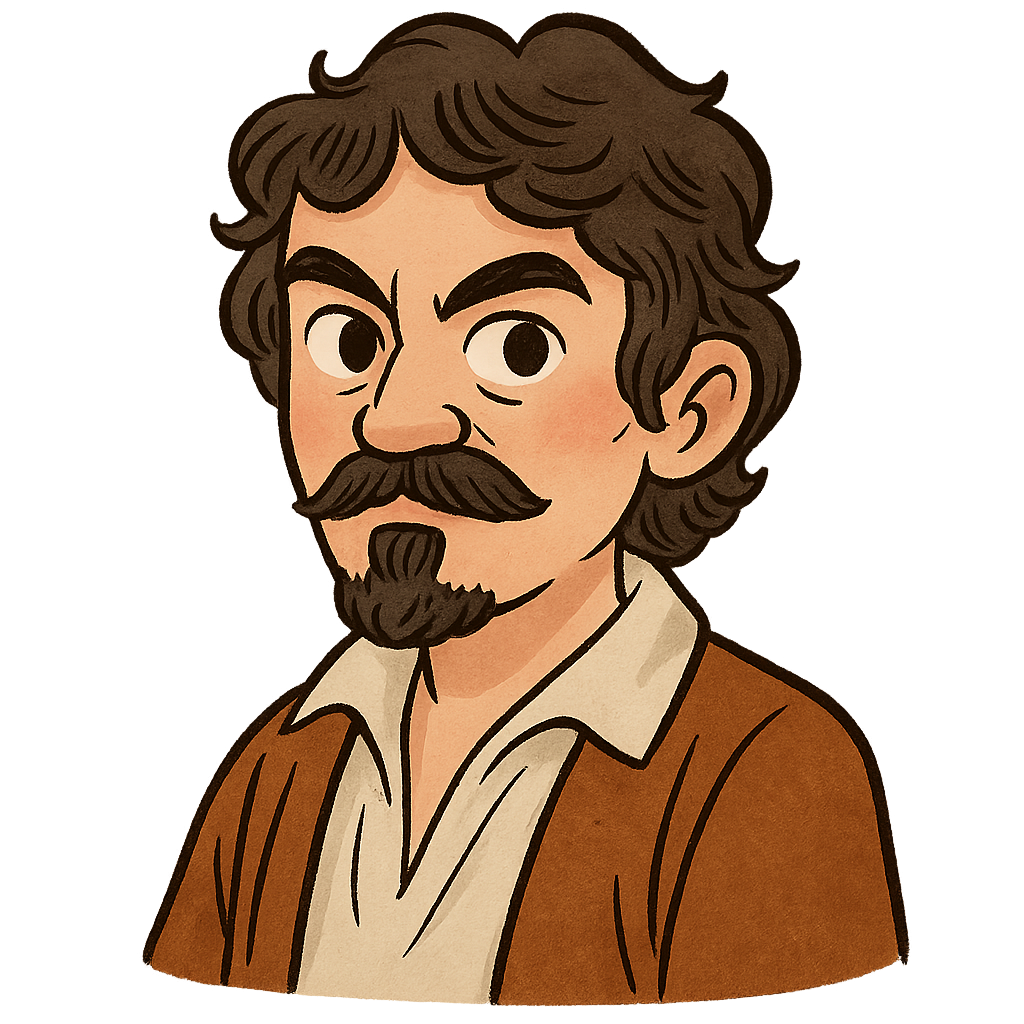
Hello. My name is Michelangelo Merisi, but you probably know me by the name of my family’s hometown, Caravaggio. I was born on September 29th, 1571, in Milan, Italy. Art was all around me from the very beginning because my father was an architect and decorator for a noble family. I loved watching him work and seeing how shapes and colors could come together to create something beautiful. But when I was just a little boy, a sad time came to our city. In 1576, a terrible sickness called the plague spread through Milan, and my family had to flee to the town of Caravaggio to stay safe. Sadly, my father passed away just one year later, in 1577.
Even with the hardships my family faced, my love for art only grew stronger. I didn't want to paint perfect, imaginary figures like many other artists did. I was fascinated by real people, with all their wrinkles, messy hair, and true emotions. I wanted my paintings to look like a moment frozen in time. When I was about thirteen years old, in 1584, I began my official training as a painter. I became an apprentice to a wonderful artist named Simone Peterzano in Milan, who taught me the skills I would need. After learning from him for several years, I knew I had to go where all the great artists were. Around 1592, I made the big move to Rome, which was the center of the art world. I worked very hard there, taking any job I could find and slowly beginning to create paintings in my own unique style.
In Rome, I began to experiment with a new way of painting that made my work stand out. I loved the drama of strong light against deep, dark shadows. This technique, which became my signature, is called 'chiaroscuro.' It made the people in my paintings look like they were stepping right out of the darkness and into a spotlight. This style made my work feel incredibly alive and powerful. My big break came around 1595 when a very important man, Cardinal Francesco Maria del Monte, saw my paintings and became my patron. This meant he supported me and gave me a place to live and work. Thanks to him, I received a very important job around the year 1600 to create large paintings for the Contarelli Chapel in a church in Rome. These paintings showed religious stories in a way no one had ever seen before, using ordinary people as models. Some people were shocked by how real they looked, but my dramatic paintings made everyone in Rome talk about my art.
Michelangelo Merisi da Caravaggio: A Story of Light and Shadow
Hello. My name is Michelangelo Merisi, but you probably know me by the name of my family’s hometown, Caravaggio. I was born on September 29th, 1571, in Milan, Italy. Art was all around me from the very beginning because my father was an architect and decorator for a noble family. I loved watching him work and seeing how shapes and colors could come together to create something beautiful. But when I was just a little boy, a sad time came to our city. In 1576, a terrible sickness called the plague spread through Milan, and my family had to flee to the town of Caravaggio to stay safe. Sadly, my father passed away just one year later, in 1577.
Even with the hardships my family faced, my love for art only grew stronger. I didn't want to paint perfect, imaginary figures like many other artists did. I was fascinated by real people, with all their wrinkles, messy hair, and true emotions. I wanted my paintings to look like a moment frozen in time. When I was about thirteen years old, in 1584, I began my official training as a painter. I became an apprentice to a wonderful artist named Simone Peterzano in Milan, who taught me the skills I would need. After learning from him for several years, I knew I had to go where all the great artists were. Around 1592, I made the big move to Rome, which was the center of the art world. I worked very hard there, taking any job I could find and slowly beginning to create paintings in my own unique style.
In Rome, I began to experiment with a new way of painting that made my work stand out. I loved the drama of strong light against deep, dark shadows. This technique, which became my signature, is called 'chiaroscuro.' It made the people in my paintings look like they were stepping right out of the darkness and into a spotlight. This style made my work feel incredibly alive and powerful. My big break came around 1595 when a very important man, Cardinal Francesco Maria del Monte, saw my paintings and became my patron. This meant he supported me and gave me a place to live and work. Thanks to him, I received a very important job around the year 1600 to create large paintings for the Contarelli Chapel in a church in Rome. These paintings showed religious stories in a way no one had ever seen before, using ordinary people as models. Some people were shocked by how real they looked, but my dramatic paintings made everyone in Rome talk about my art.
While my paintings were becoming famous, I myself had a very fiery temper and often got into trouble. This led to the most difficult time in my life. In the year 1606, I was involved in a terrible fight, and a man was killed. I knew I would be arrested, so I had to flee Rome immediately. I felt a great sadness, as I had to leave the city where I had finally found success. For the next few years, I was always on the move, traveling to places like Naples, Malta, and Sicily. Even though I was a fugitive, I never stopped painting. I created some of my most powerful works during this time, always holding on to the hope that one day I would be forgiven and could return home to Rome.
My final journey began in 1610. I heard that I might receive a pardon and be allowed to return to Rome, so I started traveling back. However, on the way, I became very sick with a fever. I lived to be 38 years old. Though my life was short, my art changed painting forever. My dramatic and realistic style inspired many other artists who came after me. They were even given a special name: the 'Caravaggisti.' My story shows that even in the darkest shadows, you can still find a powerful light.
Wow facts
About
Michelangelo Merisi da Caravaggio was a groundbreaking Italian painter of the late 16th and early 17th centuries, whose dramatic use of light and shadow (tenebrism) and intense realism had a profound influence on Baroque painting.
Take a Quiz
Question 1 of 5
What does the word 'chiaroscuro' mean in this story?
Explore next




Want to do even more?
Go beyond exploring. Unlock tools that turn every story into real learning.

Storypie Plus for families
Full stories, quizzes, and printables. Nights and car rides, sorted.
- Unlimited audio stories
- Create Mode: your child stars in the story
- Offline downloads
- Printable worksheets & coloring pages

Why Storypie for Schools
Students engaged. Prep in seconds. Evenings back to you.
- Worksheets & Quizzes
- Classroom Management
- Formative Assessment
- Custom Curriculum & Lesson Plans
- 27 Languages

Why Storypie for Homeschool
Curriculum done. They'll ask for more. Hours back in your day.
- Worksheet Generator
- First-Person Audio Stories
- Built-in Comprehension Quizzes
- Custom Curriculum & Lesson Plans
- Print & Go Activities