English

Caravaggio
Michelangelo Merisi da Caravaggio was a groundbreaking Italian painter of the late 16th and early 17th…
Reads at Grades 6–8 Listens at Grades 4–8
Print & create
Answer keys·No prep·Free with an account
28 worksheets · answer keys · full story · quiz · Ages 10-12 · CEFR B2
Plus adds 280,000+ more stories in 27 languages, audio for every one, and printables for all of them.
Just want Caravaggio?
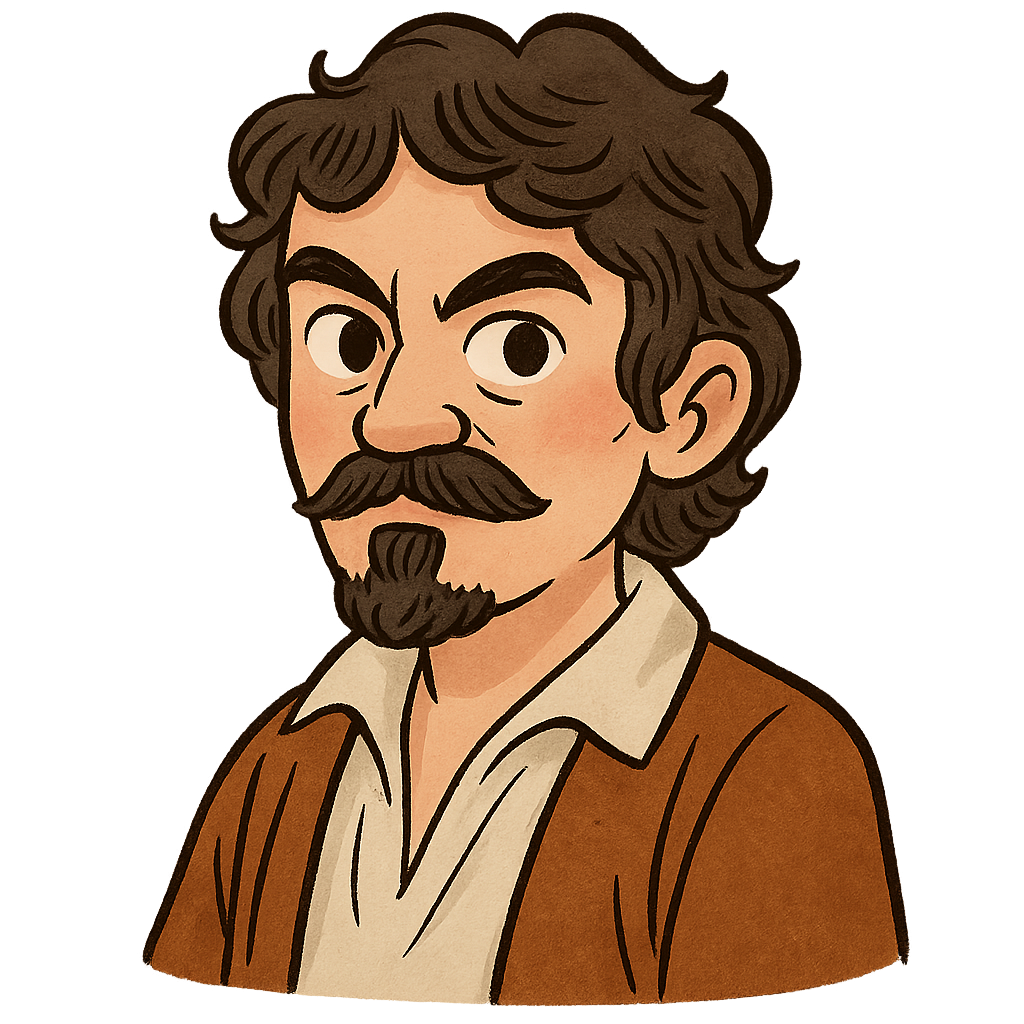
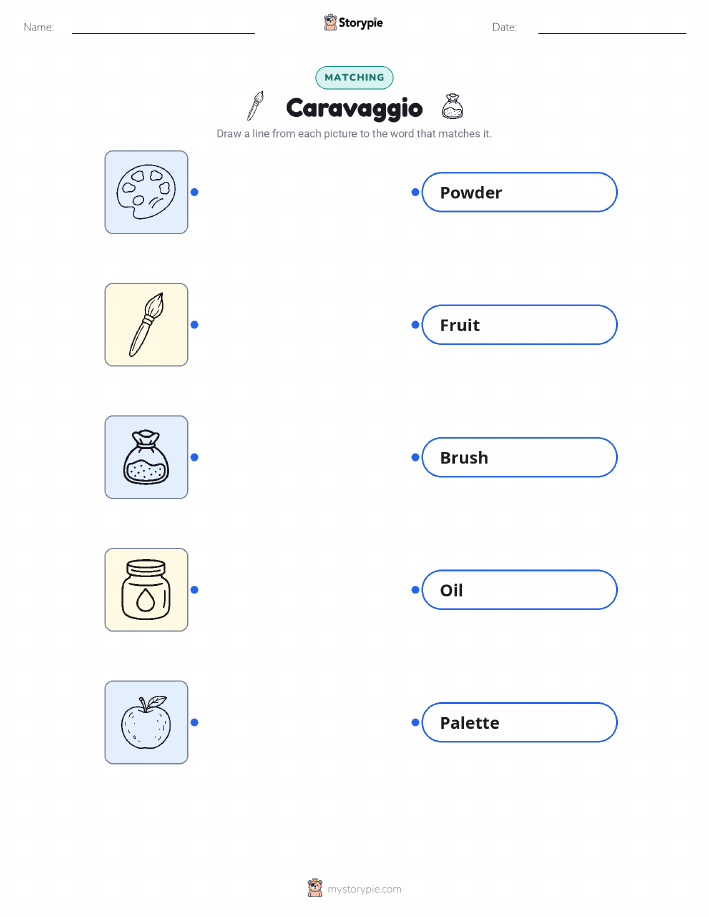
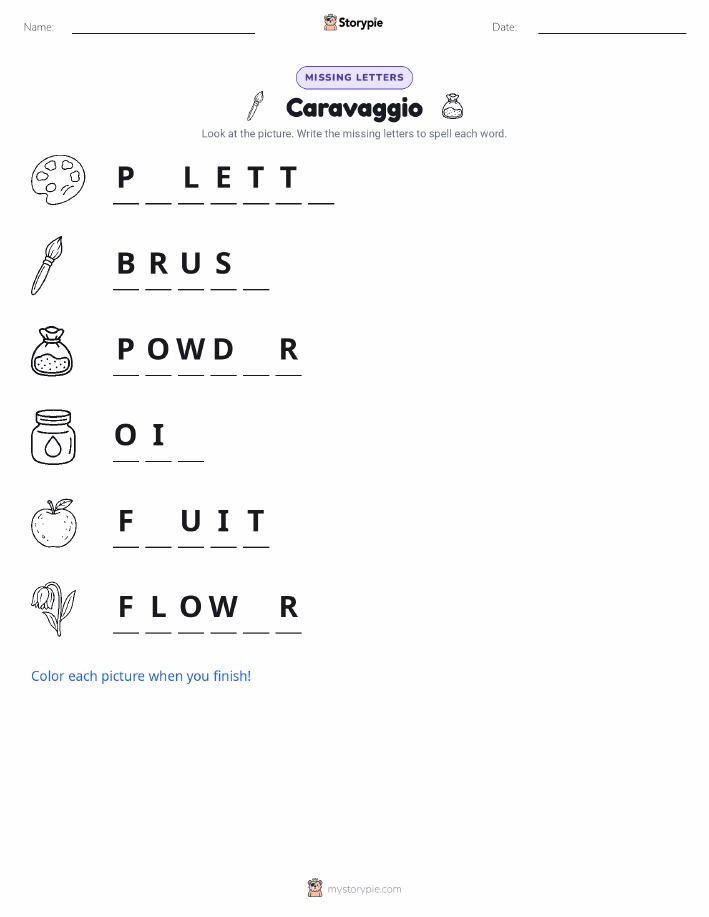
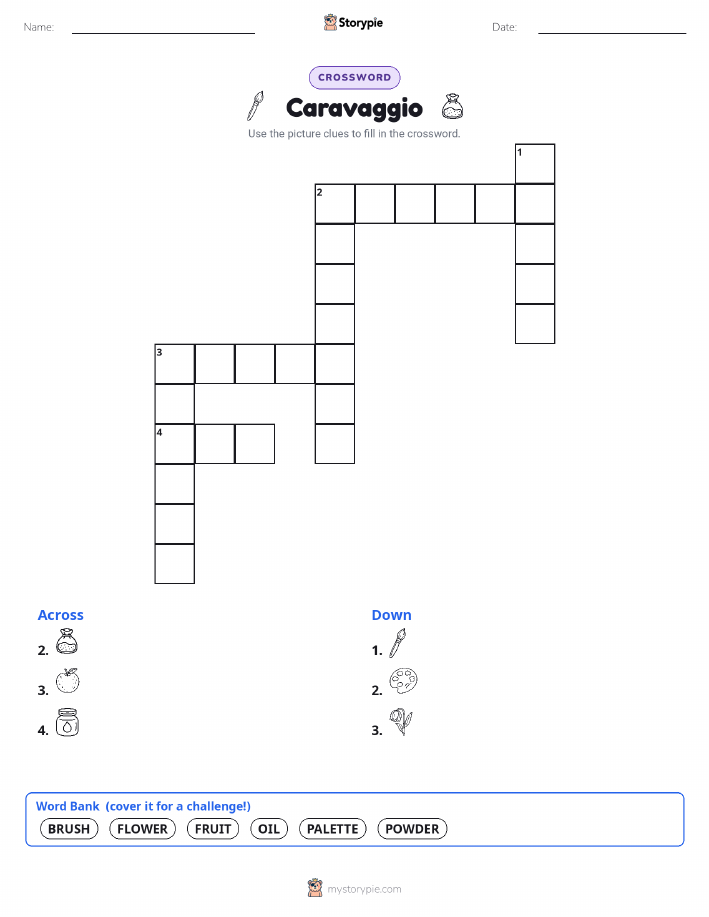
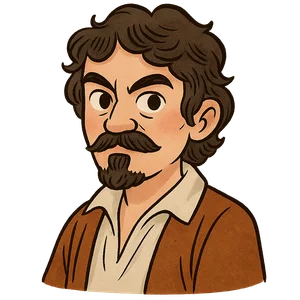
Hello. You may not know my real name, Michelangelo Merisi, but the world knows me by the name of my family's town: Caravaggio. I was born on September 29th, 1571, in Milan, Italy. From my earliest days, I was captivated by the world around me—the way light fell on a piece of fruit or the deep wrinkles on an old man's face. I knew I had to capture it. In 1584, when I was just a boy, I became an apprentice to the painter Simone Peterzano. For four years, I immersed myself in the craft, learning the essential skills of how to mix paints from powders and oils and studying the techniques of the great artists who came before me. This was the foundation upon which I would build my entire life's work.
Around the year 1592, I made my way to Rome, the heart of the art world. The city was a whirlwind of activity, buzzing with artists seeking fame, pilgrims seeking faith, and powerful people seeking to leave their mark on history. My beginnings there were humble and filled with struggle. To earn a living, I painted simple subjects like arrangements of flowers and fruit. But even then, I knew I wanted to do something different. I grew tired of the idealized, perfect figures I saw in so much art. I wanted to paint real people, with dirt under their fingernails and worry in their eyes, showing all their beautiful imperfections. My unique and honest style eventually caught the attention of a very important man, Cardinal Francesco Maria del Monte, around 1595. He saw something special in my work and invited me to live in his grand palace. For the first time, I was free from the constant worry of survival. I had the support and the freedom to paint the powerful, dramatic stories I had always imagined.
Caravaggio: A Life in Light and Shadow
Hello. You may not know my real name, Michelangelo Merisi, but the world knows me by the name of my family's town: Caravaggio. I was born on September 29th, 1571, in Milan, Italy. From my earliest days, I was captivated by the world around me—the way light fell on a piece of fruit or the deep wrinkles on an old man's face. I knew I had to capture it. In 1584, when I was just a boy, I became an apprentice to the painter Simone Peterzano. For four years, I immersed myself in the craft, learning the essential skills of how to mix paints from powders and oils and studying the techniques of the great artists who came before me. This was the foundation upon which I would build my entire life's work.
Around the year 1592, I made my way to Rome, the heart of the art world. The city was a whirlwind of activity, buzzing with artists seeking fame, pilgrims seeking faith, and powerful people seeking to leave their mark on history. My beginnings there were humble and filled with struggle. To earn a living, I painted simple subjects like arrangements of flowers and fruit. But even then, I knew I wanted to do something different. I grew tired of the idealized, perfect figures I saw in so much art. I wanted to paint real people, with dirt under their fingernails and worry in their eyes, showing all their beautiful imperfections. My unique and honest style eventually caught the attention of a very important man, Cardinal Francesco Maria del Monte, around 1595. He saw something special in my work and invited me to live in his grand palace. For the first time, I was free from the constant worry of survival. I had the support and the freedom to paint the powerful, dramatic stories I had always imagined.
Living in the Cardinal's palace allowed me to fully develop my unique artistic style. People would later give it a name: 'chiaroscuro.' It is an Italian term that simply means 'light-dark.' I used this technique to create intense drama in my paintings. Imagine a completely dark stage with a single, powerful spotlight shining on the actors—that is what my paintings felt like. I used dramatic light to highlight the most important parts of a scene, while deep shadows concealed other areas, adding mystery and emotion. I wanted my paintings to feel so real that you could almost hear the people speaking and feel the tension in the room. This style was put to the test in 1599 when I received my first major public commission for the Contarelli Chapel in Rome. I painted a series of scenes from the life of Saint Matthew. One of them, 'The Calling of Saint Matthew,' showed the holy moment taking place not in a grand temple, but in a common, dark tavern. This depiction of a sacred event in such a realistic, gritty setting shocked many people, but it also made me the most talked-about and revolutionary painter in all of Rome.
My art was full of passion, and so was my life. I had a fiery temper and a strong sense of honor, which often led me into arguments and fights in the rough streets of Rome. I was deeply committed to my vision of art and life, and I defended both with fierce intensity. Unfortunately, this passion led to the most tragic moment of my life. On May 28th, 1606, a heated argument over a game escalated into a sword fight. In the struggle, I killed a man named Ranuccio Tomassoni. It was a terrible event that changed my life forever. For this crime, I was sentenced to death by the authorities in Rome. To save my life, I had no choice but to flee the city that had made me famous. I was forced to leave behind my success, my patrons, and the home I had built for myself, becoming a fugitive from justice.
For the next several years, my life was one of constant movement and uncertainty. I was a painter on the run, traveling from Naples to the island of Malta in 1607, and then on to Sicily in 1608. I was always looking over my shoulder, yet even as a fugitive, I never stopped painting. In fact, the fear, desperation, and hope I felt during these dark years fueled some of my most famous and emotional works. My paintings from this period are often darker and more reflective, showing a deep understanding of human suffering. Throughout my exile, I held onto the hope of receiving a pardon that would allow me to safely return to Rome. My art became my voice—my way of communicating with the powerful people back home, expressing my remorse, and pleading for forgiveness through the stories I told on canvas.
In 1610, I heard that a pardon was finally possible, and I began the journey back to Rome. However, my journey ended in a small coastal town called Porto Ercole, where I fell gravely ill. I lived to be 38 years old, a life filled with intense light and deep shadows, much like my paintings. Though my time on Earth was short and turbulent, my way of painting changed the course of art forever. My technique of using dramatic light and showing the raw, honest truth of humanity inspired a whole generation of artists who followed me. They were called the 'Caravaggisti,' and they carried my style across Europe, ensuring that my vision and my passion would never be forgotten.
Wow facts
About
Michelangelo Merisi da Caravaggio was a groundbreaking Italian painter of the late 16th and early 17th centuries, whose dramatic use of light and shadow (tenebrism) and intense realism had a profound influence on Baroque painting.
Take a Quiz
Question 1 of 5
What major event on May 28th, 1606, forced Caravaggio to flee Rome?
Explore next





Want to do even more?
Go beyond exploring. Unlock tools that turn every story into real learning.

Storypie Plus for families
Full stories, quizzes, and printables. Nights and car rides, sorted.
- Unlimited audio stories
- Create Mode: your child stars in the story
- Offline downloads
- Printable worksheets & coloring pages

Why Storypie for Schools
Students engaged. Prep in seconds. Evenings back to you.
- Worksheets & Quizzes
- Classroom Management
- Formative Assessment
- Custom Curriculum & Lesson Plans
- 27 Languages

Why Storypie for Homeschool
Curriculum done. They'll ask for more. Hours back in your day.
- Worksheet Generator
- First-Person Audio Stories
- Built-in Comprehension Quizzes
- Custom Curriculum & Lesson Plans
- Print & Go Activities