English

Charles Babbage
A 19th-century English mathematician and inventor…
Reads at Grades 3–5 Listens at Grades 1–5
Print & create
Answer keys·No prep·Free with an account
28 worksheets · answer keys · full story · quiz · Ages 8-10 · CEFR B1
Plus adds 164,000+ more stories in 27 languages, audio for every one, and printables for all of them.
Just want Charles Babbage?
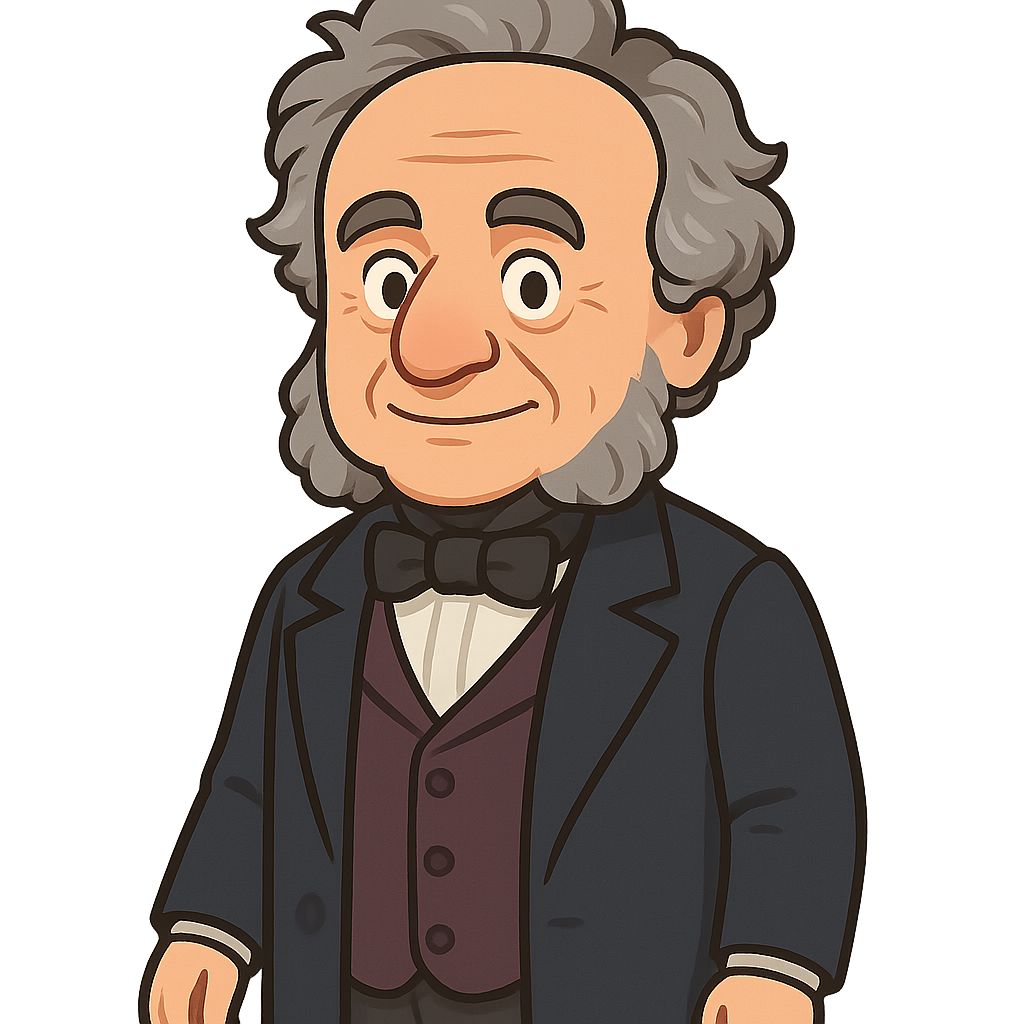
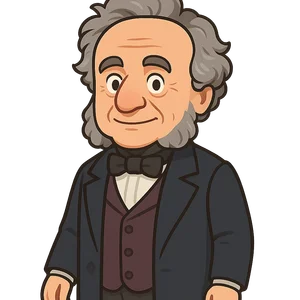
Hello! My name is Charles Babbage, and I want to tell you about my love for numbers and machines. I was born in London, England, on December 26th, 1791. Even as a young boy, I was incredibly curious about how things worked. I would often take my toys apart just to see the gears and springs inside! But my greatest passion was mathematics. I loved the challenge of solving puzzles and finding patterns in numbers. When I went to study at Cambridge University in 1810, I was excited to learn more. I soon realized that I knew even more about advanced math than some of my teachers!
In my time, during the 1800s, there were no electronic calculators like you have today. All important calculations for big projects, like planning routes for sailing ships or designing bridges, were done by hand. The people who did this work were actually called 'computers'! The biggest problem was that people can make mistakes. Even a tiny error in a math table could lead to a huge disaster, like a ship getting lost at sea. I thought to myself, 'There must be a better way!' I decided I would design a machine that could perform calculations perfectly every single time, without getting tired or making errors. In 1822, I presented my idea for a machine I called the Difference Engine. It was a giant, mechanical calculator designed with thousands of carefully crafted metal gears and wheels, all working together to produce flawless tables of numbers.
While I was busy working on the Difference Engine, an even bigger and more exciting idea sparked in my mind. Around the year 1837, I began to think beyond a simple calculating machine. What if I could build a machine that could be programmed to solve any kind of mathematical problem, not just one specific type? This was a revolutionary thought! I called this new invention the Analytical Engine, and it was the very first design for a general-purpose computer. It had a part called the 'Mill,' which did the calculations, much like a modern computer's processor. It also had a 'Store' to hold the numbers, which is like computer memory. The most amazing part was that it could even make decisions based on the results of its calculations. A brilliant mathematician and a good friend of mine, Ada Lovelace, understood my vision perfectly. She wrote about how my machine could be given instructions using special punched cards. In fact, she wrote what many people now consider the world's very first computer program for my Analytical Engine!
Charles Babbage: The Man Who Dreamed of Computers
Hello! My name is Charles Babbage, and I want to tell you about my love for numbers and machines. I was born in London, England, on December 26th, 1791. Even as a young boy, I was incredibly curious about how things worked. I would often take my toys apart just to see the gears and springs inside! But my greatest passion was mathematics. I loved the challenge of solving puzzles and finding patterns in numbers. When I went to study at Cambridge University in 1810, I was excited to learn more. I soon realized that I knew even more about advanced math than some of my teachers!
In my time, during the 1800s, there were no electronic calculators like you have today. All important calculations for big projects, like planning routes for sailing ships or designing bridges, were done by hand. The people who did this work were actually called 'computers'! The biggest problem was that people can make mistakes. Even a tiny error in a math table could lead to a huge disaster, like a ship getting lost at sea. I thought to myself, 'There must be a better way!' I decided I would design a machine that could perform calculations perfectly every single time, without getting tired or making errors. In 1822, I presented my idea for a machine I called the Difference Engine. It was a giant, mechanical calculator designed with thousands of carefully crafted metal gears and wheels, all working together to produce flawless tables of numbers.
While I was busy working on the Difference Engine, an even bigger and more exciting idea sparked in my mind. Around the year 1837, I began to think beyond a simple calculating machine. What if I could build a machine that could be programmed to solve any kind of mathematical problem, not just one specific type? This was a revolutionary thought! I called this new invention the Analytical Engine, and it was the very first design for a general-purpose computer. It had a part called the 'Mill,' which did the calculations, much like a modern computer's processor. It also had a 'Store' to hold the numbers, which is like computer memory. The most amazing part was that it could even make decisions based on the results of its calculations. A brilliant mathematician and a good friend of mine, Ada Lovelace, understood my vision perfectly. She wrote about how my machine could be given instructions using special punched cards. In fact, she wrote what many people now consider the world's very first computer program for my Analytical Engine!
My ideas for these engines were very advanced for the 1800s. The biggest challenge was building them. My designs required thousands of identical, perfect parts, but the factories of my time just didn't have the technology to make them with the precision I needed. I spent many years and a great deal of my own money trying to bring these mechanical dreams to life. Unfortunately, I was never able to build a full, working version of either the Difference Engine or the more complex Analytical Engine. It was very frustrating at times, but I never stopped believing in the power and importance of my idea.
I kept inventing and thinking for my entire life. I lived to be 79 years old. Although I never saw my greatest machines completed, my detailed plans and drawings did not disappear. They survived and showed future generations what was possible. Today, I am often called the 'father of the computer' because my Analytical Engine had all the essential ideas that are now in the computers, phones, and tablets you use every single day. And in 1991, more than a century after I was gone, a team of engineers built my Difference Engine No. 2 using my exact plans. It worked perfectly, proving my dream was not just a dream after all.
Wow facts
About
A 19th-century English mathematician and inventor, credited with originating the concept of a digital programmable computer. He designed the Difference Engine and the more complex Analytical Engine, which laid the foundation for modern computing.
Take a Quiz
Question 1 of 5
The story says Charles Babbage's Difference Engine was a 'giant, mechanical calculator.' What does the word 'mechanical' mean in this sentence?
Explore next






Want to do even more?
Go beyond exploring. Unlock tools that turn every story into real learning.

Storypie Plus for families
Full stories, quizzes, and printables. Nights and car rides, sorted.
- Unlimited audio stories
- Create Mode: your child stars in the story
- Offline downloads
- Printable worksheets & coloring pages

Why Storypie for Schools
Students engaged. Prep in seconds. Evenings back to you.
- Worksheets & Quizzes
- Classroom Management
- Formative Assessment
- Custom Curriculum & Lesson Plans
- 27 Languages

Why Storypie for Homeschool
Curriculum done. They'll ask for more. Hours back in your day.
- Worksheet Generator
- First-Person Audio Stories
- Built-in Comprehension Quizzes
- Custom Curriculum & Lesson Plans
- Print & Go Activities