English

Charles Babbage
A 19th-century English mathematician and inventor…
Reads at Grades 6–8 Listens at Grades 4–8
Print & create
Answer keys·No prep·Free with an account
28 worksheets · answer keys · full story · quiz · Ages 10-12 · CEFR B2
Plus adds 208,000+ more stories in 27 languages, audio for every one, and printables for all of them.
Just want Charles Babbage?
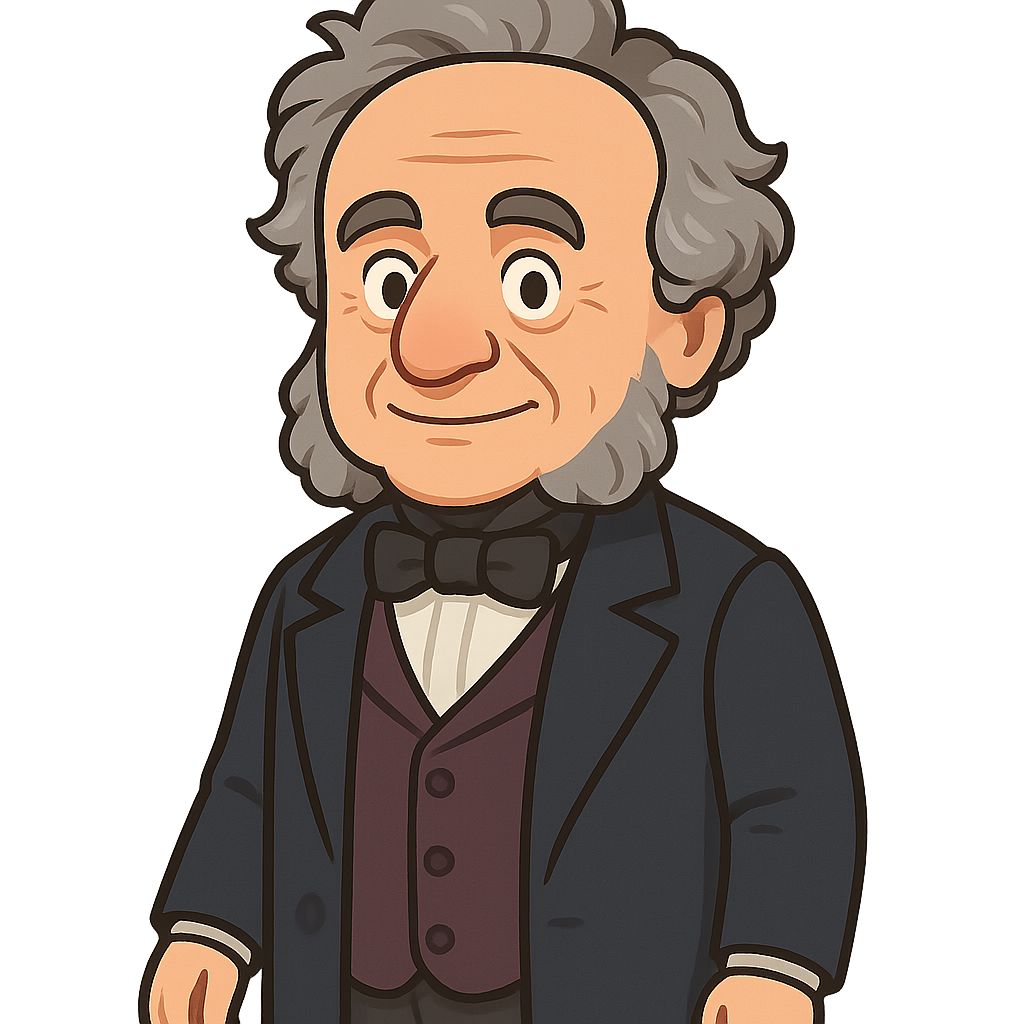
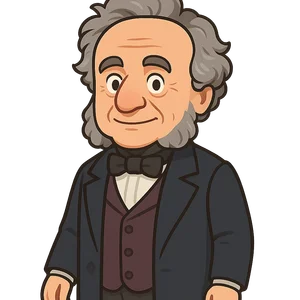
Hello! My name is Charles Babbage, and I would like to tell you the story of my life and my greatest obsession: numbers. I was born in London, England, on December 26th, 1791. Even as a boy, I was incredibly curious about how things worked. I would often take my toys apart just to see the gears and levers inside, and then I would try my best to put them back together. But my real love was mathematics. Numbers seemed to hold a secret language, and I wanted to understand everything about it. This curiosity about machines and my passion for numbers would shape my entire life.
When I was old enough, in 1810, I went to study at Trinity College, Cambridge. I was so excited to learn from the greatest mathematical minds in England. However, I quickly discovered that I had studied so much on my own that I already knew more about some modern mathematical ideas than my tutors. This was frustrating, but it did not stop me. In 1812, I gathered my clever friends, like John Herschel and George Peacock, and we formed a group we cheekily called the Analytical Society. Our goal was to shake up the old ways of teaching and bring the brilliant new mathematical methods from Europe to our university. We wanted to push the boundaries of what was known.
In my time, there were no electronic calculators. All the complex mathematical tables that sailors used for navigation or that engineers used for building bridges were calculated by hand. The people who did this work were called 'computers,' and it was a very difficult job. Because humans were doing the calculations, they often made small mistakes. A tiny error in a navigation table could lead a ship miles off course. I found these errors maddening. I remember looking at a book of tables full of mistakes and exclaiming, 'I wish to God these calculations had been executed by steam.'
Charles Babbage
Hello! My name is Charles Babbage, and I would like to tell you the story of my life and my greatest obsession: numbers. I was born in London, England, on December 26th, 1791. Even as a boy, I was incredibly curious about how things worked. I would often take my toys apart just to see the gears and levers inside, and then I would try my best to put them back together. But my real love was mathematics. Numbers seemed to hold a secret language, and I wanted to understand everything about it. This curiosity about machines and my passion for numbers would shape my entire life.
When I was old enough, in 1810, I went to study at Trinity College, Cambridge. I was so excited to learn from the greatest mathematical minds in England. However, I quickly discovered that I had studied so much on my own that I already knew more about some modern mathematical ideas than my tutors. This was frustrating, but it did not stop me. In 1812, I gathered my clever friends, like John Herschel and George Peacock, and we formed a group we cheekily called the Analytical Society. Our goal was to shake up the old ways of teaching and bring the brilliant new mathematical methods from Europe to our university. We wanted to push the boundaries of what was known.
In my time, there were no electronic calculators. All the complex mathematical tables that sailors used for navigation or that engineers used for building bridges were calculated by hand. The people who did this work were called 'computers,' and it was a very difficult job. Because humans were doing the calculations, they often made small mistakes. A tiny error in a navigation table could lead a ship miles off course. I found these errors maddening. I remember looking at a book of tables full of mistakes and exclaiming, 'I wish to God these calculations had been executed by steam.'
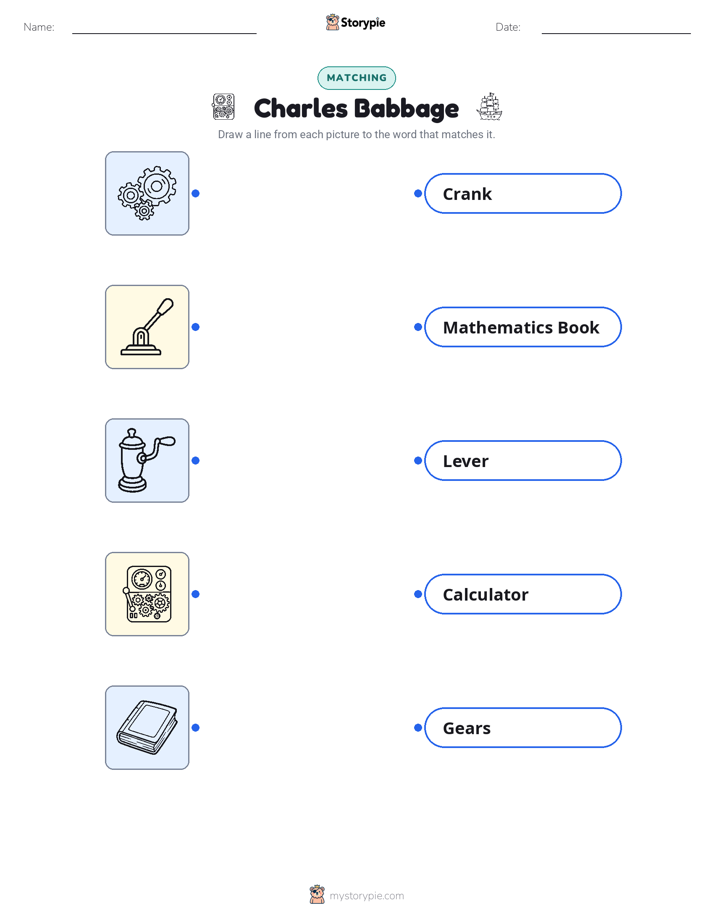
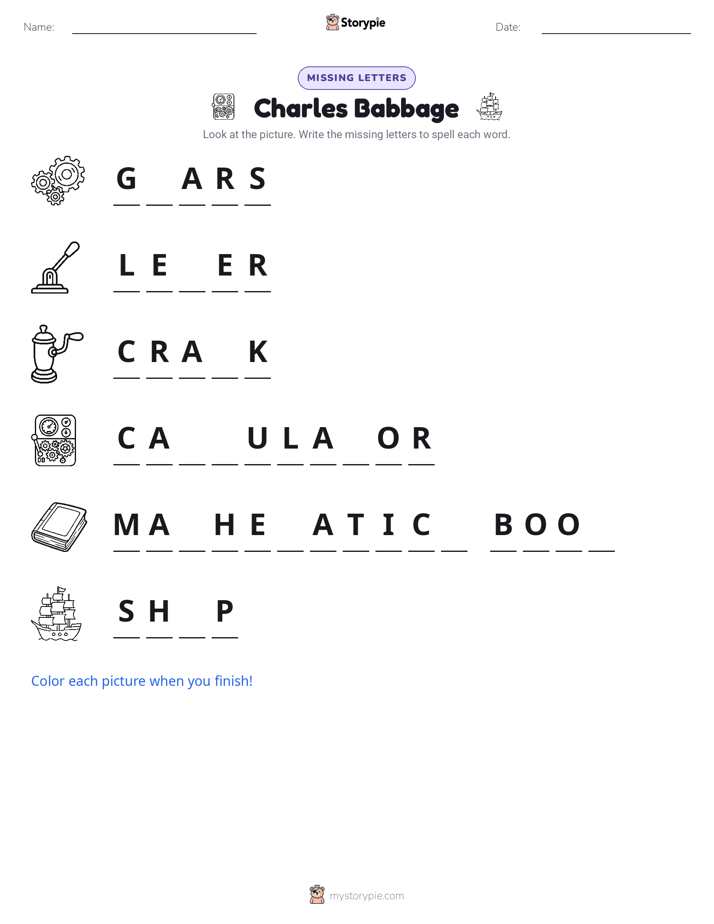
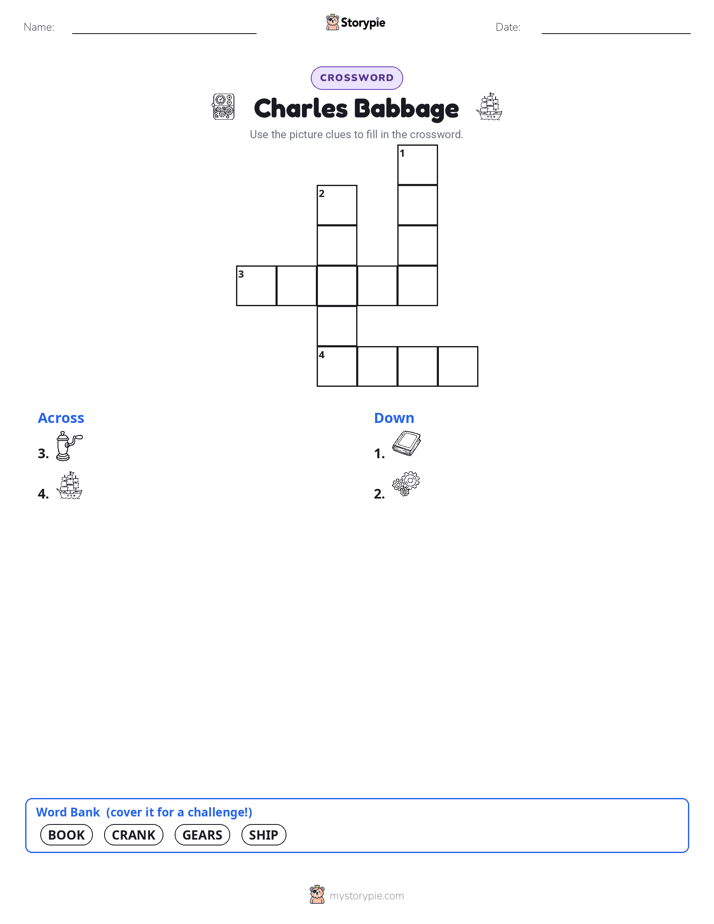
That thought sparked a grand idea. Around 1822, I began designing my first great machine: the Difference Engine. It was a massive, complex mechanical calculator made of thousands of brass and iron gears, levers, and cranks. Its purpose was to automatically calculate those mathematical tables, perfectly and without any human errors. The British government was so impressed that they gave me money to build it. But it was an enormous challenge. The technology of the day struggled to make parts with the precision I needed. The project was slow, expensive, and faced many delays.
While I was wrestling with the challenges of the Difference Engine, my mind leaped forward to an even more incredible idea. Around 1834, I designed a new machine I called the Analytical Engine. This was not just a calculator for one type of problem; it was a general-purpose computer. It had a 'store' to hold numbers, like memory, and a 'mill' to perform the calculations, like a computer processor. Most importantly, it could be programmed with instructions using punched cards, just like the ones used to weave complex patterns in fabrics on a Jacquard loom. This meant it could solve almost any mathematical problem you gave it. My brilliant friend, the mathematician Ada Lovelace, understood my vision perfectly. She saw that the machine could do more than just crunch numbers—it could one day even create music or art. She wrote what many consider to be the world's first computer program for my engine.
Sadly, I was never able to build a complete, working version of either of my engines. The ideas were simply too far ahead of the technology and funding available in the 1800s. I continued to work on my designs for the rest of my life. I lived to be 79 years old, passing away on October 18th, 1871. For a long time, my work was mostly forgotten. But about a century later, when the first electronic computers were being built, pioneers rediscovered my detailed plans and were astonished. They realized my Analytical Engine had all the basic parts of a modern computer. Today, people remember me as the 'Father of the Computer' because my dreams laid the blueprint for the amazing digital world we live in now.
Wow facts
About
A 19th-century English mathematician and inventor, credited with originating the concept of a digital programmable computer. He designed the Difference Engine and the more complex Analytical Engine, which laid the foundation for modern computing.
Take a Quiz
Question 1 of 5
What was the main problem that inspired me, Charles Babbage, to design the Difference Engine?
Explore next






Want to do even more?
Go beyond exploring. Unlock tools that turn every story into real learning.

Storypie Plus for families
Full stories, quizzes, and printables. Nights and car rides, sorted.
- Unlimited audio stories
- Create Mode: your child stars in the story
- Offline downloads
- Printable worksheets & coloring pages

Why Storypie for Schools
Students engaged. Prep in seconds. Evenings back to you.
- Worksheets & Quizzes
- Classroom Management
- Formative Assessment
- Custom Curriculum & Lesson Plans
- 27 Languages

Why Storypie for Homeschool
Curriculum done. They'll ask for more. Hours back in your day.
- Worksheet Generator
- First-Person Audio Stories
- Built-in Comprehension Quizzes
- Custom Curriculum & Lesson Plans
- Print & Go Activities