English

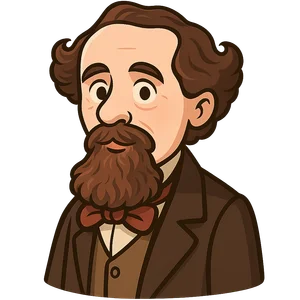
Charles Dickens
Charles Dickens was a renowned English writer and social critic of the Victorian era…
Reads at Grades 6–8 Listens at Grades 4–8
Print & create
Answer keys·No prep·Free with an account
28 worksheets · answer keys · full story · quiz · Ages 10-12 · CEFR B2
Plus adds 280,000+ more stories in 27 languages, audio for every one, and printables for all of them.
Just want Charles Dickens?
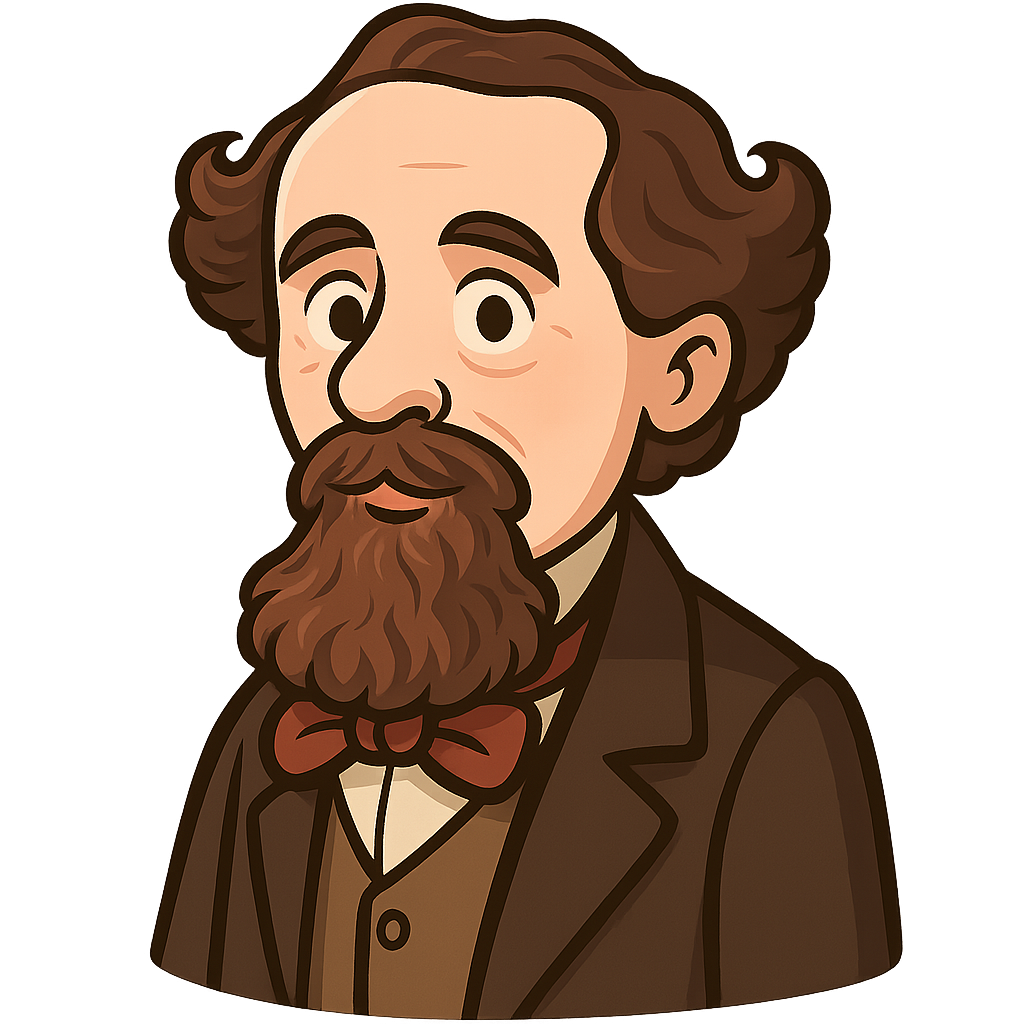
Hello, my name is Charles Dickens, and I am a storyteller. My own story began on February 7th, 1812, in a town called Portsmouth on the coast of England. In my earliest years, our home was a lively place, and my greatest treasures were found in my father's collection of books. I would lose myself for hours in tales of adventure and faraway lands. Reading was my first love, and it filled my imagination with characters and ideas. My family life was happy then, and I had no idea that our good fortune was about to change so dramatically. Those early days of comfort and joy were a sharp contrast to the hardships that lay just around the corner, challenges that would shape not only my life but every story I would ever write.
My world turned upside down around the year 1824. My father, John Dickens, was a loving man with a good heart, but he was not always practical when it came to managing money. One day, the worst happened: he was arrested for not paying his debts and was sent to the Marshalsea, a prison for debtors in London. For a boy of twelve, seeing my father taken away was a moment of profound shock and shame. My family was suddenly thrown into poverty, and the life I had known disappeared. The stability and happiness of my childhood were gone, replaced by fear and uncertainty about what our future would hold.
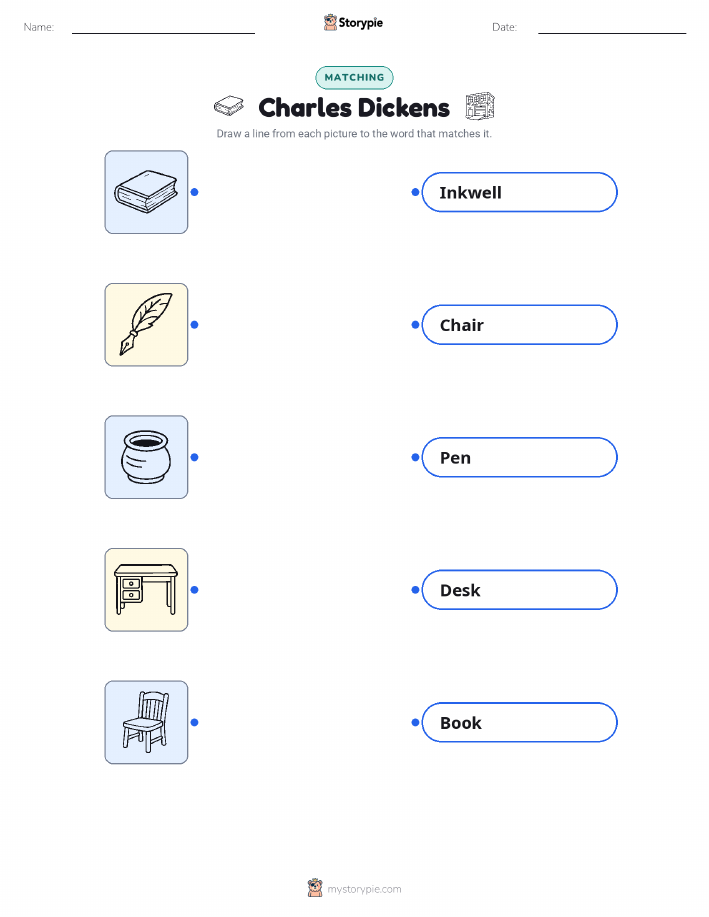
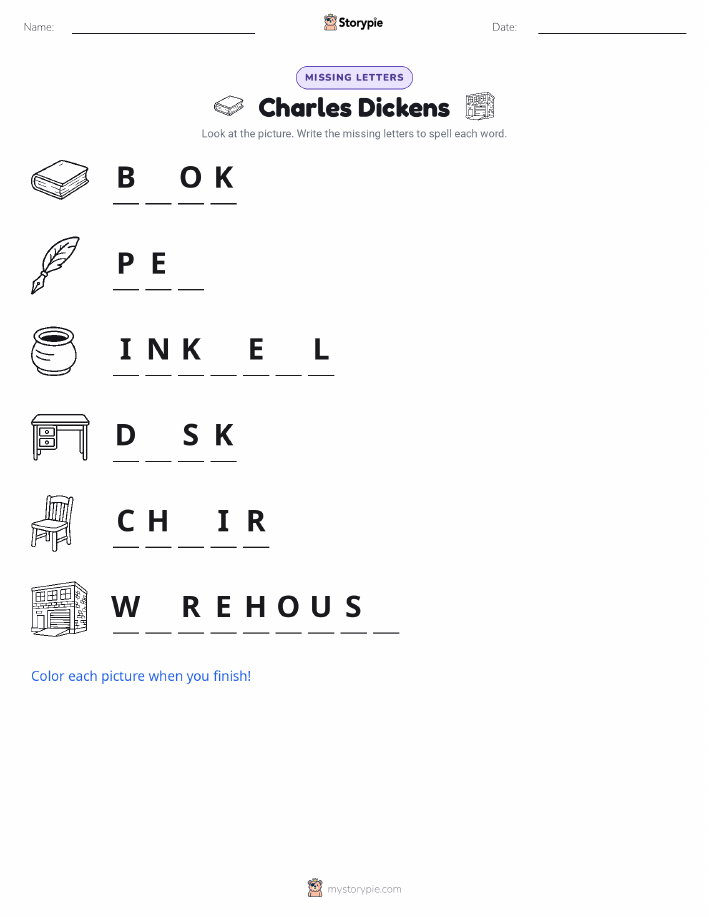
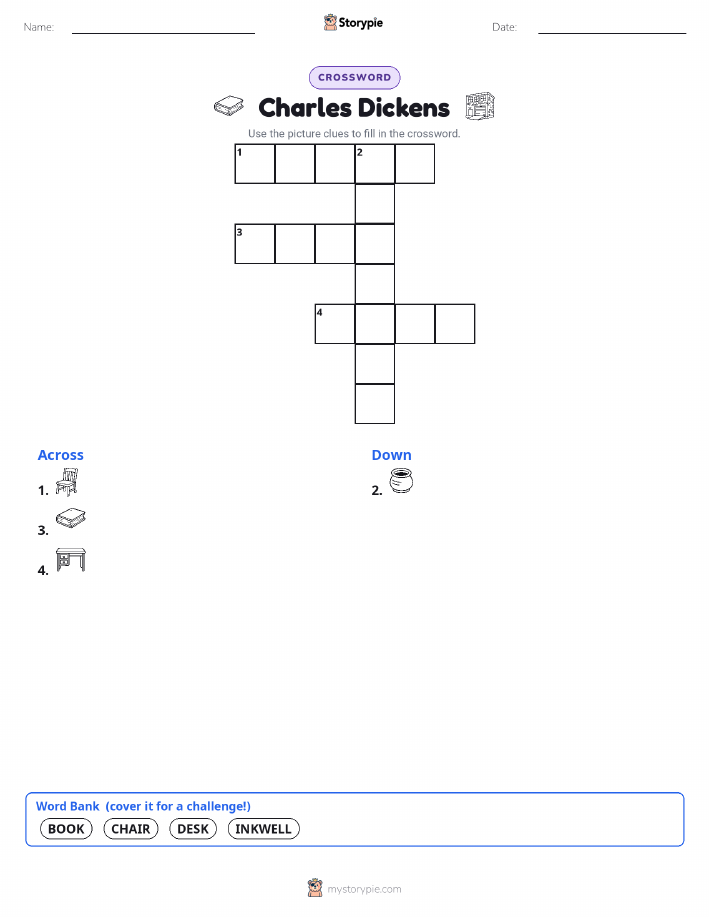
To help my family survive, I had to leave school in 1824 and go to work. My job was at a place called Warren's Blacking Warehouse, a dark and dreary factory near the river. For long hours each day, I sat pasting labels onto pots of shoe polish. The work was repetitive and lonely, and I felt as though my dreams of a better life were fading away. However, that terrible experience gave me something invaluable: a true understanding of what it was like to be poor and to feel forgotten by the world. It filled me with a powerful determination to escape that life. I taught myself a form of rapid writing called shorthand and eventually found work as a law clerk. By the early 1830s, my hard work paid off, and I became a successful journalist, reporting on the events of the day and leaving the factory far behind.
Charles Dickens
Hello, my name is Charles Dickens, and I am a storyteller. My own story began on February 7th, 1812, in a town called Portsmouth on the coast of England. In my earliest years, our home was a lively place, and my greatest treasures were found in my father's collection of books. I would lose myself for hours in tales of adventure and faraway lands. Reading was my first love, and it filled my imagination with characters and ideas. My family life was happy then, and I had no idea that our good fortune was about to change so dramatically. Those early days of comfort and joy were a sharp contrast to the hardships that lay just around the corner, challenges that would shape not only my life but every story I would ever write.
My world turned upside down around the year 1824. My father, John Dickens, was a loving man with a good heart, but he was not always practical when it came to managing money. One day, the worst happened: he was arrested for not paying his debts and was sent to the Marshalsea, a prison for debtors in London. For a boy of twelve, seeing my father taken away was a moment of profound shock and shame. My family was suddenly thrown into poverty, and the life I had known disappeared. The stability and happiness of my childhood were gone, replaced by fear and uncertainty about what our future would hold.
To help my family survive, I had to leave school in 1824 and go to work. My job was at a place called Warren's Blacking Warehouse, a dark and dreary factory near the river. For long hours each day, I sat pasting labels onto pots of shoe polish. The work was repetitive and lonely, and I felt as though my dreams of a better life were fading away. However, that terrible experience gave me something invaluable: a true understanding of what it was like to be poor and to feel forgotten by the world. It filled me with a powerful determination to escape that life. I taught myself a form of rapid writing called shorthand and eventually found work as a law clerk. By the early 1830s, my hard work paid off, and I became a successful journalist, reporting on the events of the day and leaving the factory far behind.
As a journalist, I began to write short stories and essays about life in London. I didn't use my own name at first; instead, I wrote under the pen name 'Boz'. Imagine my excitement when I saw my words in print for the very first time. These stories were collected and published in my first book, 'Sketches by Boz', in 1836. That same year, my big break arrived. I was asked to write a story that would be published in small parts, month by month, in a magazine. This serialized novel was called 'The Pickwick Papers'. To my astonishment, it became a massive success, and soon people all across England knew my name. In 1836, I also married a wonderful woman named Catherine Hogarth. My life was changing once again, but this time, it was filled with success and hope.
I knew I wanted my writing to do more than just entertain people. My mission was to use my stories to shine a light on the poverty and injustice I saw all around me in Victorian England. My own painful memories of the blacking factory inspired my novel 'Oliver Twist', which I began writing in 1837. In it, I told the world about the harsh reality that poor children faced in workhouses. In 1843, I wrote 'A Christmas Carol' with the hope that the story of Ebenezer Scrooge's transformation would inspire people to be more charitable and kind to one another. Many of my books were very personal. 'David Copperfield' drew heavily on my own life experiences, while novels like 'Great Expectations' explored themes of wealth, class, and what it truly means to be a gentleman. Through my characters and their struggles, I hoped to encourage my readers to help create a fairer, more compassionate world.
My later years were filled with work. Starting in 1858, I began performing public readings of my stories, traveling across Britain and America. These tours were thrilling, as I loved connecting with my audience, but they were also exhausting. In 1865, I survived a terrible accident, the Staplehurst rail crash, an event that haunted me for the rest of my days. I lived to be 58 years old, and my life came to an end at my home on June 9th, 1870. I was given the great honor of being buried in Poets' Corner of Westminster Abbey. Although my time on earth was over, my stories did not end. Characters like Oliver Twist, Ebenezer Scrooge, and Pip have lived on, and I hope they continue to remind people everywhere of the importance of kindness, fairness, and the enduring power of a good story.
Wow facts
About
Charles Dickens was a renowned English writer and social critic of the Victorian era, celebrated for creating some of the world's best-known fictional characters and novellas like 'Oliver Twist' and 'A Christmas Carol'.
Take a Quiz
Question 1 of 5
What major problem did Charles Dickens face as a twelve-year-old boy in 1824?
Explore next



Want to do even more?
Go beyond exploring. Unlock tools that turn every story into real learning.

Storypie Plus for families
Full stories, quizzes, and printables. Nights and car rides, sorted.
- Unlimited audio stories
- Create Mode: your child stars in the story
- Offline downloads
- Printable worksheets & coloring pages

Why Storypie for Schools
Students engaged. Prep in seconds. Evenings back to you.
- Worksheets & Quizzes
- Classroom Management
- Formative Assessment
- Custom Curriculum & Lesson Plans
- 27 Languages

Why Storypie for Homeschool
Curriculum done. They'll ask for more. Hours back in your day.
- Worksheet Generator
- First-Person Audio Stories
- Built-in Comprehension Quizzes
- Custom Curriculum & Lesson Plans
- Print & Go Activities