English

Charles VII of France
King of France from 1422 to 1461, whose reign saw the end of the Hundred Years' War…
Reads at Grades 6–8 Listens at Grades 4–8
Print & create
Answer keys·No prep·Free with an account
28 worksheets · answer keys · full story · quiz · Ages 10-12 · CEFR B2
Plus adds 279,000+ more stories in 27 languages, audio for every one, and printables for all of them.
Just want Charles VII of France?
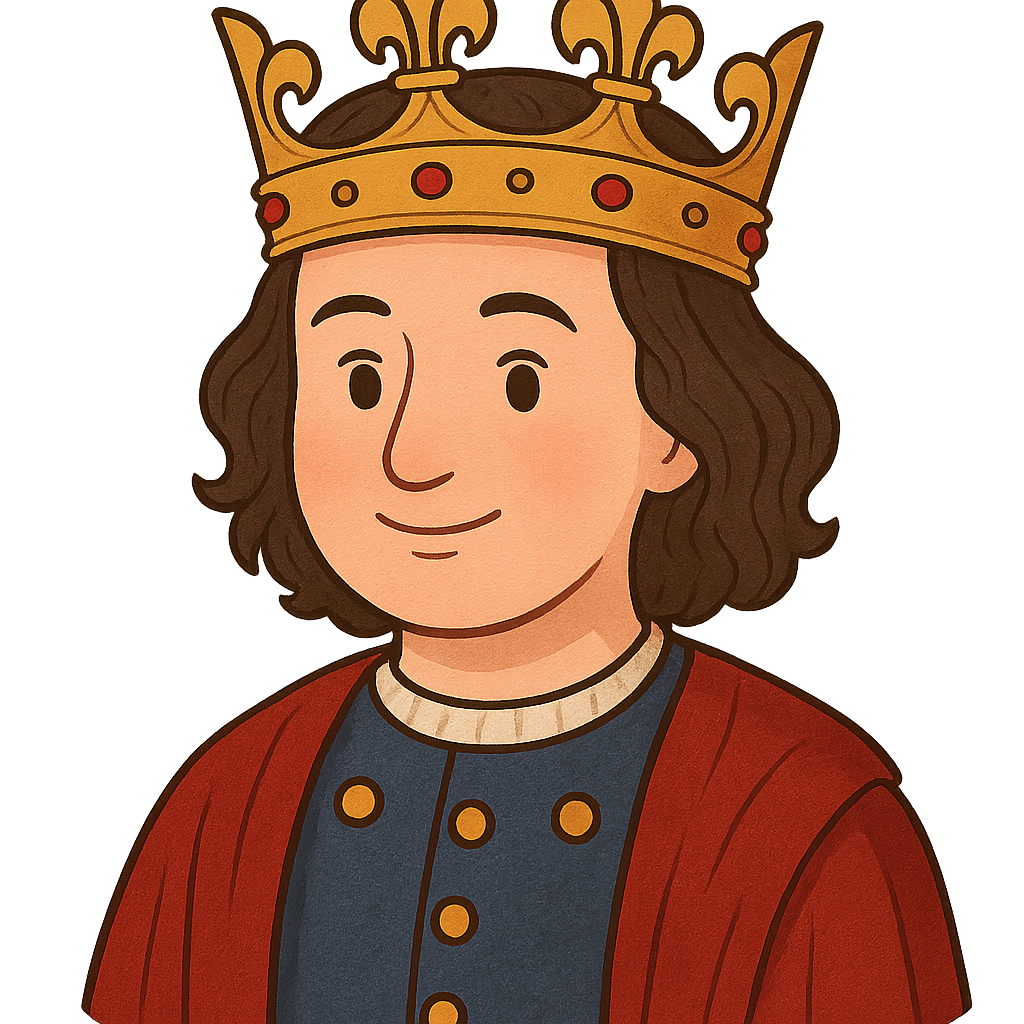
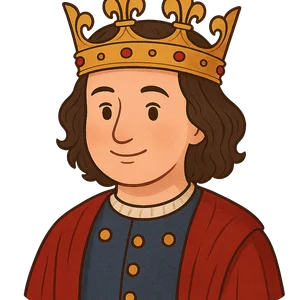
Hello, my name is Charles, and I was destined to become King Charles VII of France. My story is one of struggle, hope, and the unification of a nation. I was born on February 22nd, 1403, into a kingdom that was deeply troubled. For decades, my country had been fighting the Hundred Years' War against England, and to make matters worse, powerful French nobles were fighting amongst themselves for power. It was a dark and uncertain time to be born into royalty. I was not the first in line for the throne, but after my older brothers passed away, I suddenly became the Dauphin—the heir to the French crown—in 1417. At just fourteen years old, the immense responsibility of a divided and war-torn kingdom was placed upon my shoulders.
The years that followed were some of the most difficult in my country's history. Just a few years before I became Dauphin, our army suffered a terrible loss to the English at the Battle of Agincourt in 1415. The defeat left France weakened and vulnerable. This led to a shocking event in 1420 when the Treaty of Troyes was signed. This treaty declared that I was no longer the rightful heir. Instead, it named the son of the English king as the future ruler of France. I was officially disinherited. When my father, King Charles VI, died on October 21st, 1422, I did not give up. I claimed my right to the throne, but my power was limited. I only controlled the lands in the southern part of France, while the English and their allies held the north, including the city of Paris. My enemies mockingly called me the 'King of Bourges,' after the city where I held my court. It was a time filled with doubt, and I wondered if I would ever truly rule a united France.
Charles VII: The Victorious King
Hello, my name is Charles, and I was destined to become King Charles VII of France. My story is one of struggle, hope, and the unification of a nation. I was born on February 22nd, 1403, into a kingdom that was deeply troubled. For decades, my country had been fighting the Hundred Years' War against England, and to make matters worse, powerful French nobles were fighting amongst themselves for power. It was a dark and uncertain time to be born into royalty. I was not the first in line for the throne, but after my older brothers passed away, I suddenly became the Dauphin—the heir to the French crown—in 1417. At just fourteen years old, the immense responsibility of a divided and war-torn kingdom was placed upon my shoulders.
The years that followed were some of the most difficult in my country's history. Just a few years before I became Dauphin, our army suffered a terrible loss to the English at the Battle of Agincourt in 1415. The defeat left France weakened and vulnerable. This led to a shocking event in 1420 when the Treaty of Troyes was signed. This treaty declared that I was no longer the rightful heir. Instead, it named the son of the English king as the future ruler of France. I was officially disinherited. When my father, King Charles VI, died on October 21st, 1422, I did not give up. I claimed my right to the throne, but my power was limited. I only controlled the lands in the southern part of France, while the English and their allies held the north, including the city of Paris. My enemies mockingly called me the 'King of Bourges,' after the city where I held my court. It was a time filled with doubt, and I wondered if I would ever truly rule a united France.
Just when our cause seemed most hopeless, a glimmer of hope appeared in a most unexpected way. The English army was surrounding the crucial city of Orléans, and it seemed certain to fall. Then, in February of 1429, a young peasant girl named Joan of Arc arrived at my court in the castle of Chinon. She was just a teenager, but she spoke with incredible conviction. Joan told me she had been sent by God, with divine visions instructing her to help me drive the English out of our lands and see me properly crowned as king. I was hesitant at first, as it was a truly extraordinary claim. But her sincerity and the desperate situation convinced me to take a chance. I granted her command of my army. To the astonishment of everyone, she inspired the soldiers with newfound courage and faith. On May 8th, 1429, under her leadership, my army achieved a miraculous victory and broke the siege of Orléans. This victory was a major turning point in the long war.
After the amazing victory at Orléans, Joan insisted that we should not wait. She urged me to march through territory still controlled by our enemies to the city of Reims. This was a bold and dangerous plan, but I trusted her. Reims was the traditional place where French kings were crowned, and a coronation there would prove to my people that I was their one true king. We made the daring journey, and on July 17th, 1429, I was officially crowned King Charles VII in the great Reims Cathedral. It was a triumphant moment that solidified my legitimacy and gave my subjects a renewed sense of hope. However, my joy was followed by great sadness. The next year, in 1430, Joan was captured by enemy forces. Despite my position, I was unable to prevent her tragic fate, and she was executed in 1431. Her sacrifice, however, was not in vain; she had ignited a fire in the heart of France.
Inspired by Joan's memory, I was determined to finish the work we had started together and unite my kingdom. I knew that to defeat the English, I first had to make peace among my own people. A crucial step came in 1435 with the Treaty of Arras, where I reconciled with the powerful Duke of Burgundy, who had once been my enemy. With my kingdom more unified, I focused on strengthening it from within. I created France's first standing professional army, which meant our soldiers were better trained and more reliable. I also reformed the country's finances to pay for our efforts. These changes made France much stronger, and my armies began to push the English back. Finally, on July 17th, 1453, our forces won a decisive victory at the Battle of Castillon, which marked the end of the Hundred Years' War. For leading my country from the brink of collapse to final victory, my people gave me the title 'Charles the Victorious'.
I inherited a broken and divided kingdom, but I left behind a nation that was strong, peaceful, and united. One of the most important acts of my later reign was to honor the young woman who had made it all possible. In 1456, I ordered a new trial for Joan of Arc, which officially cleared her name and declared her innocent. This ensured that she would be remembered forever as a national hero of France. I lived to be 58 years old. Today, I am remembered as the king who, with the help of a remarkable young woman, brought the Hundred Years' War to an end and began the great work of rebuilding our nation.
Wow facts
About
King of France from 1422 to 1461, whose reign saw the end of the Hundred Years' War, largely thanks to the inspiration of Joan of Arc. He is known as 'Charles the Victorious.'
Take a Quiz
Question 1 of 5
What was the Treaty of Troyes, signed in 1420, and how did it affect Charles?
Explore next






Want to do even more?
Go beyond exploring. Unlock tools that turn every story into real learning.

Storypie Plus for families
Full stories, quizzes, and printables. Nights and car rides, sorted.
- Unlimited audio stories
- Create Mode: your child stars in the story
- Offline downloads
- Printable worksheets & coloring pages

Why Storypie for Schools
Students engaged. Prep in seconds. Evenings back to you.
- Worksheets & Quizzes
- Classroom Management
- Formative Assessment
- Custom Curriculum & Lesson Plans
- 27 Languages

Why Storypie for Homeschool
Curriculum done. They'll ask for more. Hours back in your day.
- Worksheet Generator
- First-Person Audio Stories
- Built-in Comprehension Quizzes
- Custom Curriculum & Lesson Plans
- Print & Go Activities